Tutorial:PvP (Bedrock Edition)

_JE5_BE3.png)
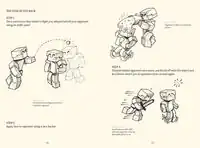
PvP, an abbreviation of player versus player, refers to multiplayer combat in Minecraft where players fight other players.
This guide covers Bedrock Edition PvP in the most modern versions of vanilla Minecraft. For other version-dependent PvP environments, see PvP.
PvP terms
Melee attacking
- Combo: Continuously chaining attacks together whilst keeping the opponent out of range.[more information needed]
- Crit-spam/c-spam: Repeatedly chaining critical hits together by continuously jumping.
- Outspacing: Attacking an opponent at the very edge of the 3 block attack reach.
- S-tap: Pressing the S key to stop forward movement after connecting an attack.
- Sprint-reset/W-tap: Starting another sprint after hitting an entity to repeatedly do sprint-knockback attacks.
Melee defending
- Hit-select: Attacking immediately after your opponent attacks, causing you to touch the ground first and giving an opening for a combo.
- Jump-reset: Jumping at the same time as getting hit, reducing the amount of horizontal knockback received.
- P-crit: Dealing a critical hit using the vertical knockback received by an opponent's attack, rather than by manually jumping.
Mace-specific
- Breach-swapping: Switching to a Breach mace immidiately after attacking with a stronger weapon (such as a netherite sword), causing the attack to use the damage of the stronger weapon with the Breach enchantment from the mace.[1][verify for Bedrock Edition]
- Stun-slamming: Attacking first with an axe before dealing a smash attack with a mace, stunning the opponent's shield and allowing the smash attack to connect.
Other
- 1v1: A PvP match in which there is only 1 player fighting only 1 player, or a request that participating players allow a multiplayer PvP match to come down to a 1v1.
- Air anchor: Placing an anchor, charging it with glowstone, and activating it with a double click while holding another anchor, causing a second anchor to be placed in the air while the first explodes.
- Double-toteming: Holding a totem in the mainhand in addition to the offhand in Crystal PvP to prevent death twice in quick succession.
- Quick-drop/quick-death: Dying early in a fight due to poor health management.
- Repairing/mending: Repairing armor enchanted with Mending using bottle o' enchanting.
- Toteming: Quickly re-equipping a totem of undying in the offhand after activating one.
PvP kit types
Reason: The standard Java Edition kits do not reflect the ones in Bedrock.
A kit in PvP is a pre-determined loadout of items. Kits function as PvP gamemodes, and require different skillsets from one another.
 Sword PvP
- A type of kit revolving around sword combos and maneuvers.
- Some variants of this kit include food such as golden apples.[note 1]
- Included items:

.gif)
.gif)
.gif)
.gif)
 Axe PvP
- A type of kit revolving around the use of an axe to disable a shield.
- Some variants of this kit include food, and some have the equipment enchanted.
- Included items:


 SMP PvP / Diamond PvP / Netherite PvP
- A type of kit revolving around high-power gear PvP that does not include a mace, end crystals, or respawn anchors. Many SMPs ban the use of explosive weapons, which is where the kit gets its namesake.
- Some variants of the netherite version of this kit include Knockback I on the sword, or include two swords (one with Knockback I and one without).
- Included items (diamond):
.gif)



- Included items (netherite):
.gif)
.gif)
.gif)
.gif)
 Crystal PvP
- A type of kit revolving around the use of end crystals and respawn anchors as explosive weapons, the quick re-equipping of totems of undying, and the use of bottle o' enchanting to repair armor. It is notably one of three types of kits that includes Blast Protection on one of its armor pieces, sharing this distinction with Cart PvP.
- Some variants of this kit do not include an axe or shield, some don't include Knockback I on the sword, some include maces and elytra/rockets, and some don't include potions.
- Included items:


 Pot PvP
- A type of kit revolving around the use of splash potions of healing to quickly replenish health that does not include ender pearls or a shield.
- Some variants of the diamond version of this kit include splash potions of regeneration.
- Included items (diamond):

- Included items (netherite):
 UHC PvP
- A type of kit revolving around the game rule Natural Regeneration being disabled, and the use of cobwebs, lava buckets, and water buckets.
- Some variants of this kit include ender pearls.
- Included items:


 Cart PvP
- A type of kit revolving around the use of TNT minecarts as explosive weapons, activated using a bow enchanted with Flame. It is notably one of three types of kits that includes Blast Protection on one of its armor pieces, sharing this distinction with Crystal PvP.
- Included items:

 Mace PvP
- A type of kit revolving around the use of a mace and wind charges in high-power gear PvP.[note 2]
- Some variants of this kit include splash potions of Strength and Speed, some have diamond equipment instead of netherite equipment, and some include splash potions of Jump Boost. Some variants of the elytra version of this kit include a Riptide trident.
- Included items (mace):


- Included items (elytra mace):
.gif)

 Vanilla PvP
- A type of kit revolving around full access to all equipment types, combining aspects of SMP PvP, Crystal PvP, and Mace PvP. It is notably one of three types of kits that include Blast Protection on one of their armor pieces, sharing this distinction with Crystal PvP and Cart PvP.
- Some variants of this kit do not include Knockback I on the sword, or include two swords (one with Knockback I and one without).
- Included items:
PvP equipment
A combatant's equipment is an important factor in PvP, as it determines survivability, damage output, and versatility. Having good gear does not guarantee success, as skill is far more impactful in the modern combat system. Becoming familiar with the usecases, strengths, and weaknesses of different equipment is an important aspect of PvP.
Weapons
Shooting the opponent with a projectile can help in starting combos.
 Swords
Swords are the best general-use weapons due to their ease of obtainment and use and their high, consistent damage.
| Material |  Wooden Wooden
|
 Gold Gold
|
 Stone Stone
|
 Copper Copper
|
Iron
|
 Diamond Diamond
|
 Netherite Netherite
|
|---|---|---|---|---|---|---|---|
| Attack Damage | 5HP.png) .png)
|
5HP
|
6HP
|
6HP
|
7HP
|
8HP
|
9HP
|
| Durability | 60 | 33 | 132 | 191 | 251 | 1562 | 2032 |
| Lifetime damage inflicted[note 3] | 300HP × 150
|
165HP × 82.5
|
792HP × 396
|
1146HP × 573
|
1757HP × 878.5
|
12496HP × 6248
|
18288HP × 9144
|
 Axes
Axes
Axes are essential for their ability to stun shields. Due to this, they technically have a higher damage consistency than swords.
| Material | Damage |
|---|---|
 Wooden Wooden |
4HP
|
 Golden Golden
| |
 Stone Stone |
5HP
|
 Copper Copper
| |
| Iron |
6HP
|
 Diamond Diamond |
7HP
|
 Netherite Netherite |
8HP
|
 Maces
Maces
Maces have the ability to deal devastating smash attacks after falling, and are the best weapon in PvP with diamond armor or better due to the Breach enchantment.
| Attack | Normal
|
Critical
|
Smash
|
|---|---|---|---|
| Attack damage | 6HP
|
9HP
|
18HP × 9 to ∞
|
| Durability | 501 | ||
| Lifetime damage inflicted[note 4] | 3006HP × 1503
|
4509HP × 2254.5
|
9018HP × 4509 to ∞
|
 Tridents
Tridents can be thrown as a projectile or used to escape threats using the Riptide enchantment. Due to the Impaling enchantment drastically increasing the damage dealt when the opponent is touching water or rain, the trident can be very powerful when used with a water bucket or in underwater fights.
| Attack | Melee
|
Melee (critical)
|
Range
|
|---|---|---|---|
| Attack damage | 9HP
|
13.5HP × 6.75
|
8HP
|
| Lifetime damage inflicted[note 5] | 2259HP × 1129.5
|
3388HP × 1694
|
2008HP × 1004
|
| Durability | 251 | ||
| Level | Increase | Melee | Ranged |
|---|---|---|---|
| I | adds 2.5HP × 1.25
|
11.5HP × 5.75
|
10.5HP × 5.25
|
| II | adds 5HP
|
14HP × 7
|
13HP × 6.5
|
| III | adds 7.5HP × 3.75
|
16.5HP × 8.25
|
15.5HP × 7.75
|
| IV | adds 10HP
|
19HP × 9.5
|
18HP × 9
|
| V | adds 12.5HP × 6.25
|
21.5HP × 10.75
|
20.5HP × 10.25
|
 Bows
Bows
Bows are the best ranged weapon for dealing damage and can also be used to quickly spam uncharged arrows to deal chip damage or to keep enemies away. They are also the only ranged weapon with access to the Flame enchantment, and are thus essential in Cart PvP for activating TNT minecarts. The Punch enchantment greatly helps with bow spamming, as it increases knockback, making it harder for the enemy to reach the player. When all three ranged weapons have maxed out enchantments, bows have the lowest shots per second and the highest damage per hit.
| Charging time | Attack damage |
|---|---|
| 0.1 s (no charge)
|
1HP
|
| 0.2–0.9 s (medium charge)
|
5HP
|
| 1 s (full charge)
|
6HP
|
| Above 1 s (critical charge)
|
6HP to 11HP × 5.5
|
 Crossbows
Crossbows are the best ranged weapon for spreading tipped arrow effects, and for the utility of having an instantaneous long-ranged shot that can be used at any time, so long as they have been charged in advance. They shouldn't be used with firework rockets due to the fact that firework rockets don't explode on contact with entities or blocks.[2] When all three ranged weapons have maxed out enchantments, crossbows have the highest shots per second and deal 7HP to 11HP × 5.5 damage, the second-highest damage per hit.
 Armor
Armor
Armor is essential to have for PvP, as failure to equip any armor will result in near-instant death. Different armor material types have differing amounts of armor points, armor toughness, and durability. The armor material types with zero armor toughness are extremely frail, and thus require high levels of Protection to be useful.
Armor points
| Material | Full set | Helmet / Cap | Chestplate / Tunic | Leggings / Pants | Boots |
|---|---|---|---|---|---|
| Turtle Shell | 2 (.png) ) )
|
2 ()
|
N/A | N/A | N/A |
| Leather | 7 (.png) ) )
|
1 ()
|
3 ()
|
2 ()
|
1 ()
|
| Copper | 10 ()
|
2 ()
|
4 ()
|
3 ()
|
1 ()
|
| Golden | 11 ( × 5.5)
|
2 ()
|
5 ()
|
3 ()
|
1 ()
|
| Chainmail | 12 ( × 6)
|
2 ()
|
5 ()
|
4 ()
|
1 ()
|
| Iron | 15 ( × 7.5)
|
2 ()
|
6 ()
|
5 ()
|
2 ()
|
| Diamond | 20 ( × 10)
|
3 ()
|
8 ()
|
6 ()
|
3 ()
|
| Netherite | 20 ( × 10)
|
3 ()
|
8 ()
|
6 ()
|
3 ()
|
Armor toughness
Every armor piece that is worse than the corresponding diamond piece doesn't give armor toughness.
| Material | Full set | Single armor piece |
|---|---|---|
| Netherite | 12 ( × 6)
|
3 ()
|
| Diamond | 8 ()
|
2 ()
|
| Every other armor set | 0 (.png) ) )
|
0 ()
|
Durability
| Material | Helmet | Chestplate | Leggings | Boots |
|---|---|---|---|---|
| Turtle Shell | 275 | N/A | N/A | N/A |
| Leather | 55 | 80 | 75 | 65 |
| Copper | 121 | 176 | 165 | 143 |
| Golden | 77 | 112 | 105 | 91 |
| Chainmail | 165 | 240 | 225 | 195 |
| Iron | 165 | 240 | 225 | 195 |
| Diamond | 363 | 528 | 495 | 429 |
| Netherite | 407 | 592 | 555 | 481 |
 Shields
Shields are an essential defensive tool, as they block all melee, ranged, and explosive damage when active, and block in a 180° arc infront of the user. When using a shield, there is a quarter-second delay before the shield becomes active. Shields that are in the active state will become stunned for 5 seconds if hit by an axe, regardless of the axe's attack cooldown percentage. The durability loss a shield endures is dependent on the strength of the blocked attack, with attacks dealing 3HP or more taking durability damage equal to the strength of the attack rounded up. They have 336 durability.
 Food
Food
A combatant should make sure they have a full hunger bar during a fight, and entering a fight with full saturation is advised. Reaching 20 (.png) × 10) hunger after eating food causes health to slowly regenerate at the cost of saturation. Health also passively regenerates slowly when hunger is at 16 ( × 8) or above, and stops when below that amount. Additionally, if hunger dips below 6 (), sprinting becomes disabled.
× 10) hunger after eating food causes health to slowly regenerate at the cost of saturation. Health also passively regenerates slowly when hunger is at 16 ( × 8) or above, and stops when below that amount. Additionally, if hunger dips below 6 (), sprinting becomes disabled.
The best food types are those that have provide high saturation when consumed. Golden apples directly provide Regeneration and Absorption, making them the best food if one has the apples and gold to craft them. If golden apples are too expensive, then golden carrots are the next-best food, with steak and cooked porkchops being tied for third-best. While enchanted golden apples are stronger than golden apples, they are much too rare to be used in the same way as golden apples, instead they should be used for emergency healing. One can eat multiple golden apples to stack absorption, up to a maximum of 8 extra hearts.[3] Suspicious stews can be used tactically in the early game for various purposes, such as quickly maxing out saturation with blue orchid and dandelion stews, and oxeye daisy stews can be used to heal slightly faster when one has a moment where they aren't being attacked by the enemy, allium stews can be used to survive short encounters with lava, and poppy stews can be used to see in the dark.
 Potions
Potions apply a variety of useful effects. These effects can strengthen allies and harm enemies when thrown as splash potions. In addition, lingering potions allow for a larger potion radius, but do not deal their effects on impact, and are expensive to brew. Drinking a regular potion takes time and leaves the user open, while splash potions can be used in quick succession. In the middle of a fight, it is most practical to splash them at the user's feet, especially when using splash potions of healing. Lingering potions are useful for either making an area inaccessible for a while or allowing everyone in a team to heal together. Using negative splash potions and lingering potions as throwable projectiles is not advised, as the throwing distance is short and each projectile takes up an entire inventory slot; tipped arrows are optimal for this instead. The best potion effects include Speed, Strength, and Fire Resistance. Turtle Master potions can be used to become effectively immortal for a short period of time.
 Blocks
Blocks are useful for obstructing attackers, making escapes, and chasing your opponent. They are especially useful in tight spaces like tunnels for blocking off a pursuer. They can also be used to pillar up to safety in a fight, at the cost of becoming vulnerable to being knocked off by projectiles. If your opponent is running away, then you can use blocks to make headhitters to catch up to them or bridge to where they're going to go. Some blocks have unique properties, such as high blast resistance, flammability, or being openable. Openable blocks such as chests or barrels can be used to counter cobweb or lava users by having them open the block when they try to place cobwebs or lava.
 Ender Pearls
Ender pearls can be used to escape opponents, allowing the user to heal, or to pursue a fleeing opponent. Ender pearls inflict damage to the user when landing, damage that can be reduced by Protection and Feather Falling. Ender pearls can be used to scale walls, done by placing a block below one's self upon landing into the wall. A ender pearl stasis chamber can be used to teleport out of a dangerous situation if activated remotely.
 Water Buckets and
  Lava Buckets
Water buckets can be used to obstruct opponents, buying more time to escape by slowing them down. It can also be used to avoid taking fall damage, destroy cobwebs, put out fires, and travel up walls.
Lava buckets can be used to damage and slow opponents, as well as to create small barricades. The Protection enchantment greatly reduces the effectiveness of lava as a damage option, making lava buckets more practical for low-power fights.
 Redstone
Redstone can be used to create traps and TNT cannons. Building a trap in a strategic location and luring the opponent into it can be an easy way to win a fight. However, constructing traps or TNT cannons using redstone in the middle of a fight is highly impractical, and thus traps and cannons that are easier to build and do not use redstone are preferred.
Explosive Weapons
 End Crystals
End crystals can be placed on obsidian or bedrock, and when punched cause an instant powerful explosion. They can also be placed and exploded rapidly, but in order to do full damage and knockback on an opponent, the user must first knock the opponent up near the end crystal. As long as the user is at least 1 block below the exploding end crystals, the user takes little damage from the explosions.
 Respawn Anchors and
  Beds
Beds
Respawn anchors when given a piece of glowstone can be right clicked on for an instant powerful explosion. Unlike end crystals, respawn anchors do not require a block for them to be placed, allowing them to be placed right at an opponent's feet without having to hit them up. However, respawn anchors cannot be activated in rapid succession and cannot be used in the Nether, unlike end crystals. Respawn anchors also pose a higher threat to the player using them than end crystals do, and thus it is recommended to place a block between the user and the respawn anchor before activating it.
Beds are the Nether counterpart to respawn anchors, and have the benefit of not requiring a fuel source to activate.
 TNT and
  TNT Minecarts
TNT can be used to build traps or deter opponents from approaching or chasing. TNT can also be used in specific formations to launch other TNT towards opponents. TNT minecarts can be used offensively in a similar way to respawn anchors, and are activated instantly with a bow enchanted with Flame.
 Flint and Steel and
  Fire Charges
Flint and steel can be used to alter the battlefield by setting surfaces on fire. Due to the Protection enchantment, fire damage is largely negligible and is instead useful for the movement disruption inflicted by it. The screen effect incurred from being on fire also obstructs a player's field of view, however this can be circumvented by use of a low-fire resource pack. Fire charges are identical to flint and steel when used as an item, but can also be fired by dispensers. Flint and steel has only 64 durability, and is therefore used up in the same time as a stack of fire charges. However, flint and steel when enchanted with Unbreaking becomes the superior option.
 Cobwebs
Cobwebs slow any player caught in them to a crawl, trapping them and make them easy targets. Ender pearls are the best way to escape from cobwebs, and water buckets can also be used to destroy them. They can also be destroyed with a sword, however being inside a cobweb whilst not being grounded causes mining speed to decrease dramatically, making this a poor escape option. Cobwebs can also be placed on oneself to act as a barricade against attacks, so long as no part of the player is exposed.
 Totem of Undying
When held in the offhand, totems protect the player from a lethal hit (except from the void), and grant them temporary Regeneration, Fire Resistance, and Absorption. Totems can be quickly re-equipped by hovering over one in the inventory and pressing the Quick Move button if on PC or controller, ignore this sentence if you are on mobile. The severity of the screen obstruction that occurs when a totem activates can be reduced with a resource pack.
 Pickaxes,
  Shovels,
  Hoes, and
  Shears
Mining tools allow for modifying the terrain, tunneling away, and destroying defenses. They are most useful when enchanted with Efficiency, as this increases their mining speed. Shears also disarm tripwire traps without triggering them.
 Elytra
The elytra can be used to travel long distances at high speed, surprise attack enemies, make quick escapes, and become difficult to hit. Wearing elytra dramatically reduces damage reduction due to taking up the chestplate slot. Having Mending on the elytra, as well as a supply of experience bottles, is recommended for sustained use. Elytra can be used in tandem with a mace to deal smash attacks with better precision and safety, however one must unequip the elytra or press jump before the smash attack is dealt for the smash attack to activate.
 Firework Rocket
Fireworks can be used to boost with an elytra. Fireworks made with firework stars can be fired as explosive projectiles using a crossbow, but due to the fact that they don't explode on contact with anything[4], they make for poor weapons.
 Horses
Horses can be used to travel around the map quicker, as well as to reach high places using their high jumping. While getting hit on a horse prevents knockback to the rider, horses are not recommended for direct combat. This is because horses have a random chance to be stunned when taking damage, making themselves and their rider vulnerable. They are also quickly killed by attacking players, and are outclassed by elytra for travel. When using a horse, having a supply of hay bales to heal it is recommended.
 Wolf
Wolf
Tamed wolves will aid the player in combat by targeting the last entity that was hit, or the last entity that hit their owner. Meat food types can be used to heal wolves and cause them to breed, making more wolves. Equipping a wolf with wolf armor is highly recommended, as failure to equip wolves with armor causes them to die quickly to attacking players. When using wolves, having a supply of armadillo scutes to repair their armor is recommended. Due to the way wolves jump when attacking targets, they often miss their attacks. This in combination with their low movement speed, damage output, and health pools causes wolves to be poor allies in combat, requiring a large army with status effects for wolves to be useful.
Enchantments for PvP
| Enchantment | Description | Applied to | Specifics and Uses |
|---|---|---|---|
| Sharpness, Power, and Breach | Increase the damage output of their respective weapon types. | Sword and Axe (Sharpness), Bow (Power), Mace (Breach) | Sharpness adds 1HP extra damage for the first three levels, 2HP extra damage for the fourth level, and 1HP extra damage for the fifth level, using the formula 1.25 * level, where the value is always rounded down. This results in Sharpness V giving the player 6HP extra damage.
Power increases damage dealt by 50% for the first level, and by 25% for each subsequent level. This results in Power V giving a total damage increase of 150%. Breach decreases the effectiveness of a target's armor by 15% per level. This results in Breach IV giving a total armor effectiveness decrease of -60%. These are generally no-brainers to apply to your equipment. |
| Density | Increases the damage of a mace smash attack. | Mace | Each level of Density increases the damage of a mace smash attack by 0.5HP × 0.25 per block fallen. This results in Density V increasing the damage from a smash attack by 2.5HP × 1.25 per block fallen.
Density is a must-have in kits revolving around repeatedly chaining mace smash attacks. However, for kits that do not offer wind charges or an elytra, Density is completely outclassed by Breach. |
| Fire Aspect and Flame | Set the target on fire. | Sword and Mace (Fire Aspect), Bow (Flame) | Fire Aspect sets the target on fire for 4 seconds per level. This results in Fire Aspect II inflicting 8 seconds of burning, dealing 1HP each second for a total of 8HP over time.
Flame inflicts 5 seconds of burning, dealing 1HP Burning damage does not take effect when the target is already taking damage from other sources, such as melee/ranged attacks or explosions. |
| Knockback and Punch | Increases inflicted horizontal knockback. | Sword (Knockback), Bow (Punch) | Knockback increases the amount of horizontal knockback inflicted on the target by 2.586 blocks per level. This results in Knockback II dealing 6.724 blocks of knockback without doing a sprint-knockback attack.[more information needed]
Punch increases the amount of horizontal knockback inflicted on the target by 3 blocks per level. This results in Punch II dealing 8.792 blocks of knockback. Knockback is not a recommended enchantment for the majority of PvP kits. The enchantment makes it more difficult to combo in PvP that doesn't have netherite armor, and makes it easier for your opponent to back out of combos even in PvP that does have netherite armor. The Knockback enchantment's only usecases are in Crystal PvP, where Knockback I is used to knock opponents into end crystal explosions, or in netherite SMP PvP, where Knockback 1 can be used to combo more effectively at the cost of combos being easier to back out of. However, Knockback and Punch can be used to prevent enemies from getting close, and the increased knockback isn't blocked by shields. |
| Protection | Increases damage resistance. | Armor | Protection increases damage resistance 4% per level. This results in a full set of Protection IV armor giving a total damage resistance increase of 64%.
Protection is extremely useful in all forms of PvP, as armor without any Protection enchantments is incredibly frail compared to armor with Protection. This is generally a no-brainer to apply to your equipment. |
| Blast Protection | Increases explosion damage resistance and explosion knockback resistance. | Armor | Blast Protection increases explosion damage resistance 8% per level, and explosion knockback resistance by 3.75 per level. This results in a Blast Protection IV armor piece giving a total explosion damage resistance increase of 32%, and results in two pieces of Blast Protection IV armor completely negating knockback from explosions.
Having a piece of Blast Protection armor is required in Crystal PvP and Cart PvP, as not having any Blast Protection results in instant death to two crystal explosions even with a totem of undying equipped. Having more than one piece of Blast Protection armor is not recommended, as having only two pieces of Protection armor will result in dying quickly to Strength II-boosted melee weapons. |
| Fire Protection and Projectile Protection | Increase fire/lava damage resistance (Fire Protection); increases projectile damage resistance (Projectile Protection) | Armor | Fire Protection increases fire/lava damage resistance 8% per level, and decreases burning time by 15% per level. This results in a Fire Protection IV armor piece giving a total fire/lava damage resistance increase of 32%, and results in two pieces of Fire Protection IV armor providing complete immunity to fire damage.
Projectile Protection increases projectile damage resistance 8% per level. This results in a Projectile Protection IV armor piece giving a total projectile damage resistance increase of 32%. Both Fire Protection and Projectile Protection have no usecases for PvP. This is because sacrificing Protection for one of the two is never worth it, regardless of the type of PvP kit. |
| Feather Falling | Increases fall damage resistance (including ender pearl damage). | Boots | Feather Falling increases fall damage resistance by 12% per level. This results in a Feather Falling IV armor piece giving a total fall damage resistance increase of 48%.
Feather Falling is not mutually exclusive with any other enchantments, so it is always worth having. |
| Thorns | Chance to inflict damage on attackers when receiving damage; increases armor durability loss. | Armor | Deals 1HP to 4HP randomly to attackers, with the chance of activation increasing per level. This results in a full set of Thorns III armor giving a 100% chance of dealing 1HP to 4HP damage upon being attacked. An additional 2 armor durability is lost when Thorns activates.
Thorns is not a recommended enchantment for PvP, as the damage of thorns becomes inconsequential against the Protection enchantment, while still massively harming the sustainability of your armor. In addition to this, when Thorns inflicts damage on the opponent, it will grant them knockback immunity for 0.5 seconds, as all indirect damage sources do, which disrupts combos. |
| Infinity | Causes arrows to not be consumed when used (does not affect tipped arrows). | Bow | Infinity causes arrows used to not disappear from the inventory when fired. It does not affect tipped arrows, and it is mutually exclusive with Mending.
Bows are virtually never at risk of breaking in a PvP fight, while one is much more likely to run out of arrows with Mending, and having multiple stacks of arrows takes up valuable inventory space, so Infinity is always preferred over Mending in a PvP environment. |
| Unbreaking | Gives a random chance for durability to not be consumed. | All | Unbreaking gives a random chance for durability to not be consumed, with a chance of 50% at Unbreaking I, ~66% at Unbreaking II, and 75% chance at Unbreaking III.
Unbreaking is essential to have on armor and shields, as armor durability is a key factor in high-power gear PvP. Excluding shields, it is not as important to have Unbreaking on other items, as they are very unlikely to break from full durability in a PvP fight. |
| Mending | Consumes gained experience to repair durability. | All | Mending repairs 2 durability for each experience point received.
Mending, like Unbreaking, is essential to have on armor, as armor durability is a key factor in high-power gear PvP. It is important to either omit having Mending on equipment other than armor in a PvP fight, or to remember to not hold mending-enchanted items while using bottle o' enchanting as repairing armor using bottles o' enchanting must take priority over repairing other equipment. |
| Loyalty | Causes thrown tridents to return to the thrower. | Trident | Loyalty causes thrown tridents to return to their owner, with the return time decreasing more for each level of enchantment.
Loyalty is not a recommended enchantment for PvP. This is because tridents are poor weapons for damage-dealing, and water fights are rare, leading to the utility of Riptide being far more useful. |
| Riptide | Launches the user when attempting to throw a trident while in water or rain. Replaces a trident's throwing functionality. | Trident | Riptide launches the user by 9 blocks at Riptide I, 15 blocks at Riptide II, and 21 blocks at Riptide III.
Riptide is the main reason to use a trident in PvP, as tridents are poor damage-dealers, resulting in the utility of Riptide being their best usecase. |
| Impaling | Increases damage against entities in water or rain. | Trident | Each level of Impaling adds 2.5HP × 1.25 extra damage per hit. This applies both to the trident projectile, a melee hit, and Riptide's collision. This results in Impaling V increasing damage by 12.5HP × 6.25, which is very useful in water fights.
|
| Curse of Vanishing | Deletes the item on death. | Anything | Curse of Vanishing deletes the enchanted item when the user is killed.
Curse of Vanishing can be useful for preventing opponents from collecting your gear in a team-based PvP fight. |
| Quick Charge | Decreases the charging time of a crossbow. | Crossbow | Quick Charge decreases the charging time of crossbows by 0.25 seconds per level. This results in a Quick Charge III crossbow having a charge time of only 0.5 seconds.
Quick Charge is an essential enchantment for crossbows, as it drastically increases their DPS and rate of spreading tipped arrow effects. Spamming arrows with a Quick Charge III crossbow is a viable strategy, as it will repeatedly damage an opponent's armor and make it difficult for them to approach. |
| Piercing | Causes fired arrows to pierce multiple targets, as well as shields. Arrows under the effect of Piercing can be picked up and fired again. | Crossbow | Piercing causes arrows to pierce targets, letting arrows hit additional targets, and causes fired arrows to ignore shields. Piercing arrows can be picked up and fired again, rather than sticking to the target.
Piercing is most useful in low-power PvP kits, as the utility of letting a crossbow ignore a shield is very helpful. Piercing also acts as a pseudo-Infinity enchantment that works with tipped arrows, however the arrows have to be picked up again manually. Piercing becomes less useful as gear becomes more powerful, as Multishot begins overshadowing it for the utility of spreading tipped arrow effects when the crossbow itself stops dealing meaningful damage. |
| Multishot | Fires two additional arrows to the left and right of the center arrow. Increases crossbow durability damage. | Crossbow | Multishot adds two additional arrows to the left and right of the center arrow. The two side arrows cannot be picked up, and have the same damage and effects as the center arrow. Multishot increases the durability consumed by 2 for each use.
Multishot is incredibly useful in high-power gear kits for the utility of spreading tipped arrow effects. It also by nature makes it easier to land arrow shots. |
Status effects for PvP
Positive status effects
 Strength
- Increases melee damage through a slightly complex equation.[5] What this equation means is that Strength applies more damage the more damage the held item deals, and that the difference between Strength II and Strength I is larger than the difference between no Strength and Strength I
- Strength II can be used to out-damage golden apples in kits with full Protection IV netherite armor.
 Speed
Speed- Increases movement speed by 20% per level.
- Speed can be used to combo more effectively, better dodge attacks, and better run away to heal. With Speed II, it is faster to not sprint-jump and instead sprint without jumping.
 Fire Resistance
- Provides immunity to lava and fire damage.
- Fire Resistance can be used to remove the damage and screen obstruction caused by being on fire, and there are a lot of ways to apply fire to an enemy, such as enchantments for the sword and bow, lava buckets, and flint and steel. It can also be used to avoid the movement-stuttering knockback caused by being on fire.
 Instant Health
- Instantly recovers 4HP per level.
- Instant Health can be used to rapidly regenerate back to full health using multiple splash potions of healing.
 Weaving
- Lessens the movement slowdown from being in a cobweb by 25%.
- Weaving can be used to better deal with cobweb spam in kits that include them.
 Regeneration
- Provides passive health regeneration, with the speed of health recovery increasing by 100% per level.
- Regeneration is most useful when applied using golden apples, as carrying potions to apply Regeneration is generally not worth the inventory space.
 Absorption
- Provides 4HP
.png) per level, temporary hearts that once lost cause the effect to be removed.
per level, temporary hearts that once lost cause the effect to be removed. - Absorption is only obtainable through golden apples, and is useful for increasing sustainabilty.
 Water Breathing
- Provides immunity to losing oxygen underwater.
- Water breathing can be useful for extended underwater fights, allowing for the user to effectively camp out their opponent by staying underwater.
Neutral status effects
 Jump Boost
- Increases jump height by 0.5 blocks per level, and reduces fall damage by 1HP per level.
- Jump Boost can be used to quickly tower up to escape or reach an opponent. However, Jump Boost effectively decreases movement speed, as it reduces the effectiveness of sprint-jumping. It also effectively reduces DPS, as it makes it take longer to land and thus makes chaining critical hits together far less effective. Jump boost can be used to perform smash attacks with a mace from the ground.
 Slow Falling
- Causes the user to fall slower, provides immunity to fall damage, and prevents the ability to do critical hits and mace smash attacks.
- Slow Falling can be used to circumvent fall damage in situations where water buckets and ender pearls are not given. However, Slow Falling effectively reduces DPS, as it makes it impossible to do critical hits and mace smash attacks. It also makes the affected player far more susceptible to being comboed, and makes them far more susceptible to repeated end crystal explosions.
 Resistance
- Increases damage resistance by 20% per level.
- While Resistance on its own is a purely positive status effect, it can only be received on its own through beacons, and is thus not a usable effect in the vast majority of PvP scenarios. Potions of the turtle master can be used to apply Resistance without the need of a beacon, however these potions come with the massive downside of decreasing movement speed by 60% at level 1, and 90% at level 2. This causes the potion to be extremely exploitable, as an opponent can simply run away for the duration of the effects, rendering the Resistance effect useless, although one can pearl or use an elytra to fly to the opponent and being airborne negates the effects of Slowness and Speed.
Negative status effects
 Weakness
- Decreases melee damage using a slightly complex equation.[6]
- Weakness can be used to drastically decrease an opponent's damage output. In addition to this, Weakness can be used to outright prevent an opponent from dealing any damage or knockback if their weapon deals low enough damage (if the opponent's weapon has Sharpness on it, they will still be able to deal knockback even if they have a low damage). Like all negative status effects, it is best applied via the use of tipped arrows.
 Slowness
- Decreases movement speed by 15% per level.
- Slowness can be used to hinder the opponent's ability to combo effectively, hinder their ability to dodge attacks, and hinder their ability to run away to heal. Like all negative status effects, it is best applied via the use of tipped arrows.
 Instant Damage
- Instantly deals 6HP per level.
- Instant Damage can be used to increase the damage output of ranged weapons using tipped arrows of harming. If the base damage of the ranged weapon exceeds 12HP × 6, Instant Damage will not provide any damage increase. This causes tipped arrows of harming to be most useful in combination with crossbows, and in combination with uncharged bow shots.
 Poison
- Passively deals damage, with the speed of damage dealt increasing by 100% per level.
- Poison can be used to deal light chip damage to an opponent during a fight. It is most useful in kits with lower levels of Protection, as kits with higher levels of Protection will render Poison damage useless.
 Infested
- Gives a 10% chance for 1 to 2 silverfish to be spawned when taking damage.
- Infested can be used to spawn silverfish on an opponent to knock them around and damage their armor. It is best applied via the use of tipped arrows from a distance, so that the silverfish always target the opponent.
Useless status effects
 Night Vision
- Increases vision in darkness and underwater.
- While Night Vision seems useful at first, it is never worth an inventory slot in PvP because its effects can be replicated permanently using a fullbright resource pack, which is commonly allowed.
 Oozing
- Spawns two slimes on death.
- Oozing has limited usecases for PvP, as it could be used to deal damage to the opposing team after death in team-based PvP. However, there is nothing stopping the slimes that spawn from targeting teammates, which can render the potion harmful. In addition to this, it is never worth an inventory slot in PvP.
 Wind Charged
- Spawns a wind charge on death.
- Wind Charged has no usecases for PvP.
PvP settings
It's important to determine the best settings for you. Settings don't improve your fighting skill, rather they make your fights more comfortable. It is discouraged to constantly change your settings to try to find the "perfect" setting that will "magically make you the best". Get settings that don't limit your gameplay and get skilled with them.
Having more FPS is incredibly important if you have a low-end system. Toning down most of your graphics, such as setting it to Simple, turning down your render distance, and setting your FPS cap to unlimited are some examples that can somewhat improve your FPS.
An ideal FOV is any FOV above 80-85, letting you see enough so that enemies can't strafe behind you easily but not making opponents too small if they are at the edge of your reach. It's best to turn off "FOV Can Be Altered By Gameplay", as it can make it harder to aim, and you should be able to determine whether or not you are sprinting or have status effects through memory/the presence of the doll at the top-left corner and the effect GUI. Decreasing your GUI scale modifier can make the GUI less distracting.
Resource packs are optional but sometimes they make your PvP experience more comfortable. Some vanilla textures in the game obstruct your vision too much, such as food, explosion particles, swords, fire, and offhand items, so texture packs reducing the size of those are definitely recommended. While resource packs that function while minimally modifying the vanilla aesthetic are called overlays, one may opt for a resource pack with cosmetic changes, too.
Mods are also important and some of these are tailored for PvP combat. Sodium and FPS-increasing mods are incredibly essential and PvP clients like Lunar, Badlion and Feather feature modules that significantly help in combat.
Tips for modifying controls
Modifying your controls, although not necessary, can significantly help you fight.
General tips
The best sensitivity varies for each player and choosing one that you're comfortable with is essential with getting better aim. With a high sensitivity, your crosshair would start becoming shaky and you won't accurately track your opponent as your mouse is too fast, while if your sensitivity is too low, your rotation is too slow, thus you won't be able to track your opponent that moves too much and too fast. Other settings to change are turning Auto-jump to off and binding Sprint to an easy to hold down button/enabling "Sprint using the joystick" on mobile. Binding/turning on the pick block functionality is useful as well.
PC
First, modifying your keybinds is totally up to you. Using the default 1-9 isn't recommended, as the numbers past 4 or 5 are inconvenient to reach. Although using the scroll wheel in your mouse can be helpful, keybinds are faster and more accurate than using the scroll wheel if you become good with your keybinds.
Controller
Making the large trigger buttons move the hotbar and making the bumpers next to those large trigger buttons perform actions can increase CPS, which is rather important in Bedrock PvP.
Mobile
First, you have to choose between the tap to interact and aim crosshair control modes. Aim crosshair allows you to jump-bridge and make headhitters, and allows you to move your crosshair while attacking. Tap to interact can make it easier to hit your opponent, but you can't jump-bridge and you have to be next to a wall to make headhitters, and you can't change the angle that you are looking in while tapping the screen. Turning on "Show Camera Perspective Button" is a no-brainer, as looking behind yourself without having to turn around is very useful.
PvP locations
The location where PvP takes place affects general gameplay and can affect strategies.
Types of terrain
Natural terrain
This is when two players fight in the naturally generated terrain of Minecraft. In this type of fight, players decide on a designated area or may be unexpectedly attacked (underground, caves, cliffs, or strongholds). One can also add custom features into the natural terrain, normally player-built structures.
Custom terrain
This is PvP that takes place in a unique area or challenge map. Players that are friends may decide to create or use a challenge map that facilitates PvP. The players may choose to divide themselves into multiple groups, enjoy a free-for-all, or any other distribution of players that fight among one another.
Players may prefer to build an arena for the sake of organization or aesthetics.
Types of arenas
- Spawn
- Many servers have a PvP area at spawn or even around it. Be warned though, because you usually can't place or break blocks.
- Vanilla
- PvP out in the wilderness of naturally generated terrain.
- Ancient
- Build a Colosseum inspired by the ancient Romans with fights against animals and perhaps some blood (redstone dust) on the floor — use stone or different kinds of stone brick for walls, grass or sand as the floor, and planks for decoration and breaking the stone up.
- Survival games
- A huge arena that's in a dome and often has multiple biomes incorporated into it. The walls must be obsidian, bedrock or barrier. Supporters and spectators can send in messengers with food, armor etc. The battle goes on until there is a last player standing!
- Multi-leveled
- Have several floors on the arena with random holes; make sure the sides are made of glass so spectators can see all the gravitational action.
- Spleef Twist
- Who says you have to do the dirty work? Let lava below the map do it for you (tell combatants before the match to avoid having to pay compensation)! Run around stabbing your opponent while removing the floor from beneath their feet.
- Bridge
- Players attempt to cross a narrow bridge, killing enemies and/or scoring points at the other side. Players can hit their opponents using eggs, snowballs, bows, snow golems, etc. until they fall through the void or the lava, To defend yourself from falling use shields, pearls and some blocks.
- Bedrock formations
- This area is just made out of bedrock formations, it makes PvP a lot more interesting and makes movements more challenging. It is usually used for Crystal PvP.
Terrain impact
- Inclines
- Inclines are hills and slopes that spawn naturally all over the vanilla world, where the terrain moves up by a block every couple blocks or so. It's important to be able to play around them since most practice servers do not have them. If your opponent is ever trying to move up an incline by jumping up one block, hit them just before they jump. This suspends them in the air and prevents them from jumping, making them weirdly stuck. You can and should do this repeatedly.
- Lower Ground
- Usually in PvP you want to keep the lower ground. Because your head is lower than theirs, you can hit them from further away, an effect that is made even more extreme if you crouch. Try to use KB hits to hold them back so that they can't get to the same level as you. If they do, just drop back another level to keep the low ground. In Crystal PvP, due to the way explosion damage is based on the feet, low ground is even more essential.
- Higher Ground
- Having the higher ground makes it much more difficult for enemies to chase you uphill, and lets you hit them away from you further. It's very easy for you to rush them by no-KB critting towards them, as your fall will be extra long, giving you a longer window where KB hits are inefficient. Additionally, by stepping off of a ledge, you can get a critical hit without having to jump, which requires fairly precise timing but is very strong if you can pull it off fluidly.
- Walls
- Walls can be a cave wall you're in, a steep slope nearby, or a tree you've wandered in nearby. All of them force the fight to be closer range and put cobwebs in the spotlight, making Headwebs available on every hit.
- Playing Against a Wall
- Being backed up against a wall in a fight certainly... doesn't sound ideal, but considering it, your only two disadvantages are that you can't run and you can be headwebbed easily. If your opponent likes to headweb you, treat a wall like a hazard and stay away from it. If you are pushed into a wall, put a block above your head so they can't headweb you, or pre-water the wall. If headwebs aren't such a big concern, then as long as you aren't at an HP disadvantage and need to run, walls are pretty good! You take no knockback if you get hit into a wall, meaning that you can crit or pcrit your opponent to no end.
- Pushing Your Opponent Into a Wall
- Crit them out, since you won't be able to deal knockback anyway. Your goal is to drop them and make it akward and in the end, costly or impossible for them to escape and heal. The only exception is if you also have the low ground: if they can't run and can't advance past your KB hits, they will be trapped in a position where they have lower reach. And finally, headweb them whenever you think you can. It's okay to preplace the web and then hit them into it if they aren't moving them from their spot.
Terrain hazards
A hazard is any area that's dangerous or disadvantageous to be. Most likely its a lava pool, ravine opening, or for a particularly experienced player, even just a wall that's easy to headweb against. In any case, both players want to stay away from it and force the other player into it. When playing around a hazard, strafe around your opponent constantly and stay low to the ground, letting you move more effectively to put them in between you and the hazard. Whether you're successful or not, you'll need to push your opponent back and gain ground. To do this, disable their shield and don't let yours be disabled, at all costs. Use techniques like Shoving to advance forwards consistently without taking much knockback or Uppercutting to gain lots of ground very quickly. If your opponent crits you, Sidesweeps are a viable option (only if you're losing) to run around behind them and flip the scenario on them.
- Cliffs and holes
- The goal with these is always to hit your opponent over the edge, making them stack or water back up to you and possibly take fall damage. Feather Falling reduces your fall damage down to 20%, making cliffs not a danger but just a piece of terrain that's one way. When your opponent attempts to come back up, use this opportunity to KB hit them back off and force them to waste lots of time and resources to come back up to you. Also not a bad time to use a punch bow, which especially helps drain their armor.
- Water pools
- Water pools that spawn in plain biomes or the like are a mixed bag. Being in one prevents you from critting/jumping and slows you significantly, basically trapping you. However, while in one, you have the lower ground and are immune to lava/webs. If in a water pool, dig down one block and enter Swimming Mode, making you fast and making your hitbox comically low and small. Essentially get KB hits past their shield and come out ahead in damage, then safely exit the pool once they heal. If you are pushing somebody in a water pool, get very close and place blocks below you to allow you to continue to crit them.
- Lava pools
- If both players have Fire Resistance, treat a lava pool as a water pool where you can't swim. Lava pools massively slow and damage the player in them and due to the constant damage ticks make it hard to swim out of them. If your opponent is in a lava pool, try to keep them in the pool and don't take too many hits; let the lava kill them. Place blocks on edges where they are attempting to swim out.
- Mobs
- Most mobs don't do enough damage to be important in PvP, but you can still let them do some work for you. During the nighttime, notice if a spider, skeleton or creeper has aggroed on your opponent. If so, play passive with shield and continually hit them away until they're eventually forced to distract themselves with killing the mob. Simply run until they're out of range if a mob decides to attack you.
- Rivers and Oceans
- Entering a river or ocean to heal is often a good option. Water makes fire, lava, and cobwebs impossible to use, prevents critical hits, and shrinks your hitbox, making offensive play difficult. Having Depth Strider on your boots is essential for this, otherwise they will easily catch up to you and hit you. Also note if either player has Respiration, since if not, you can keep track of their air bubbles and go under to heal when they need to surface. Tridents enchanted with Impaling and/or Riptide are also highly powerful here.
PvP context
It is important to note the context in which PvP takes place.
Friendly PvP
Friendly PvP is when two or more players agree to PvP for friendly practice and training only. Friendly PvP is great to play on LAN. It is the least hostile option for PvP as it:
- Avoids grudges.
- Stops property loss from thieving player drops.
- Encourages cooperation.
- Allows players to use any type of weapon without worry
Organized PvP
In organized PvP, players agree on the circumstances of their fight, and then battle. The victor may be agreed to receive anything, from diamonds and emeralds to proven superiority to nothing at all. This type of PvP can be highly competitive and players may need an impartial judge to moderate.
Unorganized PvP
This is when someone surprise attacks you without warning, and is mainly common in SMP PvP.
If you have better equipment than your attacker, you will likely be able to kill them. At this point, there is no better time to give it your all. Utilize anything and everything at your disposal to destroy your opponent — any method that Minecraft provides, you should exploit. (Combat-logging, hacking, and other out-of-game methods are unacceptable except on select servers.) Always carry extras. You never want to be stuck in battle without a weapon. Therefore, extensive measures must be taken to ensure that equipment can be readily replaced in a fight, such as enchantments, extras, and consistent resupplying.
Press any advantages you can, and consider fleeing if you don't think you can win. There's little point in being honorable, and more point to staying alive.
Make sure to understand your disadvantage if you are attacked unexpectedly. Your opponent likely has applied potion effects or eaten golden apples in advance, giving them saturation and absorption. To stand a chance against them, you'll need to do the same. Keeping combat healing items, ender pearls or potions on you as well as in your hotbar can save you in those situations.
Kit PvP
In this type, 2 players spawn in a set map with an arranged set of equipment, hence the name. Practicing kits are important in learning the basics of PvP. And the kits can also be customizable depending on the server.
Minigames
Minigames are typically played on dedicated minigame servers. Some popular ones include Bedwars (where each player/team has a bed that allows them to respawn if it is undestroyed), and Capture the Flag (where each team tries to steal a banner/wool from the other team). Many other variations of these games, and some more niche minigames, also exist. Each minigame will typically have its own set of rules, as well as a shop or class system (although this is not true for all minigames). To gain experience in this kind of PvP, it is recommended to try different kinds of minigames, and find one/some that you enjoy. Minigames are technically a form of Organized PvP, but are normally on a dedicated server.
References
- ↑ "[MC-297392] Swapping to another item shortly after attacking causes an item properties desync - Jira" – Mojira.
- ↑ MCPE-52675 — Fireworks do not explode on impact with entity and blocks
- ↑ MCPE-160490 — Eating Golden Apples continues to increase Absorption Hearts up to 8
- ↑ MCPE-52675 — Fireworks do not explode on impact with entity and blocks
- ↑ Melee damage under the Strength effect can be found through the equation , where is the default damage of whatever weapon or tool is used to attack.
- ↑ Melee damage under the Weakness effect can be found through the equation where is the default attack damage with whatever weapon or tool is used to attack. To find the damage when Strength and Weakness are applied at the same time, first calculate the damage with the Strength formula, then plug that in as the "" in this Weakness formula.
Notes
- ↑ This variant of Sword PvP is referred to as OP PvP.
- ↑ A general consensus on the kit for Mace PvP has not been reached, and this section is thus subject to change.
- ↑ The formula to find the total lifetime damage is Durability × Damage per hit = Lifetime damage minimum. It excludes enchantments and critical hits
- ↑ The formula to find the total lifetime damage is Durability × Damage per hit = Lifetime damage minimum. It excludes enchantments, and assumes no fall distance.
- ↑ The formula to find the total lifetime damage is Durability × Damage per hit = Lifetime damage minimum. It excludes enchantments and critical hits.