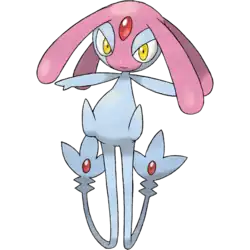
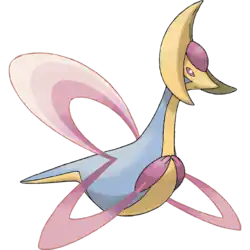
A roaming Pokémon[1] (Japanese: 移動してるポケモン migrating Pokémon) is a wild Legendary Pokémon that, instead of remaining in one place as a special event, runs around the region it appears in, seemingly at random. Roaming Pokémon appeared in every core series game from Generations II to VI except Pokémon Black 2 and White 2 and Pokémon Omega Ruby and Alpha Sapphire.
They have also been referred to as wandering Pokémon,[2] migrating Pokémon,[2] and runaways.[2] Their movement has been described in several ways: one or more of these Pokémon were said to "roam",[3][4] "migrate",[2] "wander",[5][6] "race around",[7] "move around",[8] "wander around",[9] "blow around",[7] or "fly around".[4]
Mechanics

|
This section is incomplete.
Please feel free to edit this section to add missing information and complete it.
Reason: When are IVs, natures, and personality determined? Double-check whether roaming Pokémon in Generation III will attempt to flee if they are able to after the first turn
|
In addition to changing routes (something that happens every time the player moves to a new area), roaming Pokémon will also attempt to flee from battle.
Generation II
When encountering a roaming Pokémon for the first time, their HP and DVs are initialized. Those stats remain static once generated. This means that Shiny Pokémon will remain Shiny, and any damage that has been inflicted to them will remain across battles. However, their PP and status conditions are reset each time they flee.
In addition to moving around each time the player changes map, all currently roaming Pokémon will also move after each battle with a 1/16 chance (always, if the player just encountered a roaming Pokémon, not merely the one they have just encountered).
There is a 1/8N chance that a roaming Pokémon will move to a completely random map other than the one the player is on, where N is the amount of possible connections to where the roaming Pokémon is at the moment. Otherwise, a roaming Pokémon will move to an adjacent route. A roaming Pokémon will never move past Olivine, meaning that if it is currently on Route 39, it will always move to Route 38.
Each time the player steps in tall grass that is currently in the same area as a roaming Pokémon, and the game attempts to generate a wild Pokémon, the player has a 25/256 (or roughly 10%) chance of randomly encountering it.
A roaming Pokémon will flee on any turn it is able to, immediately before it would use its move; if it is unable to flee, it will instead use its prepared move. Since the roaming Pokémon in Generation II all know moves with different priorities, depending on the move they are prepared to use, the player's Pokémon may sometimes act before it flees and sometimes not.
The player can stop a roaming Pokémon from fleeing by using trapping moves (such as Mean Look or Wrap). Sleep and freeze also prevent the Pokémon from fleeing.
If a roaming Pokémon is defeated, it will not reappear under any conditions.
Generation III
The chance of encountering a roaming Pokémon is now 25%, given that a wild encounter has successfully been generated in tall grass or water in the same area as a roaming Pokémon. Roaming Pokémon are affected by Repels but not Abilities that affect appearance of wild Pokémon.
From Generation III onward, if a roaming Pokémon is afflicted by a non-volatile status condition, it will retain those effects in subsequent encounters.
If a roaming Pokémon is not already trapped, each turn it will attempt to flee at an effective priority of 0 instead of using a move. If it becomes trapped in the battle during the turn, it will attempt to flee but fail. If it is already trapped at the start of a turn, it will use a move instead of attempting to flee.
A roaming Pokémon can become trapped if it is hit by a trapping move before it is able to act. Trapping Abilities (such as Shadow Tag) can only prevent the Pokémon from attempting to flee if in place at the start of the turn; if a Pokémon with a trapping Ability is switched in, its Ability will not prevent the roaming Pokémon from fleeing on that turn if it is able. Status conditions do not prevent a roaming Pokémon from fleeing.
Due to a glitch in FireRed, LeafGreen, and Emerald, if a roaming Pokemon ends the battle by using Roar or Whirlwind, the game considers it to have been defeated and it will permanently stop appearing. However, as Raikou, Entei, Suicune, Latias and Latios cannot learn Whirlwind while only Raikou and Entei have Roar in their moveset when found as roaming Pokémon, under normal gameplay this bug only affects players of FireRed and LeafGreen who chose Bulbasaur or Squirtle as their first partner Pokémon.
Generation IV
If a roaming Pokémon is not already trapped, each turn it will attempt to flee instead of using a move. In Pokémon HeartGold and SoulSilver, with the exception of Latios and Latias, if it is the first turn of the battle, it will attempt to flee at an effective priority of -7. If it becomes trapped (either by a trapping move or Ability) before it is able to act, it will attempt to flee but fail.
Starting in Platinum, if the player defeats a roaming Pokémon, it will reappear when the player next enters the Hall of Fame, but the player must retrigger its roaming. For example, if the player defeats Mesprit and then enters the Hall of Fame, Mesprit will only begin roaming again once the player visits Verity Cavern.
Roaming Pokémon are no longer considered to be defeated if the battle ends due to Roar or Whirlwind.
In Diamond, Pearl, or Platinum, IVs, nature, and personality are determined when interacting with the stationary Pokémon for the first time, causing them to roam.
In Pokémon HeartGold and SoulSilver, IVs, nature, and personality are determined after meeting them in the Burned Tower (Entei and Raikou), or after leaving the Pokémon Fan Club and talking to Steven (Latias and Latios). For any roamer defeated in battle, initiating the Champion battle in the Pokémon League will generate new values.
Generation V
If the player defeats a roaming Pokémon, it will reappear when the player next enters the Hall of Fame.
Generation VI
A roaming Pokémon will flee unconditionally after the player sends out their Pokémon. Not even trapping abilities (although only Shadow Tag works on the legendary birds) will prevent it from fleeing. It will become stationary in a specific area after the player encounters it 11 times.
If a roaming Pokémon is defeated, it will reappear in its stationary position the next time the player enters the Hall of Fame.
Unlike in previous games, roaming Pokémon no longer flee once encountered. They appear in the overworld and must be caught up to in order to be encountered.
Tracking
In Generations II, III, and VI, players can use their Pokédex to check the current location of a roaming Pokémon (after they have seen it). In Generation IV, the Pokétch's Marking MapDPPt application and the Pokégear's map cardHGSS serve this purpose. In Generation V, the player can track their locations using the notifications of stormy weather on electric bulletin boards in gates.
List of roaming Pokémon
Generation II
The Legendary beasts are found roaming Johto in Pokémon Gold, Silver, and Crystal; however, Suicune is not roaming in Crystal, where it instead can be found at the Tin Tower. They can be captured at any point after they are disturbed by the player in Ecruteak City's Burned Tower.
Gold, Silver, and Crystal
Generation III
Hoenn
The Eon Pokémon can be caught in Hoenn after entering the Hall of Fame. Only one will roam Hoenn; the other can be obtained on Southern Island with the Eon Ticket. In Emerald, the roaming Pokémon will depend on the color of Pokémon that the player tells their Mom was on the TV; red will result in Latias roaming, while blue will result in Latios roaming. In Pokémon Ruby and Sapphire, the roaming Pokémon will have low individual values due to the Roaming Pokémon IV bug.
Kanto
One of the three Legendary beasts will roam Kanto in Pokémon FireRed and LeafGreen, depending on the type weakness of the player's chosen first partner Pokémon (Raikou for Squirtle, Entei for Bulbasaur, Suicune for Charmander). It will commence roaming the Kanto mainland after the player defeats Team Rocket in the Rocket Warehouse on Five Island and delivers the Sapphire to Celio. It will have low IVs due to the Roaming Pokémon IV bug, and if it uses Roar to flee, it will disappear permanently due to the roaming Roar bug.
Generation IV
In all Generation IV games, entering a gate does not cause roaming Pokémon to change routes, even if the player's location changes as a result.
Sinnoh
Sinnoh has five roaming Pokémon, each of which is available in the wild after certain events have taken place. Mesprit will roam after the player goes to Lake Verity after defeating Team Galactic at Mt. Coronet, Cresselia will appear after the player helps cure Eldritch's son's nightmares, and the legendary birds will appear in Platinum only after the player first talks to Professor Oak in Eterna City.
Diamond, Pearl, and Platinum
Johto and Kanto
In Pokémon HeartGold and SoulSilver, Raikou and Entei will roam Johto after meeting them in the Burned Tower. After leaving the Vermilion City Pokémon Fan Club house with Copycat's doll, Latios (in SoulSilver) or Latias (in HeartGold) will start roaming Kanto.
Generation V
In Pokémon Black and White, after obtaining the Legend Badge, when entering the gate leading to Route 10, the woman behind the desk will alert the player about the big storm on Route 7. TornadusB or ThundurusW will make the weather more extreme in Route 7 when entering the route. Heading towards the second house on the route will cause an old lady to come out and pull the player in. She will then recite the story of either TornadusB or ThundurusW. Upon exiting the house, the player will be approached by the respective Pokémon, which will then fly off and will roam around Unova until being caught or defeated. Wherever these Pokémon appear will be subject to weather identified as "stormy" by the bulletin boards in gates. Only these two Pokémon can cause stormy weather (which manifests as rain in-battle), so they can be tracked down using the bulletin boards.
Unlike other generations, the roaming Pokémon's location varies depending on the time of day. At night, between midnight and morning, the Pokémon can only be encountered in Routes 12, 13, 14 and 15, in the morning it can only be encountered in Routes 2, 3 and 18, during the daytime it can only be encountered in Routes 4, 5 and 16, in the evening it can only be encountered in Routes 6, 7 and 8 and at night before midnight it can only be encountered in Routes 9, 10 and 11.
Bulletin boards can be considered somewhat inferior to the tracking methods of previous generations, as, unlike Generation IV, Tornadus or Thundurus's location changes when the player exits the gate. However, as they simply cycle between three or four routes, one may continuously re-enter and exit the same gate until the route displays stormy weather.
Generation VI
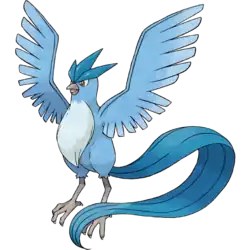
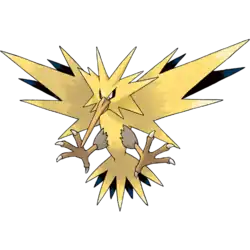
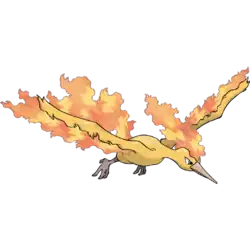
In Pokémon X and Y, one of the legendary birds roams the Kalos region, depending on the chosen first partner Pokémon: Articuno if the chosen first partner Pokémon was Chespin, Zapdos if it was Fennekin, and Moltres if it was Froakie. It will begin to roam after the player has entered the Hall of Fame, and it will always be the first wild Pokémon encountered in tall grass afterward in one of the possible locations it can appear in.
If the player uses Fly, the roaming Pokémon will relocate to a random location. Traveling normally, on the other hand, will only provide a small chance for the roaming Pokémon to change routes, and even then it will move to an adjacent route. Furthermore, entering any of the connecting gates between cities (or Victory Road) may cause the roaming Pokémon to relocate randomly. This appears to be on a timer, however, as immediately pursuing the roaming Pokémon does not seem to cause it to change location.
As the bird will automatically flee upon encounter, it cannot be caught until after it has been encountered an additional 10 times (not counting the first encounter), and has subsequently retreated to the Sea Spirit's Den in Azure Bay, where it remains as a stationary Pokémon. However, if the battle in the Sea Spirit's Den is fled from, the bird will begin roaming Kalos again as before.
All three are coded to never be Shiny.
Generation VIII
Galar
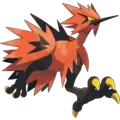
In Pokémon Sword and Shield's Crown Tundra, the Galarian Forms of the legendary birds appear. Once the player has encountered them at the Dyna Tree Hill, they will become roaming Pokémon in the overworld. Articuno roams around the Crown Tundra, Zapdos roams around the Wild Area, and Moltres roams around the Isle of Armor. If the player knocks any of the birds out, it respawns instantly.
All three are coded to never be Shiny.
Sinnoh
Sinnoh has two roaming Pokémon, each of which is available in the wild after certain events have taken place. Mesprit will roam after the player goes to Lake Verity after defeating Team Galactic at Mount Coronet and Cresselia will appear after the player helps cure Eldritch's son's nightmares.
Brilliant Diamond and Shining Pearl
In other languages
| Language
|
Title
|
| French
|
Pokémon mouvant
|
| German
|
Umherziehende Pokémon
|
| Italian
|
Pokémon che si spostano da un luogo all'altro
|
| Korean
|
이동하는 포켓몬 migrating Pokémon
|
| Spanish
|
Pokémon Errante
|
|
|
|
References
- ↑ "Oh! Just a little more until your Pokédex is complete! Make sure you go after the roaming Pokémon and trade with friends to get the ones you're missing!" - Cedric Juniper, Pokémon Black and White
- ↑ 2.0 2.1 2.2 2.3 Pokémon Diamond and Pearl Pokédex, page 412
- ↑ "Your meeting with Cresselia both gets you the item you sought and sends Cresselia flying off, and it begins freely roaming the land." - Celebrate Legendary Pokémon, like Mewtwo, Rayquaza, Eternatus, and More - Pokémon.com
- ↑ 4.0 4.1 "Once you visit the Burned Tower, Raikou and Entei start roaming the Johto region. [...] Latias or Latios [...] will start flying around the Kanto region, too." - Pokémon HeartGold and SoulSilver Pokédex, page 191
- ↑ "Raikou, Suicune, and Entei split as soon as you find them, and will spend them rest of the game wandering from Route to Route in Johto." - Official Pokémon Gold and Silver Adventure Guide, page 44
- ↑ "Raikou and Entei, however, are in the wind now, and will spend the rest of the game wandering from Route to Route in Johto." - Official Pokémon Crystal Version Perfect Guide, page 45
- ↑ 7.0 7.1 Suicune's Pokédex entries
- ↑ "Latias and Latios move around the map with great regularity, [...]" - Pokémon Emerald: Prima's Official Strategy Guide, page 99
- ↑ "They are Raikou, Entei, and Suicune, and they will wander around Johto randomly." - Pokémon Gold and Silver: Official Nintendo Player's Guide, page 39; Pokémon Crystal: Official Nintendo Player's Guide, page 43
Related articles

|
This game mechanic article is part of Project Games, a Bulbapedia project that aims to write comprehensive articles on the Pokémon games.
|