It is not known to evolve into or from any other Pokémon.
Biology
Orthworm's parapodia
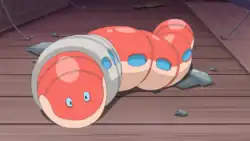
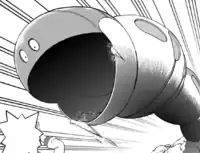
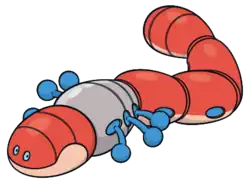
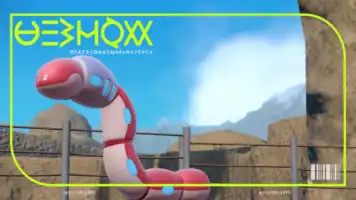
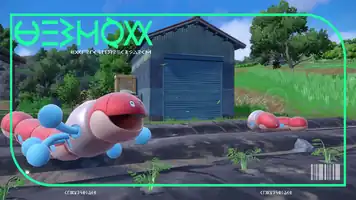
Orthworm is a long, worm-like Pokémon with a six-segmented metal body. Its body is red on top and light orange on the bottom, except for its second segment, which is steel-colored. The first segment is its head, which contains its small, pale blue eyes and a large, toothless mouth. There are pairs of cyan ovals lining either side of its body from its third to fifth segments, while its second segment has three of such pairs. Parapodia-like tendrils can extend from the ovals on its second segment, which resemble simple fists.
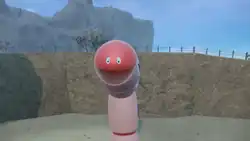
When threatened, Orthworm uses its blue fist-like parapodia to pelt its opponent with a storm of punches. It lives in dry deserts, and eats iron from the soil to maintain its body. It is sometimes seen buried in the ground, with only its head visible.
The player and Arven eventually found it in East Province (Area Three) to find the Herba Mystica it guards and defeated it, forcing it to flee. After both took the Herba Mystica, Orthworm became a normal-sized Pokémon once again. After this, it can be rematched in its original location, and will have the Titan Mark when captured.
Pokédex entries
This Pokémon was unavailable prior to Generation IX.
Despite its Pokédex entry in Pokémon Scarlet stating that Orthworm can "wield the tendrils on its body like fists and pelt the opponent with a storm of punches," it cannot learn any punching moves.
Origin
Orthworm appears to be based on an earthworm, and also shares similarities to a subway train. Its tendrils may be derived from the pronounced parapodia of polychaetes, relatives of earthworms. It may also be inspired by the Iberian worm lizard, a reptile that superficially resembles an earthworm that lives deep underground and is native to Spain and Portugal (where Paldea is based on).
This Pokémon article is part of Project Pokédex, a Bulbapedia project that aims to write comprehensive articles on each Pokémon species, as well as Pokémon groups and forms.


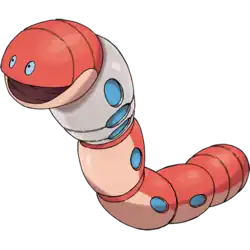




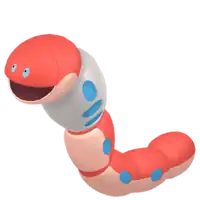
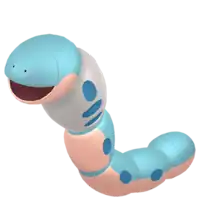
 For other sprites and images, please see Orthworm images on the Bulbagarden Archives.