Pokémon Gold and Silver Spaceworld '97 demo
|
It has been suggested that this article be moved to Pokémon Gold and Silver Space World '97 demo or Pokémon Gold and Silver SpaceWorld '97 demo. Please discuss whether or not to move it on its talk page. |
| Pokémon Gold demo | |
|---|---|
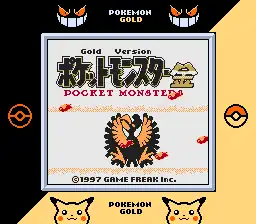 Title screen of the Pokémon Gold demo | |
| Pokémon Silver demo | |
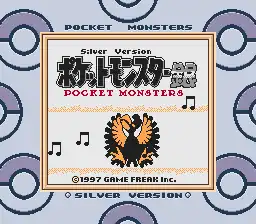
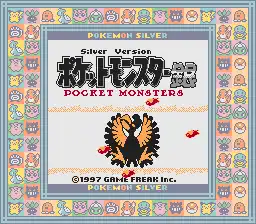 Title screen of the Pokémon Silver demo | |
Basic info
| |
| Platform: | Game Boy (enhanced for the Super Game Boy) |
| Category: | RPG demo |
| Players: | 1 player |
| Connectivity: | None |
| Developer: | Game Freak |
| Publisher: | Nintendo/The Pokémon Company |
| Part of: | Generation II |
Ratings
| |
| CERO: | N/A |
| ESRB: | N/A |
| ACB: | N/A |
| OFLC: | N/A |
| PEGI: | N/A |
| GRAC: | N/A |
| GSRR: | N/A |
Release dates
| |
| Japan: | November 21, 1997 |
| North America: | N/A |
| Australia: | N/A |
| Europe: | N/A |
| South Korea: | N/A |
| Hong Kong: | N/A |
| Taiwan: | N/A |
Websites
| |
| Japanese: | Space World |
| English: | N/A |
The Pokémon Gold and Silver Spaceworld '97 demo is an early build of the games Pokémon Gold and Silver that was shown at Nintendo Space World '97 from November 21 to 23, 1997. At the time, the final game was estimated to be about 80% complete and was set to be released for the original Game Boy—the Game Boy Color would not be announced until late March of the following year.[1][2] However, due to a variety of delays, including a complete overhaul to the game, it would not be released until late 1999.
During the two years after it was first shown at Nintendo Space World '97 until its final release on November 21, 1999, the game changed extensively from this early demo. As with the final games, the demo used the Japanese Pokémon Blue as its basis for development.
Up until 2018, little information was known about this demo, due to the majority of the game being locked off from players. Only a few photographs were taken and most of the information known at the time came from the testimony of attendees. On May 26, 2018, however, ROM files of both the Gold and Silver demos were anonymously posted online, including versions with debug menus, allowing players to explore data that was blocked off at Space World.
Beyond what was intended to be played appears unfinished: many Pokémon have unfinished and placeholder base stats, especially in Special Defense; scripts for events and NPC dialogue are completely absent, collision data is unfinished, and some areas, usually dungeons, are completely missing. Nevertheless, a large amount of information can be gathered from what is present, including many redesigned or scrapped Pokémon designs, minigame Easter eggs, and a completely different region. Additionally, the NPCs that remain give some implications for the original story; for example, an Imposter Professor Oak-like NPC can be seen in "High-Tech".
Gameplay
The demo begins with a monologue from Professor Oak, similar to the final game. However, there is no option to give the player a gender or a name, who is instead automatically a boy named Satoshi (サトシ)G or Shigeru (シゲル)S. Afterwards, the player begins in his room in a town called Silent Hill (サイレントヒル); this town is also named Silent Hills (サイレントヒルズ) in the Official Fan Book of Pocket Monsters (Japanese: ポケットモンスター公式ファンブック), published earlier in 1997. The player will already have 3000$ and eight Badges, although the Gym Leaders are blacked out. One of three first partner Pokémon, randomly chosen, is already placed in the player's party.
|
|
| ||||||||||||||||||||||||||||||||||||||||||||||||||||||||||||||||||||||||||||||
The player's Bag initially has the following items:
- 5 Poké Balls
- 10 Potions
- 10 Full Heals
- 1 (Japanese: きあいだま Fighting Spirit Orb), an early iteration of the Focus Band, which occupies the same slot as in the final game.
- 1 (Japanese: しげきだま Stimulus Orb). It is an item that prevents the holding Pokémon from falling asleep, but it is not consumed upon use. It was dummied out in the final game as Teru-sama.
Silent Hill has exits to the west, north, and east; however, the northern and eastern exits are blocked to prevent the player from accessing unfinished areas. A Pokémon Center which the player can enter is present in the town, but all of its functions are unavailable. Silent Hill also has a laboratory, but it cannot be entered.
The player will then move west to Route 1, a typical route with a dungeon called Silent Hill (しずかなおか) in the middle. (Although the English translations for both サイレントヒルズ and しずかなおか are the same, they are written differently in Japanese: the town is a transliteration of the English term "Silent Hill" in katakana, and the dungeon area in Route 1 is the Japanese native translation for "Silent Hill," written in hiragana.) Silent Hill has the first Trainers to encounter in the game. They can only be challenged by directly talking to them, and won't have any dialogue when they lose. While prize money is given out, and one Beauty has a Meowth that knows Pay Day, there is no way to spend money in the demo. After going through Silent Hill, the player reemerges on the other side of Route 1, where they will encounter another trainer. At the end of Route 1, the rival, automatically named Shigeru (シゲル), stops the player, and the demo ends. The demo will also end if the player blacks out.
Differences from the final game
The demo and the final versions of the Generation II games had numerous differences.
-
 Morning
 -
 Day
Day -
 Night
Night
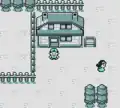
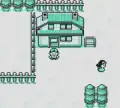
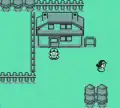
The demo was meant to be played on Game Boy hardware and was not designed to take advantage of the colors available on a Game Boy Color; as such, the colors available through the Super Game Boy were less detailed. The day and night system is present, but due to running on a Game Boy color scheme, the change in colors for the time of the day are just shades of blue. Playing the final games on a Super Game Boy yields a similar effect.
The intro lacks music, and instead of showing the Generation II first partner Pokémon at the end of the intro, Venusaur and Blastoise are shown instead; Charizard, which was present in the final game's intro, has a slightly less detailed design.
Generation I Pokédex entries were carried over as placeholders for Pokémon until new Pokédex entries were able to be written for them. All Pokédex entries for Generation II Pokémon use the same placeholder text:「はっけんされた ばかりの ポケモン げんざい ちょうさちゅう。」 In an odd occurrence, it was also possible to battle wild Pokémon twice in a row without moving from a grass panel; why this was an implemented feature at the time is unknown.
Kanto Route 1 music plays for all Routes. The music of Viridian City, Saffron City, and Pewter City plays for all cities and towns present. Trainer and wild Pokémon battles both use Pokémon Red and Green Gym Leader music. More tracks from Pokémon Red and Green are present for events that are not normally possible in this build.
Type chart
Several type match ups differed from the final version of the game. Notably, Normal and Dark would be super effective against Dark types, while Normal types would only take resisted damage from Dark-type moves, Water and Electric would have been super effective against Metal, and Poison would be resisted by the Metal type instead of Poison type moves doing no damage. Additionally, Bug and Poison remained super effective against each other, something that existed in Generation I, but was changed to Poison dealing neutral damage to Bug and Bug being resisted by Poison in the final version. Ghost and Dark would both deal neutral damage against Metal (like Generation VI onwards) instead of Metal resisting both types.
In the below type chart, bold text and a different shade of the color means that the type matchup is different than in the final version.
| × | Defending type | |||||||||||||||||
|---|---|---|---|---|---|---|---|---|---|---|---|---|---|---|---|---|---|---|

|

|

|

|

|

|

|

|

|

|

|

|

|

|

|

|

| ||
Attacking type
|
|
1× | 1× | 1× | 1× | 1× | ½× | 1× | 0× | 1× | 1× | 1× | 1× | 1× | 1× | 1× | 1× | 2× |
|
|
2× | 1× | ½× | ½× | 1× | 2× | ½× | 0× | ½× | 1× | 1× | 1× | 1× | ½× | 2× | 1× | 1× | |
|
|
1× | 2× | 1× | 1× | 1× | ½× | 2× | 1× | 1× | 1× | 1× | 2× | ½× | 1× | 1× | 1× | 1× | |
|
|
1× | 1× | 1× | ½× | ½× | ½× | 2× | ½× | ½× | 1× | 1× | 2× | 1× | 1× | 1× | 1× | 1× | |
|
|
1× | 1× | 0× | 2× | 1× | 2× | ½× | 1× | 1× | 2× | 1× | ½× | 2× | 1× | 1× | 1× | 1× | |
|
|
1× | ½× | 2× | 1× | ½× | 1× | 2× | 1× | ½× | 2× | 1× | 1× | 1× | 1× | 2× | 1× | 1× | |
|
|
1× | ½× | ½× | 2× | 1× | 1× | 1× | ½× | 1× | ½× | 1× | 2× | 1× | 2× | 1× | 1× | 2× | |
|
|
0× | 1× | 1× | 1× | 1× | 1× | 1× | 1× | 1× | 1× | 1× | 1× | 1× | 2× | 1× | 1× | ½× | |
|
|
1× | 1× | 1× | 1× | 1× | 2× | 1× | 1× | 0× | 1× | ½× | 1× | ½× | 1× | 1× | 1× | 1× | |
|
|
1× | 1× | 1× | 1× | 1× | ½× | 2× | 1× | 1× | ½× | ½× | 2× | 1× | 1× | 2× | ½× | 1× | |
|
|
1× | 1× | 1× | 1× | 2× | 2× | 1× | 1× | 2× | 2× | ½× | ½× | ½× | 1× | 1× | ½× | 1× | |
|
|
1× | 1× | ½× | ½× | 2× | 2× | ½× | 1× | 1× | ½× | 2× | ½× | 1× | 1× | 1× | ½× | 1× | |
|
|
1× | 1× | 2× | 1× | 0× | 1× | 1× | 1× | 2× | 1× | 2× | ½× | ½× | 1× | 1× | ½× | 1× | |
|
|
1× | 2× | 1× | 2× | 1× | 1× | 1× | 1× | 1× | 1× | 1× | 1× | 1× | ½× | 1× | 1× | ½× | |
|
|
1× | 1× | 2× | 1× | 2× | 1× | 1× | 1× | 1× | ½× | ½× | 2× | 1× | 1× | ½× | 2× | 1× | |
|
|
1× | 1× | 1× | 1× | 1× | 1× | 1× | 1× | 1× | 1× | 1× | 1× | 1× | 1× | 1× | 2× | 1× | |
|
|
½× | 1× | 1× | 1× | 1× | 1× | 1× | 2× | 1× | 1× | 1× | 1× | 1× | 2× | 1× | 1× | 2× | |
| These matchups are suitable for the Gold and Silver Spaceworld '97 demo. | ||||||||||||||||||
Demo restrictions
As this game was meant to be publicly played at Space World '97, there were several restrictions put in place to make sure the game could not lock up or be set up to not work for other players. The only options available at the start screen are "ポケモンを あそぶ" (Play Pokémon) and "せっていを かえる" (Change Settings). There is no Continue option as the player is not able to save in the demo build. The player is given a random level 8 first partner Pokémon.
The player could only heal using Potions as Pokémon Centers are not accessible in the demo. PCs are also not able to be used. Trying to visit a Pokémon Center or use a PC gives the text of "under repair" or "being adjusted." While prize money is given out, and one Beauty has a Meowth that knows Pay Day, there is no way to spend money in the demo. This was likely to prevent a single attendee from hogging the demo by repeatedly healing to avoid blacking out.
The player and rival's names are random pre-selected names. First partner Pokémon and wild Pokémon that appear in the demo are not able to evolve. The player can only challenge NPCs by talking to them directly. When an NPC loses, they do not have any losing dialog, presumably to make the demo faster to play. The player can only visit Silent Hill and early routes up to the forest area. When all the player's Pokémon faint, the game returns to the title screen to ensure the next person could have a turn.
Pokémon
- Main article: Pokémon Gold and Silver Spaceworld '97 demo/Pokémon
Although only a few new Pokémon can be seen in the demo through normal gameplay, 100 new Pokémon had been designed at the time. Some of these Pokémon were kept into the final release largely unchanged; some had major modifications; others went completely unused. 16 of the unused Pokémon were related to the original 151 Generation I Pokémon, and two of the unused Pokémon were related to Generation II Pokémon which made it into the final release.
Many of the 151 Generation I Pokémon still used their sprites from Pokémon Blue as placeholder sprites during this time. Several Pokémon would have also gained either an Evolution or a pre-Evolution. Certain scrapped Pokémon correspond to, and may have inspired, later-generation Pokémon such as Leafeon or Lickilicky.
Many new Pokémon that were unused in the demo had placeholder base stats, which were all 50.
List of new Pokémon
| Ndex | Sprite | Pokémon | Type | |
|---|---|---|---|---|
| #152 | 
|
Happa | Grass | |
| #153 | 
|
Hanamogura | Grass | |
| #154 | 
|
Hanaryū | Grass | |
| #155 | 
|
Honōguma | Fire | |
| #156 | 
|
Borubeā | Fire | |
| #157 | 
|
Dainabea | Fire | |
| #158 | 
|
Kurusu | Water | |
| #159 | 
|
Akua | Water | |
| #160 | 
|
Akueria | Water | |
| #161 | 
|
Hōhō | Flying | |
| #162 | 
|
Bōbō | Flying | |
| #163 | 
|
Pachimē | Electric | |
| #164 | 
|
Mokoko | Electric | |
| #165 | 
|
Denryū | Electric | |
| #166 | 
|
Mikon | Water | |
| #167 | 
|
Monja | Grass | |
| #168 | 
|
Jaranra | Grass | |
| #169 | 
|
Hanēi | Water | Flying |
| #170 | 
|
Pukū | Water | |
| #171 | 
|
Shibirefugu | Water | |
| #172 | 
|
Pichū | Electric | |
| #173 | 
|
Py | Normal | |
| #174 | 
|
Pupurin | Normal | |
| #175 | 
|
Mizūo | Water | |
| #176 | 
|
Neiti | Flying | Psychic |
| #177 | 
|
Neitio | Flying | Psychic |
| #178 | 
|
Gyopin | Water | |
| #179 | 
|
Mariru | Water | |
| #180 | 
|
Manbō1 | Water | |
| #181 | 
|
Ikari | Water | Metal |
| #182 | 
|
Gurotesu | Water | Metal |
| #183 | 
|
Ekushingu | Poison | Flying |
| #184 | 
|
Para | Bug | |
| #185 | 
|
Kokumo | Bug | Poison |
| #186 | 
|
Tsūheddo | Bug | Poison |
| #187 | 
|
Yoroidori | Flying | Metal |
| #188 | 
|
Animon | Normal | |
| #189 | 
|
Hināzu | Normal | Flying |
| #190 | 
|
Sanī | Grass | Psychic |
| #191 | 
|
Paon | Ground | |
| #192 | 
|
Donfan | Ground | |
| #193 | 
|
Tsuinzu | Dark | Normal |
| #194 | 
|
Kirinriki | Dark | Normal |
| #195 | 
|
Peintā | Normal | |
| #196 | 
|
Kōnya | Normal | |
| #197 | 
|
Rinrin | Dark | |
| #198 | 
|
Berurun | Dark | |
| #199 | 
|
Nyorotono | Water | |
| #200 | 
|
Yadokingu | Water | Psychic |
| #201 | 
|
Annōn | Normal | |
| #202 | 
|
Rediba | Bug | Flying |
| #203 | 
|
Mitsuboshi | Bug | Flying |
| #204 | 
|
Puchikōn | Normal | |
| #205 | 
|
Ēfi | Psychic | |
| #206 | 
|
Burakkī | Poison | |
| #207 | 
|
Tāban | Water | |
| #208 | 
|
Betobebī | Poison | |
| #209 | 
|
Teppouo | Water | |
| #210 | 
|
Okutan | Water | |
| #211 | 
|
Gongu | Fighting | |
| #212 | 
|
Kapoerā | Fighting | |
| #213 | 
|
Pudi | Fire | |
| #214 | 
|
Haneko | Grass | Flying |
| #215 | 
|
Poponeko | Grass | Flying |
| #216 | 
|
Wataneko | Grass | Flying |
| #217 | 
|
Baririna | Normal | |
| #218 | 
|
Rippu | Ice | |
| #219 | 
|
Erebebī | Electric | |
| #220 | 
|
Bubyi | Fire | |
| #221 | 
|
Kireihana | Grass | Poison |
| #222 | 
|
Tsubomitto | Grass | Poison |
| #223 | 
|
Mirutanku | Normal | |
| #224 | 
|
Bomushikā | Water | Fire |
| #225 | 
|
Gifuto | Water | Ice |
| #226 | 
|
Kotora | Electric | |
| #227 | 
|
Raitora | Electric | |
| #228 | 
|
Madāmu | Normal | Flying |
| #229 | 
|
Norowara | Ghost | |
| #230 | 
|
Kyonpan | Ghost | |
| #231 | 
|
Yamikarasu | Dark | Flying |
| #232 | 
|
Happī | Normal | |
| #233 | 
|
Shizāsu | Bug | Flying |
| #234 | 
|
Purakkusu | Bug | |
| #235 | 
|
Debiru | Fire | |
| #236 | 
|
Herugā | Fire | |
| #237 | 
|
Urufuman | Ice | |
| #238 | 
|
Wāurufu | Ice | |
| #239 | 
|
Porigon2 | Normal | |
| #240 | 
|
Namēru | Normal | |
| #241 | 
|
Haganēru | Metal | Ground |
| #242 | 
|
Kingudora | Dragon | Water |
| #243 | 
|
Rai | Electric | |
| #244 | 
|
En | Fire | |
| #245 | 
|
Sui | Water | |
| #246 | 
|
Nyūra | Dark | |
| #247 | 
|
Houou | Flying | |
| #248 | 
|
Togepī | Normal | |
| #249 | 
|
Bulu | Psychic | |
| #250 | 
|
Teiru | Normal | |
| #251 | 
|
Rīfi | Grass | |
Special entry animations
Pikachu and Sanī used the special "stars" animation, which would be later used for Shiny Pokémon. However, this demo lacked a special animation linked to Shininess.[3]
Hōhō used a special "fade-in" animation, which remains in the final games, but is unused.
There was also a special "wave" animation, which was unused even in the demo.
Shiny Pokémon
Shiny Pokémon had much different mechanics than in the final games. Instead of exact DV requirements (Defense, Speed and Special DVs at 10, and Attack DV of 2, 3, 6, 7, 10, 11, 14 or 15), all Shiny Pokémon had DVs of 10 or higher for all stats other than HP, which translates to Shininess odds of 81/4096, or ~1.977%. Shiny Pokémon had no special star animation when sent out, although that animation is implemented in-game. For some reason, it only applies to non-Shiny Pikachu and Sanī.
Due to technical limitations caused by the Super Game Boy's hardware, each color palette also had an assigned Shiny palette. Thus, all Pokémon with a given color palette also had the same Shiny palette.
| Color | Standard palette | Shiny palette | ||||||
|---|---|---|---|---|---|---|---|---|
| Green | #E7E7E7 | #A7D787 | #4FA75F | #272727 | #E7E7E7 | #BFAF87 | #676757 | #272727 |
| Orange | #E7E7E7 | #FFA757 | #D75737 | #272727 | #E7E7E7 | #B77F87 | #8F172F | #272727 |
| Cyan | #E7E7E7 | #AFCFEF | #779FCF | #272727 | #E7E7E7 | #7FA7A7 | #2F8787 | #272727 |
| Brown | #E7E7E7 | #E7A77F | #AF774F | #272727 | #E7E7E7 | #A78F97 | #976F5F | #272727 |
| Yellow | #E7E7E7 | #FFE777 | #D7A707 | #272727 | #E7E7E7 | #D7BF87 | #EF774F | #272727 |
| Blue | #E7E7E7 | #97A7DF | #5F7FBF | #272727 | #E7E7E7 | #8797AF | #576797 | #272727 |
| Purple | #E7E7E7 | #DFB7C7 | #AF7FBF | #272727 | #E7E7E7 | #BF7F9F | #772767 | #272727 |
| Human | #E7E7E7 | #F7B78F | #87779F | #272727 | #E7E7E7 | #BF9F6F | #77678F | #272727 |
| Faded | #E7E7E7 | #D7AFB7 | #7F7F97 | #272727 | #E7E7E7 | #979797 | #575757 | #272727 |
| Pink | #E7E7E7 | #F7B7C7 | #E77FAF | #272727 | #E7E7E7 | #AFCFEF | #F7B7C7 | #272727 |
Trainer Classes
|
This article is missing one or more images. Please feel free to add any missing images to this article. Needed images can be uploaded to the Bulbagarden Archives. Reason: Overworld sprites for all Trainer classes |
In the demo, the majority of trainer classes present would go on to be unused or have drastic character redesigns when compared to the final game. In this build, the Gym Leader "classes" work just like in Generation I, with each entry only being the character's name. In the final release they're all just known as Gym Leader, with their name added after it.
| Trainer Classes | ||||||||||||||||||||||||||||||||||||||||||||||||||||||||||||||||||||||||||||||||||||||||||||||||||||||||||||||||||||||||||||||||||||||||||||||||||||||||||||||||||||||||||||||||||||||||||||||||||||||||||||||||||||||||||||||||||||||||||||||||||||||||||||||||||||||||||||||||||||||||||||||||||||||||||||||||||||||||||||||||||||||||||||||||||||||||||||||||||||||||||||||||||||||||||||||||||||||||||||||||||||||||||||||||||||||||||||||||||||||||||||||||||||||||||||||||||||||||||||||||||||||||||||||||||||||||||||||||||||||||||||||||||||||||
|---|---|---|---|---|---|---|---|---|---|---|---|---|---|---|---|---|---|---|---|---|---|---|---|---|---|---|---|---|---|---|---|---|---|---|---|---|---|---|---|---|---|---|---|---|---|---|---|---|---|---|---|---|---|---|---|---|---|---|---|---|---|---|---|---|---|---|---|---|---|---|---|---|---|---|---|---|---|---|---|---|---|---|---|---|---|---|---|---|---|---|---|---|---|---|---|---|---|---|---|---|---|---|---|---|---|---|---|---|---|---|---|---|---|---|---|---|---|---|---|---|---|---|---|---|---|---|---|---|---|---|---|---|---|---|---|---|---|---|---|---|---|---|---|---|---|---|---|---|---|---|---|---|---|---|---|---|---|---|---|---|---|---|---|---|---|---|---|---|---|---|---|---|---|---|---|---|---|---|---|---|---|---|---|---|---|---|---|---|---|---|---|---|---|---|---|---|---|---|---|---|---|---|---|---|---|---|---|---|---|---|---|---|---|---|---|---|---|---|---|---|---|---|---|---|---|---|---|---|---|---|---|---|---|---|---|---|---|---|---|---|---|---|---|---|---|---|---|---|---|---|---|---|---|---|---|---|---|---|---|---|---|---|---|---|---|---|---|---|---|---|---|---|---|---|---|---|---|---|---|---|---|---|---|---|---|---|---|---|---|---|---|---|---|---|---|---|---|---|---|---|---|---|---|---|---|---|---|---|---|---|---|---|---|---|---|---|---|---|---|---|---|---|---|---|---|---|---|---|---|---|---|---|---|---|---|---|---|---|---|---|---|---|---|---|---|---|---|---|---|---|---|---|---|---|---|---|---|---|---|---|---|---|---|---|---|---|---|---|---|---|---|---|---|---|---|---|---|---|---|---|---|---|---|---|---|---|---|---|---|---|---|---|---|---|---|---|---|---|---|---|---|---|---|---|---|---|---|---|---|---|---|---|---|---|---|---|---|---|---|---|---|---|---|---|---|---|---|---|---|---|---|---|---|---|---|---|---|---|---|---|---|---|---|---|---|---|---|---|---|---|---|---|---|---|---|---|---|---|---|---|---|---|---|---|---|---|---|---|---|---|---|---|---|---|---|---|---|---|---|---|---|---|---|---|---|---|---|---|---|---|---|---|---|---|---|---|---|---|---|---|---|---|---|---|---|---|---|---|---|---|---|---|---|---|---|---|---|---|---|---|---|---|---|---|---|---|---|---|---|---|---|---|---|---|---|---|
|


Maps
- Main article: Pokémon Gold and Silver Spaceworld '97 demo/Locations
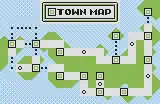
Although only Silent Hill and the route and forest leading from it to Old City are accessible in the demo, an almost fully mapped, albeit unpolished region is visible. However, the inaccessible locations use an outdated form of collision that makes areas inaccessible without debug mode; most notably, grass tiles are often treated as walls. Warps data is functional and all accessible houses feature NPCs, though dungeon maps are completely unused and the Pokémon League equivalent is nonexistent. No Trainer battles exist beyond the demo area, but a scant few areas have wild Pokémon, featuring some prototype Pokémon, averaging around level 30.
The final map of Johto bears little resemblance to the region present in the demo, which was based on the entirety of Japan, with Kanto included as a large city within it. Apart from Kanto and a prototype of the Ruins of Alph, none of the areas from the final game appear in the demo; however, some maps bear similarities.
Mini-games
This build of the game contained far more mini-games, with a total of 5.
Title screen
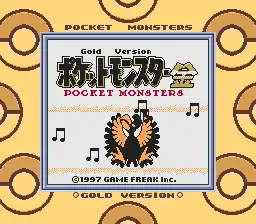
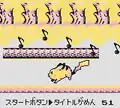
A hidden mini-game involving Pikachu can be played if the game is left idle at the title screen for an extended period of time. The player tries to avoid obstacles and collect musical notes while catching up to Jigglypuff. The game ends once Pikachu catches up to Jigglypuff and returns to the title screen. After playing, the title screen will have musical notes flying across the screen, rather than fire.
-
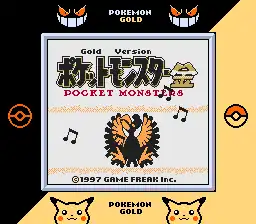 Alternate title screen for Gold
 -
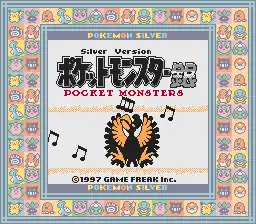 Alternate title screen for Silver
Picross
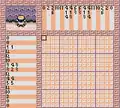
A Picross mini-game featuring four unique Pokémon nonogram puzzles was present, featuring Diglett, Snorlax, Gengar, and an Unown.
Some Pokémon nonogram puzzles would later appear in Picross NP Vol. 1. Pokémon Picross would also be announced for the Game Boy Color; however, it was ultimately cancelled. A dedicated Pokémon Picross game would not be released until Pokémon Picross for the Nintendo 3DS released in December 2015.
Poker
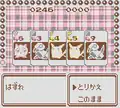
The poker mini-game was based on the real-life game of poker but with various Pokémon on the cards instead of clubs, diamonds, hearts, and spades. It would be replaced with card flip in the final version of the game.
Memory game
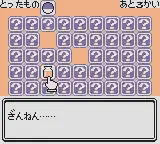
A memory game is a game where the player attempts to match five pairs of cards in five turns. However, no coins are actually rewarded for any matches. This game remains unused in the final game.
Slide puzzle
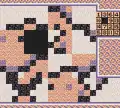
The last mini-game is a 15-tile slide puzzle game where the player has to try rearranging the tiles to reveal who the Pokémon is.
Gallery
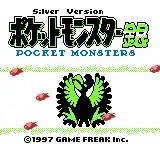
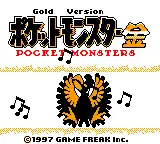
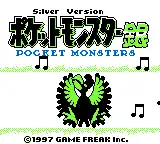
The Game Boy mode variant of the Pokémon Silver demo loads a very similar albeit distinct boot ROM palette to the one used by Pokémon Green.
Game Boy Color
Game Boy mode, main |
Game Boy mode, main |
Game Boy mode, alternate |
Game Boy mode, alternate |

|
|
|
|
Super Game Boy
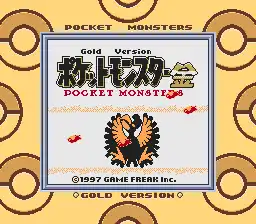
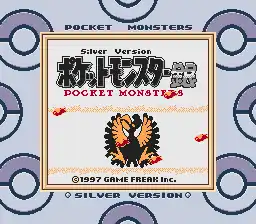
The Super Game Boy borders can be switched by pressing SELECT in the Options screen.
final border, main |
final border, main |
final border, alternate |
final border, alternate |
|
|
|
|
demo-only border, main |
demo-only border, main |
demo-only border, alternate |
demo-only border, alternate |
|
|
|
|
|
In-game screenshots
-
 Title screen mini-game
 -
 Picross
 -
 Poker
Poker -
 Memory game
 -
 Slide puzzle
Items
- Main article: Pokémon Gold and Silver Spaceworld '97 demo/Items
With the introduction of held items, many new items and Key Items were added that would be cut, have slight changes in how they worked, or be scrapped altogether.
References
- ↑ Pokemon Gold and Pokemon Silver Nintendo Space World 97 version - geocities.jp (archived; retrieved June 21, 2021)
- ↑ SPACEWORLD'97 Exhibit GAME BOY software vol.3 - nintendo.co.jp (archived; retrieved June 21, 2021)
- ↑ Pokémon Gold and Silver/Spaceworld 1997 Demo/Pokémon → Shinies | The Cutting Room Floor
- ↑ https://web.archive.org/web/20230201102400/https://twitter.com/SUPER_32X/status/566790273804419073
- ↑ https://twitter.com/xdanieldzd/status/1253849097062285313
Core series • Side series • Spin-off series • Standalone spin-offs • Pokémon mini • Betas • Demos
Core series • Side series • Spin-off series • Standalone spin-offs • Pokémon mini • Betas • Demos

|
This game-related article is part of Project Games, a Bulbapedia project that aims to write comprehensive articles on the Pokémon games. |