Shepard class

|
Warning! |
| This page contains information regarding Star Trek: Strange New Worlds, and thus may contain spoilers. |
The Shepard-class was a type of Federation starship in service during the 2250s and 2260s.
History
The Shepard-class was in service by 2256, where it was involved in the Federation-Klingon War (2256-57).
Two ships of the class, the USS Kerala, and USS Ride were involved in the opening conflict of the Federation-Klingon War at the Battle of the Binary Stars in 2256 after responding to the distress call of the USS Shenzhou.
Ships of the class suffered from numerous losses during the war, including the USS Gagarin later in 2256, and another during the Klingon attack on Starbase 1 in 2257. (DIS: "Battle at the Binary Stars", "Si Vis Pacem, Para Bellum", "The War Without, The War Within")
The Sheppard-class continued to be utilized into the post war period, and 2260's, where they saw a refit of the warp propulsion systems with the rest of the fleet, as early as 2259. This included new contemporary cylindrical nacelles.
Also by 2261, USS Gagarin had been recovered and returned to active service. Several other ships of the class were stationed at Starbase 1 for the Federation Centennial celebration that year. (SNW: "Strange New Worlds", "Wedding Bell Blues")
Legacy
By the early 25th century, Starfleet had developed the Gagarin-class, which shared the class's design lineage, and honoring the legacy of the Sheppard-class and the crew of the USS Gagarin. (PIC: "The Star Gazer")
Ships in class
- Named
- Uncertain
- Unnamed
Appendices
Appearances
Background information
|
|
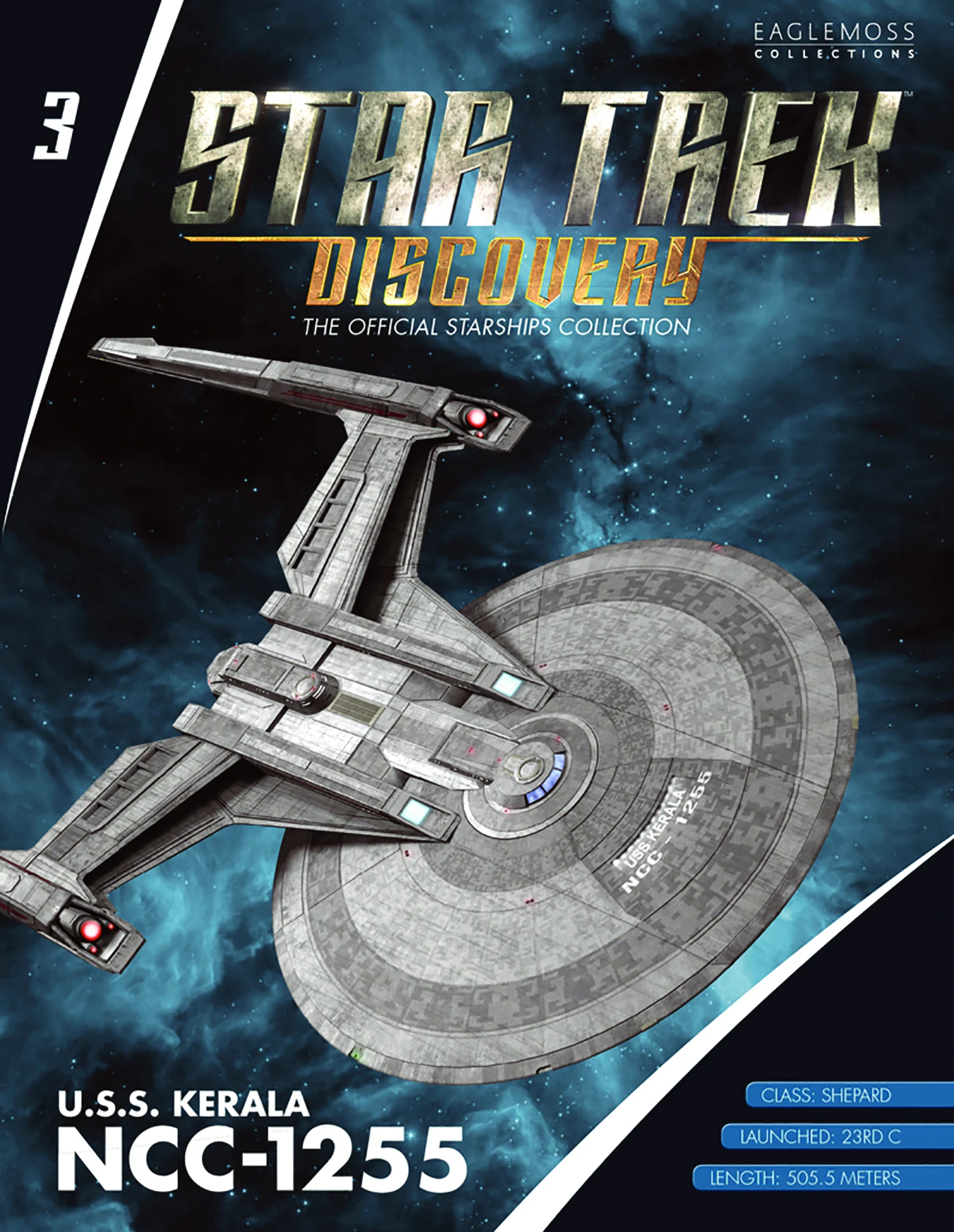
The Shepard-class was identified via the Kerala by designer John Eaves. [1] Eaves also named the class, which was later confirmed [2] after being revealed on StarTrek.com. [3](X) According to Eaves, the Shepard-class was named after American astronaut, Alan Shepard. (Star Trek: The Art of John Eaves, p. 196)
Eaves' design was converted into a production CGI model at Pixomondo by Victoria Passariello for use in Star Trek: Discovery, [4] and was shortly thereafter endowed with its own entry as the third issue in Eaglemoss Collections' display model/magazine partwork, Star Trek: Discovery The Official Starships Collection.
The designs for the Kerala were said to have "continued to experiment with the streamlined hull and elongated nacelles." Eaves specifications for the design measured 1658'-7" in length, 203'-9" in height, and the diameter of the saucer was 737'-11". (Star Trek: The Art of John Eaves, p. 197)
The USS Curie was a Shepard-class starship that was to have originally appeared in "Context Is for Kings" before being rewritten as the Crossfield-class USS Glenn. (Star Trek: The Art of John Eaves, p. 196)
Apocrypha
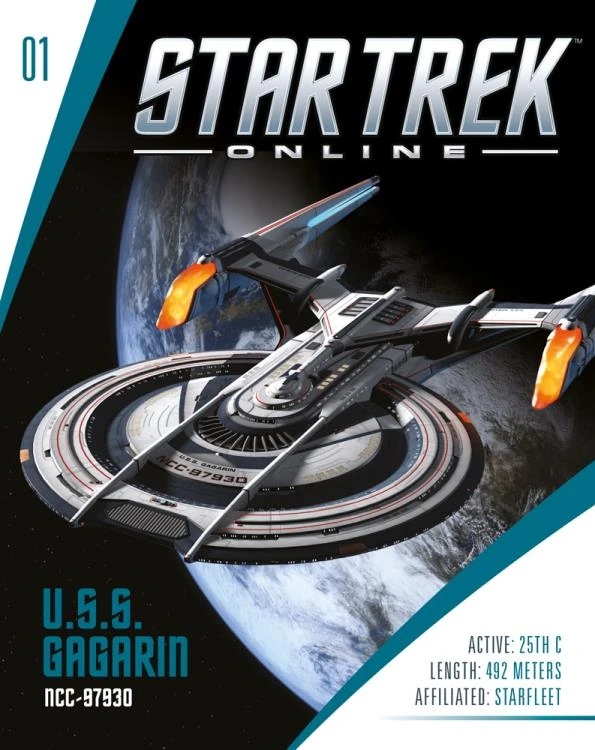
The Shepard-class appears in the 25th century set game Star Trek Online, as a cosmetic "skin" for the playable Gagarin-class (β) starship and has as such likewise been released by Eaglemoss as the opening issue of their non-canon Star Trek Online Starships Collection sister partwork publication in June 2020. That version had been redesigned by Hector Ortiz and built as a digital model by Donny Versiga. It has the singular distinction of becoming canon as well as the similarly named class when it was featured as one of the first four specific Online game designs to become so (the three others concerned the Sutherland-class, Ross-class, and Reliant-class), in the Star Trek: Picard Season 2 episodes "The Star Gazer" and "Farewell". [5]
According to Star Trek Adventures - Discovery (2256-2258) Campaign Guide, the class ship USS Shepard (NCC-1250) was launched on 5 May 2196.
In both instances it was Fabio Passaro's Meshweaver Productions that provided the CGI model conversions from the original production software packages (Autodesk Maya in Discovery's case), into LightWave 3D, Eaglemoss' software package of choice, to make the models suitable for both print publications, as well as for turning them into the CAD files needed as templates for the display model manufacturing. [6] [7] [8]
Further reading
- Star Trek: Discovery The Official Starships Collection, issue 3, June 2018
- Star Trek Online Starships Collection, issue 1, June 2020
External links
- Shepard class at Memory Beta, the wiki for licensed Star Trek works
- Gagarin class (25th century) at Memory Beta, the wiki for licensed Star Trek works