VISTA (protein)
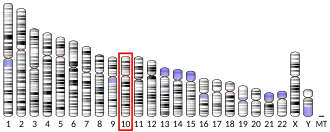



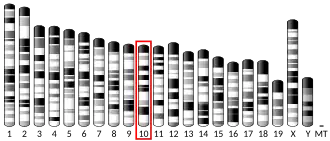


V-domain Ig suppressor of T cell activation (VISTA) is a type I transmembrane protein that functions as an immune checkpoint and is encoded by the VSIR gene.[5][6][7]
Structure and function
VISTA is approximately 50 kDa and belongs to the immunoglobulin superfamily and has one IgV domain.[8][5]
VISTA is part of the B7 family, is primarily expressed in white blood cells and its transcription is partially controlled by p53.[8][9] There is evidence that VISTA can act as both a ligand[10] and a receptor[11] on T cells to inhibit T cell effector function and maintain peripheral tolerance.[5][8] Similarly, VISTA and TIM-3 may co-exist on macrophages infiltrating different human and mouse tumours where they can co-regulate immunotherapy resistance.[12]
Clinical significance
VISTA is produced at high levels in tumor-infiltrating lymphocytes, such as myeloid-derived suppressor cells and regulatory T cells, and its blockade with an antibody results in delayed tumor growth in mouse models of melanoma[13] and squamous cell carcinoma.[14] It is also up-regulated in tumour-associated macrophages in various malignancies, including melanoma, especially in immunotherapy-resistant human context.[12]
Monocytes from HIV-infected patients produce higher levels of VISTA compared to uninfected individuals. The increased VISTA levels correlated with an increase in immune activation and a decrease in CD4-positive T cells.[15]
As a drug target
There are several ongoing cancer immunotherapy clinical trials for a monoclonal antibodies targeting VISTA in advanced cancer.[16] Preliminary results of the phase I clinical trials show good safety tolerance and anti-cancer activity in patients with advanced tumours.[17] One of the best characterized ligands or binding partners for VISTA is PSGL-1, which binds VISTA with high affinity only under acidic conditions (pH<6.5).[18] One promising approach uses an antibody (SNS-101) that only binds to VISTA when the multiple histidine residues of VISTA are protonated inside acid tumors. This approach greatly improves the pharmacokinetics of the anti-VISTA antibody.[19] Another ongoing clinical trial involves a small molecule that antagonizes the programmed death-ligands 1 and 2 (PD-L1 and PD-L2), and VISTA pathways in patients with advanced solid tumors or lymphomas.[20]
References
- 1 2 3 GRCh38: Ensembl release 89: ENSG00000107738 – Ensembl, May 2017
- 1 2 3 GRCm38: Ensembl release 89: ENSMUSG00000020101 – Ensembl, May 2017
- ↑ "Human PubMed Reference:". National Center for Biotechnology Information, U.S. National Library of Medicine.
- ↑ "Mouse PubMed Reference:". National Center for Biotechnology Information, U.S. National Library of Medicine.
- 1 2 3 Le Mercier I, Lines JL, Noelle RJ (August 2015). "Beyond CTLA-4 and PD-1, the Generation Z of Negative Checkpoint Regulators". Frontiers in Immunology. 6: 418. doi:10.3389/fimmu.2015.00418. PMC 4544156. PMID 26347741.
- ↑ Clark HF, Gurney AL, Abaya E, Baker K, Baldwin D, Brush J, et al. (October 2003). "The secreted protein discovery initiative (SPDI), a large-scale effort to identify novel human secreted and transmembrane proteins: a bioinformatics assessment". Genome Research. 13 (10): 2265–2270. doi:10.1101/gr.1293003. PMC 403697. PMID 12975309.
- ↑ "Entrez Gene: C10orf54 chromosome 10 open reading frame 54".
- 1 2 3 Yoon KW, Byun S, Kwon E, Hwang SY, Chu K, Hiraki M, et al. (July 2015). "Control of signaling-mediated clearance of apoptotic cells by the tumor suppressor p53". Science. 349 (6247) 1261669. doi:10.1126/science.1261669. PMC 5215039. PMID 26228159.
- ↑ Wang L, Rubinstein R, Lines JL, Wasiuk A, Ahonen C, Guo Y, et al. (March 2011). "VISTA, a novel mouse Ig superfamily ligand that negatively regulates T cell responses". The Journal of Experimental Medicine. 208 (3): 577–592. doi:10.1084/jem.20100619. PMC 3058578. PMID 21383057.
- ↑ Lines JL, Pantazi E, Mak J, Sempere LF, Wang L, O'Connell S, et al. (April 2014). "VISTA is an immune checkpoint molecule for human T cells". Cancer Research. 74 (7): 1924–1932. doi:10.1158/0008-5472.CAN-13-1504. PMC 3979527. PMID 24691993.
- ↑ Flies DB, Han X, Higuchi T, Zheng L, Sun J, Ye JJ, et al. (May 2014). "Coinhibitory receptor PD-1H preferentially suppresses CD4+ T cell-mediated immunity". The Journal of Clinical Investigation. 124 (5): 1966–1975. doi:10.1172/JCI74589. PMC 4001557. PMID 24743150.
- 1 2 Vanmeerbeek I, Naulaerts S, Sprooten J, Laureano RS, Govaerts J, Trotta R, et al. (July 2024). "Targeting conserved TIM3+VISTA+ tumor-associated macrophages overcomes resistance to cancer immunotherapy". Science Advances. 10 (29) eadm8660. doi:10.1126/sciadv.adm8660. PMC 11259173. PMID 39028818.
- ↑ Le Mercier I, Chen W, Lines JL, Day M, Li J, Sergent P, et al. (April 2014). "VISTA Regulates the Development of Protective Antitumor Immunity". Cancer Research. 74 (7): 1933–1944. doi:10.1158/0008-5472.CAN-13-1506. PMC 4116689. PMID 24691994.
- ↑ Kondo Y, Ohno T, Nishii N, Harada K, Yagita H, Azuma M (June 2016). "Differential contribution of three immune checkpoint (VISTA, CTLA-4, PD-1) pathways to antitumor responses against squamous cell carcinoma". Oral Oncology. 57: 54–60. doi:10.1016/j.oraloncology.2016.04.005. PMID 27208845.
- ↑ Bharaj P, Chahar HS, Alozie OK, Rodarte L, Bansal A, Goepfert PA, et al. (October 3, 2014). "Characterization of programmed death-1 homologue-1 (PD-1H) expression and function in normal and HIV infected individuals". PLOS ONE. 9 (10) e109103. Bibcode:2014PLoSO...9j9103B. doi:10.1371/journal.pone.0109103. PMC 4184823. PMID 25279955.
- ↑ Clinical trial number NCT02671955 for "A Study of Safety, Pharmacokinetics, Pharmacodynamics of JNJ-61610588 in Participants With Advanced Cancer" at ClinicalTrials.gov
- ↑ Calvo E (February 26, 2018). "Interim results of a phase 1/2 study of JNJ-63723283, an anti-PD-1 monoclonal antibody, in patients with advanced cancers". Journal of Clinical Oncology. 36 (5_suppl): 58. doi:10.1200/JCO.2018.36.5_suppl.58.
- ↑ Su LJ, Pinckney J, Critton D, Boyer E, Krishnakumar A, Corbett M, et al. (October 2019). "VISTA is an acidic pH-selective ligand for PSGL-1". Nature. 574 (7779): 565–570. doi:10.1038/s41586-019-1674-5. ISSN 1476-4687. PMID 31645726.
- ↑ Smith FD, Mukherjee A, Kleschenko Y, Feng F, Jiang ZG, Eitas T, et al. (2024-04-04). "VISTA checkpoint inhibition by pH-selective antibody SNS-101 with optimized safety and pharmacokinetic profiles enhances PD-1 response". Nature Communications. 15 (1) 2917. doi:10.1038/s41467-024-47256-x. ISSN 2041-1723. PMC 10995192. PMID 38575562.
- ↑ Clinical trial number NCT02812875 for "A Study of CA-170 (Oral PD-L1, PD-L2 and VISTA Checkpoint Antagonist) in Patients With Advanced Tumors and Lymphomas" at ClinicalTrials.gov
Further reading
- Colland F, Jacq X, Trouplin V, Mougin C, Groizeleau C, Hamburger A, et al. (July 2004). "Functional proteomics mapping of a human signaling pathway". Genome Research. 14 (7): 1324–1332. doi:10.1101/gr.2334104. PMC 442148. PMID 15231748.
- Zhang Z, Henzel WJ (October 2004). "Signal peptide prediction based on analysis of experimentally verified cleavage sites". Protein Science. 13 (10): 2819–2824. doi:10.1110/ps.04682504. PMC 2286551. PMID 15340161.
- Wan D, Gong Y, Qin W, Zhang P, Li J, Wei L, et al. (November 2004). "Large-scale cDNA transfection screening for genes related to cancer development and progression". Proceedings of the National Academy of Sciences of the United States of America. 101 (44): 15724–15729. Bibcode:2004PNAS..10115724W. doi:10.1073/pnas.0404089101. PMC 524842. PMID 15498874.
- Rual JF, Venkatesan K, Hao T, Hirozane-Kishikawa T, Dricot A, Li N, et al. (October 2005). "Towards a proteome-scale map of the human protein-protein interaction network". Nature. 437 (7062): 1173–1178. Bibcode:2005Natur.437.1173R. doi:10.1038/nature04209. PMID 16189514. S2CID 4427026.
External links
- Overview of all the structural information available in the PDB for UniProt: Q9H7M9 (V-type immunoglobulin domain-containing suppressor of T-cell activation) at the PDBe-KB.