King Edward Medical University
کنگ ایڈورڈ میڈیکل یونیورسٹی | |
 | |
| Motto | Altapete |
|---|---|
Motto in English | Aim high |
| Type | Public |
| Established | 1860 |
| Vice-Chancellor | Mahmood Ayaz |
Academic staff | N/A |
| Students | 325 |
| Location | Lahore , Punjab , Pakistan |
| Website | https://kemu.edu.pk |
King Edward Medical University (Punjabi, Urdu: کنگ ایڈورڈ میڈیکل یونیورسٹی; commonly abbreviated as KEMU) is a public medical university located in Lahore, Punjab, Pakistan. It was established as Lahore Medical School during the British Raj in 1860 and is named after King Edward VII.[1]
In 1868, Trinity College Dublin granted students of the Lahore Medical School "privilege similar to the granted to students from English schools". In 1871, the university added Mayo Hospital as an affiliated hospital, replacing the existing Anarkali Dispensary. The same year the college became an affiliate of University of the Punjab, while in 1887, the university added Lady Aitchison Hospital as a second teaching hospital.[2]
After Pakistan's independence, the university became the only medical college in the province and in 2005 became a charter to award degrees in its own right. It has since gone through expansion, and oversees seven tertiary referral hospitals including the Lady Willingdon Hospital.[3]
The university has a rich history of producing great physicians who have served not only in Pakistan but also in US, UK and many other parts of the world, and KEMU produces one of the highest numbers of successful USMLE Match candidates in Pakistan every year.
History
King Edward Medical College was established in 1860 as the Lahore Medical College. It is the fifth oldest medical school in South Asia, after Medical College Kolkata (January 28, 1835), Madras Medical College, Chennai (February 2, 1835) Grant Medical College, Bombay (1845) and Sarojini Naidu Medical College Agra (1854).[2]
The first academic building was completed in 1883. On 21 December 1911, Lahore Medical College was renamed King Edward Medical College in honour of the late King and Emperor and was elevated to the status of an independent, degree-granting university on 12 May 2005, when it became King Edward Medical University.[4]
Campus and departments

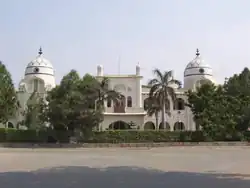
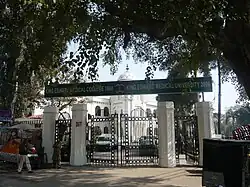
The university has the following departments:
Basic science departments
Medicine and allied departments
- Cardiology
- Tuberculosis and Chest Medicine (Pulmonology)
- Clinical Oncology (Radiotherapy)
- Child Psychiatry
- Dermatology Unit I and II
- Neurology
- Pediatrics
- General Medicine Unit I, II, III and IV
Physical Medicine and Rehabilitation
- Psychiatry and Behavioural Sciences
The psychiatry department of KEMU has been designated status of Psychotrauma Centre for the province of Punjab by Prime Ministers National Advisory Council in the aftermath of killings at Army Public School, Peshawar killings in 2014. This centre is created to conduct workshops on trauma, identify and train teams of mental health professionals and develop modules for training. [5] The department is being headed by Aftab Asif. The chief coordinator is Dr Ali Madeeh Hashmi. A technical expert committee has been made with prominent psychiatrists and psychologists from Punjab. The centre held its first workshop for the first responders' team and trained professionals from 1122 rescue service, traffic police, and Punjab police officers in 'Psychological First Aid' on Jan 17, 2015. The next workshop was carried out on Feb 07, 2015. Media professionals from the different genres were included and topics such as responsible reporting of terrorist activities, mental health problems faced by media personnel and the dynamics between government, media and terrorism highlighted the programme.[6]
- Radiotherapy
- Social and Preventive Medicine
- Preventive Pediatrics
Surgery and allied departments
- Anesthesiology unit I and II
- Cardiac Surgery
- Neurosurgery
Neurosurgery Department pioneers spinal cord stimulation in Pakistan. Pakistan's first Spinal Cord Stimulation surgery was done by Neurosurgery Department of King Edward Medical University / Mayo Hospital Lahore in August 2018.[7] Medtronic Spinal Cord Stimulation (SCS) system was purchased via tender.[8] The team included Professor Shahzad Shams (Chairman[9][10] Neurosurgery King Edward Medical University / Mayo Hospital Lahore), Dr Muhammad Tariq [11](Asst Prof Neurosurgery King Edward Medical University, Lahore), Dr Ammar Anwer[12] (Research Fellow ANFN-DBS Pakistan) and Dr Rupesh Jung Raut[13] (R 3, Neurosurgery Department King Edward Medical University / Mayo Hospital Lahore). The patient was suffering from phantom limb syndrome and Medtronic Prime Advance™ SCS[14] system was implanted bilaterally in cervical spine.[15]
- Obstetrics and Gynaecology Unit I, II, III and IV
- Ophthalmology unit I, II and III
- Oral and Maxillofacial Surgery
- Orthopedics Unit I and II
- Otorhinolaryngology Unit I and II
- Pediatric Surgery
- Plastic Surgery
- Radiology
- General Surgery Unit I, II, III and IV
- Thoracic Surgery
- Urology
Attached hospitals
- Mayo Hospital Lahore
- Lady Willingdon Hospital
- Lady Aitchison Hospital
- Nawaz Sharif Hospital, Yakki Gate, Lahore
- Nawaz Sharif Hospital, Kot Khawaja Saeed, Lahore
- Shahdra Hospital
- Govt. Said Mitha Teaching Hospital Lahore
- Mian Munshi Hospital Lahore
Institutes, schools and centres
- Centre For Nuclear Medicine (CENUM)
- Convalescent Centre
- College of Ophthalmology and Allied Vision Sciences(COAVS)
- School of Nursing
- School of Orthopaedic Technology
- School of Paramedical
- School of Physiotherapy
Auxiliary services
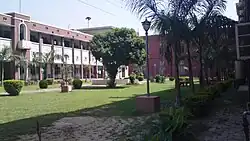
- Library
- Computer labs
- Wi-Fi
Attached hostel facilities
- Boys Hostel
- Girls Hostel
New buildings and campuses
After getting university status in 2005, A new campus building was designed. The new building was completed in 2019. Another building was constructed with the help of Maqbool Ahmad, M.D., a notable Kemcolian, who donated 9 million dollars for the new structure. This is the Maqbool Ahmad Block, which currently has the departments of Biochemistry, Community Medicine, and Pharmacology. Furthermore, Maqbool Ahmad Block has the offices of the King Edward Debating Society (KEDS) and Kemcolians' Arts and Photography Society (KAPS). This block also features the Asad Aslam Auditorium and the Samina Hall, the focal venues of most university events. The university has also acquired new land outside Lahore to build a sub-campus.
Academic degrees offered
Undergraduate
- Bachelor of Medicine and Bachelor of Surgery (MBBS)[16]
- Bachelor of Science (B.S.(Hons)) in Allied Health Sciences
- Doctor of physical therapy (DPT)
Postgraduate
- Doctor of Philosophy (Ph.D.)
- Master in Community Eye Health (MCEH)
- Doctor of Medicine (MD)
- Master of Surgery (MS)
- Fellow of College of Physicians and Surgeons Pakistan (FCPS)
- Membership of the Royal College of Physicians (MRCP(UK))
- Master of Philosophy (M.Phil.)
- Diploma
Organization
King Edward Medical University is headed by the Vice Chancellor; this title is currently being served by Prof. Dr. Mahmood Ayaz. At any time of year, the university has over 1300 undergraduate and over 800 postgraduate students. Among the postgraduate doctors, 500 are doing residencies under the College of Physicians & Surgeons Pakistan.
Admission to King Edward Medical University is awarded to the students who have the highest merit in the province of Punjab and after primary selection, the list of selected candidates is sent to Dr Muhammad Awais (Chairman Pakistan Medical Board) for approval. The merit for admission is calculated from marks obtained in Higher Secondary School Certificate (HSSC) exam plus the marks obtained in the entry test plus marks obtained in Secondary School Certificate (SSC). The percentage of each of these exams contributing to the final merit is different each year. The entry test takes place in September. Criteria for selection, for undergraduate seats, of foreign students and students with foreign examination is based on equivalents tables present for foreign examinations to that of local HSSC examination.[17]
The graduation time period is five years. After graduation, internship (house job) is done in Mayo Hospital or any Government Hospital. The interns are given rotations in departments based on merit. This merit is made from marks obtained in a final professional examination and all the other professional examinations, with deductions for any failures in the exams. Of all the specialities on offer, the Medicine and Surgery ones are the most competitive and allow only the best of each graduating class.[18] After completion of the internship the full registration status to a Doctor is awarded by Pakistan Medical and Dental Council (PMDC).
National Research and Innovation Conference (NRIC)
On August 2, 2025, King Edward Medical University (KEMU) hosted the inaugural National Research and Innovation Conference[19] (NRIC) 2025: a pioneering, student-led national event designed to promote undergraduate medical research and healthcare innovation across Pakistan. This event was recorded as the largest event ever in the history of the institute with over 1500 attendees, 100+ abstracts, and 40+ expert panelists, keynote speakers and adjudicators, from across Pakistan[20].
The event was ideated and founded by Professor Dr. Muhammad Moin, Pro-Vice Chancellor of KEMU, Chair of Department of Ophthalmology, and Principal of COAVS at KEMU, and brought to life by the Chief Coordinator, Warda Rasool, a Final Year MBBS student of the university. The event was presided over by the honourable Vice Chancellor of KEMU, Professor Dr. Mahmood Ayyaz (S.I.), and was attended by notable figures such as Professor Dr. Khalid Masood Gondal (T.I.) and the Minister of Specialised Health, Punjab, Khawaja Salman Rafique.
Overview
The conference took place on 2 August 2025, at the historical campus of KEMU in Lahore. It was spearheaded by a dedicated team of medical students who formed the Founding Student Committee, and researchers. The conference emphasized innovation, AI integration in medicine, and interdisciplinary collaboration.
Theme: The event carried the rallying cry: "Innovamus Ergo Sumus" (latin, translated to “We innovate, therefore we are!”).
Advisory Board
The conference was organised by the Founding Student Committee, advised by:
- Professor Dr. Mahmood Ayyaz (S.I.), Vice Chancellor, KEMU, Patron-in-Chief of NRIC.
- Professor Dr. Muhammad Moin, Pro-Vice Chancellor, KEMU, Chief Organiser of NRIC.
- Professor Dr. Abrar Ashraf Ali, Head of DME and Chief of Surgery, KEMU, Chief Organiser of NRIC.
Founding Student Committee
The Founding Student Committee of NRIC 2025 was composed of undergraduate medical students at King Edward Medical University, who initiated and led the first edition of the conference. They were responsible for the design, operations, technical systems, academic program, and nationwide outreach that established NRIC as a national platform. Additionally, NRIC 2025 is the first undergraduate research conference in Pakistan to use a completely online registration, abstract submission, and conference management system, thus emphasising the importance of digitalisation in the healthcare and education industries. The executive committee of the founding team included:
- Warda Rasool — Chief Coordinator and Founder of NRIC. She is credited as the driving force behind the conception, design, and execution of the inaugural conference, laying the foundation for what has become a recurring national platform for undergraduate medical research and innovation.
- Haram Aftab — Joint Secretary; co-led organising committee management, administrative aspects and institutional alignment.
- Muneeb Ur Rehman — Joint Secretary; co-led organising committee management, administrative aspects and institutional alignment.
- Muhammad Fateh Alam Bhatty — Director of Technology & Operations; single-handedly led the digital infrastructure, branding, merchandise, and oversaw all event planning and protocols for the conference-day.
- Fatima Shahid — Director of Scientific Committee; directed all research-related aspects of the conference, including abstract review, scientific programming, and adjudication, supported by her academic team.
- Ghadiya Waheed — Director of Media and Sponsorships; brought in high-profile sponsors for the inaugural edition of NRIC 2025.
- Ahmad Rasheed — Director of Event Management; handled the on-ground event planning and execution from venues, to sponsors, to conference infrastructure and conference inventory.
- Fahad Amin — Director of Ambassadors and Logistics; managed the largest conference ambassador program of about 150+ ambassadors from across Pakistan and handled logistical aspects of the conference and spearheaded registrations on-ground.
This committee is recognized as the first student body in Pakistan to create a national-scale, AI-integrated undergraduate medical research conference. Their work has since been cited as the foundation for subsequent NRIC editions.
Aims & Scope
NRIC 2025 served as a national platform for undergraduate medical students to:
- Present their research findings.
- Showcase innovative solutions in medicine, surgery, oncology, public health, and AI in healthcare. The conference was designed to foster a culture of research, inter-institutional networking, and the fusion of artificial intelligence with medical practice.
Participation & Engagement
- Participants: The event attracted over 1,500 attendees, including students and professionals from more than 50 universities across Pakistan.
- Submissions: More than 100 research and innovation abstracts were presented.
- Expert Involvement: A panel of over 40 qualified experts—including researchers, clinicians, and AI specialists—served as keynote speakers, session chairs, and adjudicators.[21]
Conference Themes & Format
Thematic Focus
- Medicine & Clinical Research
- Surgery & Interventional Medicine
- Oncology & Cancer Research
- AI in Healthcare (e.g., machine learning, diagnostic tools)
- Public Health & Nutrition
- Pharmacology & Drug Development
Structure & Sessions
- Keynote Sessions:
- “Challenges and Opportunities in Robotic Surgical Education” — Prof. Dr. Mahmood Ayyaz, Vice Chancellor, KEMU.
- “Genomics, Big Data, and AI: The New Triad of Predictive Healthcare” — Dr. Danish Saleheen (MBBS, PhD, Columbia University, USA).
- Parallel Competitions and Workshops
- American‑Pakistani Physicians Enclave
- Basic Life Support (BLS) workshop
- ECG interpretation workshop
- Research Design & AI Ethics by IFMSA Pakistan
- Panel Discussion:
- “Career Compass: Navigating Medical Research Careers in Pakistan vs Abroad” — guided attendees through potential career trajectories.
- CME Credits & Networking:
- Participants could earn 4 Continuing Medical Education (CME) credit hours. The conference concluded with a closing ceremony, awards presentation, followed by lunch and networking.
Significance & Legacy
- Student Empowerment: NRIC 2025 spotlighted the leadership and academic potential of undergraduate students in research and innovation.
- Innovation Hub: The conference contributed to positioning KEMU at the intersection of medical education and groundbreaking AI research.
- Continuity: Its success set the foundation for future editions, promising to be an enduring fixture in Pakistan’s medical academia.
Student societies
The student societies of King Edward Medical University include:
- King Edward Literary Society URDU" KELS URDU (the oldest society of KEMU, started in 1882 as "Bazm e Adab")
- King Edward Debating Society (Since 1887) (KEDS)
- King Edward Literary Society English "KELS ENGLISH"
- Kemcolians' Arts & Photography Society (KAPS) (The Largest Official Society of KEMU)
- International Federation of Medical Students' Associations - Pakistan KEMU LC (IFMSA-Pakistan KEMU LC)
- Students' Patients Welfare Society (SPWS)
- Kemcolians' Sports Club
- Kemcolians' Dramatic Society (KDS)
- Kemcolians' Akhuwat Club (A society for social welfare among students and patients)
- Kemcolians United - KemUnited - The King Edward Medical University Blog
- Humans of KEMU is a Facebook page dedicated to the stories of the students, alumni and teaching staff: www.facebook.com/HumansOfKEMU
The members of these societies compete at the national and international level and have won numerous competitions. King Edward Medical University Magazine, KEMCOL, is maintained by the students. The previous and current students of KEMU are referred to as "Kemcolians".[22]
Alumni association
Notable alumni
- Riaz Haider MD - American cardiologist, academic and past president, American Heart Association
- Ayub Ommaya MD, ScD (h.c.), FRCS, FACS - neurosurgeon and the inventor of the Ommaya reservoir.
- Prem Chandra Dhanda - physician and a medical academic
- Amjad Saqib - Sitar-e-Imtiaz, Hilal-e-Imtiaz, Ramon Magsaysay Awardee - Social Entrepreneur, Development Practitioner, and Founder of Akhuwat
- Afzal Javed - OBE, SI – Psychiatrist and academic; President of the World Psychiatric Association (2020–2023)
- Faisal Sultan - infectious diseases physician who has served as the chief executive officer of the Shaukat Khanum Memorial Cancer Hospital and Research Centre
- Riaz Haider - American physician, cardiologist, author, and medical educator.
- Farid Ahmad Khan - Pakistani plastic surgeon. Former Chairman and Dean at Shaikh Sayed Medical Complex, and former Registrar at KEMU from 2011 to 2015.
- Farrukh Siyar Hashmi - OBE British Pakistani consultant psychiatrist pioneering in the field of race relations in the UK.
- Nazir Ahmad, neurosurgeon
- Syed Muhammad Najeeb, a renowned Medical Professor, who has been imparting medical education for the last 40 years across the world and is an Internal Medicine specialist in the United States.
- Junaid Hafeez - political prisoner kept in confinement since 2013 over alleged accounts of apostasy.
- Israr Ahmed
See also
- Education in Pakistan
David Waters Sutherland CIE FRSE (18 December 1872–19 April 1939) was an Australian physician who ran the King Edward Medical College in Lahore and married Princess Bamba Singh. He was also the physician to Mirza Ghulam Ahmad of Qadian, during his trips to Lahore, including the last visit in May 1908. Also issuing the certificate of death.
References
- ↑ "King Edward Medical University: Ex-principals, alumni push CM to restore college - The Express Tribune". 2011-11-11. Retrieved 2016-09-11.
- 1 2 University, King Edward Medical. "History | King Edward Medical University". kemu.edu.pk. Archived from the original on 2016-09-19. Retrieved 2016-09-11.
- ↑ University, King Edward Medical. "ABOUT kemunew | King Edward Medical University". kemu.edu.pk. Archived from the original on 2016-09-19. Retrieved 2016-09-11.
- ↑ "The King Edward Medical University, Lahore Act 2005". Punjab Gazette (Extraordinary): 5393–5410. 12 May 2005.
- ↑ "Psycho-trauma centres to be developed at national level - Pakistan Today". www.pakistantoday.com.pk. Retrieved May 11, 2020.
- ↑ The Newspaper's Staff Reporter (Jan 17, 2015). "Psychological trauma centre at KEMU". DAWN.COM. Retrieved May 11, 2020.
- ↑ Neurosurgery, KEMU (2018). "Neurosurgery KEMU / MHL Makes Medical History in Pakistan". Facebook. Archived from the original on 2022-02-26.
- ↑ "Tender Notice for Functional Neurosurgery Implabts" (PDF). Mayo Hospital Lahore Official Website. 2018.
- ↑ University, King Edward Medical. "NEUROSURGERY | King Edward Medical University". Retrieved 2019-06-30.
- ↑ "Mayo Hospital". www.mayohospital.gop.pk. Retrieved 2019-06-30.
- ↑ "Faculty list of King Edward Medical University Lahore". Official Website of King Edward Medical University. 2018.
- ↑ "First Spinal Cord Stimulation of Pakistan". Stereotactic and Functional neurosurgery. 2018. Archived from the original on 2019-06-29. Retrieved 2019-06-30.
- ↑ Raut, Rupesh J (2018). "Pakistan's First Spinal Cord Stimulation Team". Facebook.
- ↑ Medtronic. "Spinal Cord Stimulation Systems - PrimeAdvanced SureScan MRI Neurostimulator". www.medtronic.com. Retrieved 2019-06-30.
- ↑ Niraula, Kiran (2018). "Per Operative X Ray of Pakistan's First patient who under went Spinal Cord Stimulation". Facebook. Archived from the original on 2022-02-26.
- ↑ "JCAT Admission form - Joint Centralized Admission Test | The NUST Web". Sep 12, 2016. Retrieved May 11, 2020.
- ↑ "Prospectus OF King Edward Medical University and Government Medical Colleges in the Punjab, Pakistan. Session 2007-2008" (PDF). Archived from the original (PDF) on 2008-04-11. Retrieved 2007-10-03.
- ↑ Rahman, Dr Atif. "After Passing Final Year (M.B.;B.S.)". Retrieved 2007-10-14.
- ↑ Team, NRIC. "NRIC 2025 | KEMU | National Research and Innovation Conference". NRIC 2025. Retrieved 2025-08-27.
- ↑ Team, NRIC. "NRIC 2025 | KEMU | National Research and Innovation Conference". NRIC 2025. Retrieved 2025-08-27.
- ↑ Team, NRIC. "NRIC 2025 | KEMU | National Research and Innovation Conference". NRIC 2025. Retrieved 2025-08-27.
- ↑ "An ode to King Edward Medical University".
External links

- King Edward Medical University - Official website of King Edward Medical University.
- King Edward Medical University Blog Kemcolians United - Official blog of King Edward Medical University.
- King Edward Medical University Neurosurgery Official Facebook Page.
| Azad Jammu & Kashmir |
| ||||
|---|---|---|---|---|---|
| Balochistan |
| ||||
| Islamabad |
| ||||
| Khyber Pakhtunkhwa |
| ||||
| Punjab |
| ||||
| Sindh |
| ||||
| |||||

