Motivation and emotion/Tutorials/Learned optimism
Tutorial 06: Learned optimism
This is the sixth tutorial for the motivation and emotion unit of study.
Overview
This tutorial:
- Explores learned optimism (the opposite of learned helplessness)
- Wraps up motivation (following tutorials focus mainly on emotion)
Learned helplessness vs. learned optimism
This exercise explores learned optimism.
Learned optimism relates to personal control beliefs in Chapter 10 of Reeve (2018) and the mindsets, control, and the self lecture. Whilst the textbook and lecture focus on learned helplessness, here attention is turned to the opposite: learned optimism.
Discuss:
- What characterises learned helplessness?
- What characterises learned optimism?
A computer metaphor:
- Body and brain = "hardware". Can't easily be changed.
- Thinking = "software". Reprogrammable.
- At least, this is the view of cognitive psychology
Martin Seligman
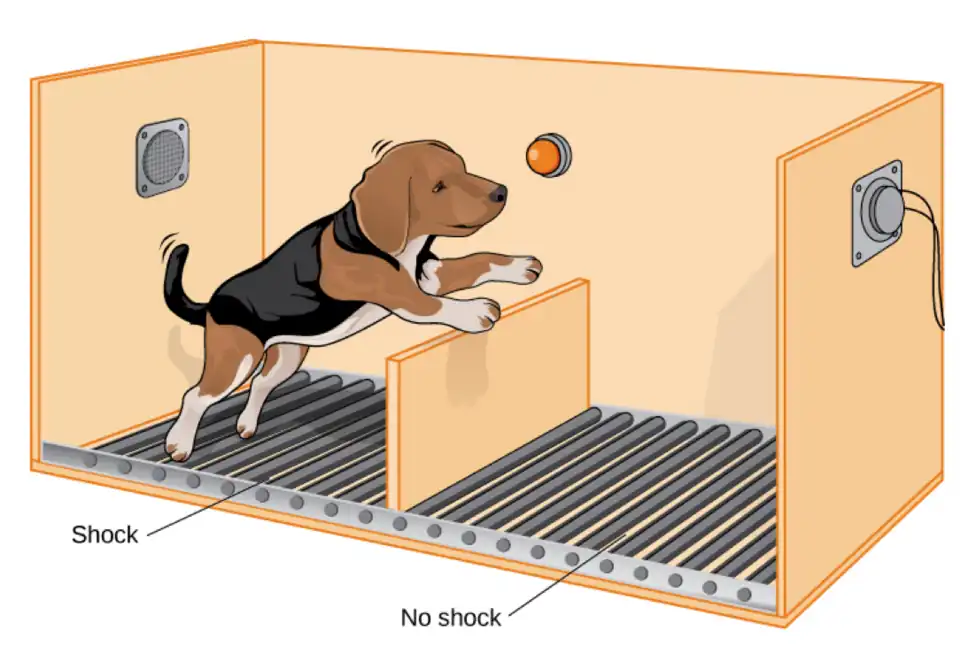
The learned helplessness and learned optimism concepts were developed by Martin Seligman. Seligman started with research about learned helplessness in animals and then later applied this to learning optimism in humans and positive psychology more generally. Three key books in this respect are:
- Helplessness: On depression, development, and death (Seligman, 1975)
- Learned optimism: How to change your mind and your life (Seligman, 1990)
- The hope circuit: A psychologist's journey from helplessness to optimism (Seligman, 2018)
Learned optimism
|
Activity: Learned Optimism Test  Are you more pessimistic or optimistic? Let's find out.
|
Attributions are our explanations about causes of events. Our attributions about past events is used to predict causes of future events.
The Learned Optimism Test measures three types of attributions:
- Permanence: How a person views the duration of an event's cause, seeing it as either temporary (transient) or permanent (stable)
- Pervasiveness: How a person views the scope of an event's cause, seeing it as either specific (domain-bound) or universal (widespread across domains)
- Personalisation: How a person views the source of an event's cause, seeing it as either internal (attributable to the self) or external (attributable to others or circumstances)
The Learned Optimism Test measures the three types of attributions for each of two types of events:
- Good: Positive occurrences in a person's life that lead to positive feelings
- Bad: Negative occurrences in a person's life that lead to negative feelings
The three attributions for two types of events combine to create a six-domain theoretical structure (see Table 1).
Table 1.
Attributional Dimensions (3) by Event Valence (2) Explanation of Pessimism-Optimism
| Attribution | Bad | Good |
|---|---|---|
| Permanence | PmB | PmG |
| Pervasiveness | PvB | PvG |
| Personalisation | PsB | PsG |
| Total | ToB | ToG |
Table 2.
Explanatory Styles Based on Attributional Dimensions of Pessimism and Optimism
| Optimistic | Pessimistic | |
|---|---|---|
| Good event | Permanent Pervasive Internal |
Temporary Local External |
| Bad event | Temporary Local External |
Permanent Pervasive Internal |
Permanence
Time: Temporary vs. Permanent - a pessimistic view is that bad events are permanent and good events are temporary (opposite for optimism)
- PmB (Permanent Bad)
- PmG (Permanent Good)
Pervasiveness
Space: Specific vs. Universal (i.e., across situations/domains) - a pessimistic view is that bad events are pervasive across situations/domains and good events are specific to a situation/domain (opposite for optimism)
- PvB (Pervasive Bad)
- PvG (Pervasive Good)
Personalisation
Control/causality: Internal vs. External - a pessimistic view is that bad events are internally caused and good events are externally causes (opposite for optimism)
- PsB (Personalisation Bad)
- PsG (Personalisation Good)
ABCDE solution
Would you like to become more optimistic?
If so, Seligman suggests a cognitive ABCDE solution:
Table 3.
How to Change Pessimistic Thinking Styles
| A | Adversity | When we encounter adversity, we react by thinking about it |
| B | Beliefs | Our thoughts rapidly congeal into beliefs |
| C | Consequences | These beliefs ... have consequences |
| D | Disputation | Challenge problematic beliefs by finding evidence against them, alternatives to negative reasoning, and limit the implications of the beliefs. "Much of the skill of dealing with setbacks ... consists of learning how to dispute your own first thoughts in reaction to a setback." (Seligman) |
| E | Energisation | We feel energised after we've disputed our false, negative beliefs |
Is optimism always good?
There are well established positive relationships between optimism and important life outcomes such as physical health (e.g., longevity) and psychological well-being.
But is optimism always good? For example:
- Narcissism - Believing that one is all-powerful and influential can contribute to inflated self-importance (i.e., narcissism)
- Risk-taking - Believing that one can control good outcomes (when you actually can't) can be problematic (e.g., gambling)
Is pessimism always bad? For example:
- If anticipating negative future events is associated with positive, prepatory and preventive action (i.e., taking responsibility and acting with sufficient skill), then a pessimistic outlook could be beneficial
- But if the self is unnecessarily blamed, it can lead to helplessness, low self-esteem etc.
Where is the sweet spot?
Despite these potential problems, the advantages of optimism are overwhelming. So much so that the psychologically healthiest people tend to have "positive illusions", that is, they have somewhat unrealistically positive views. "Pessimists" and "realists", on the other hand, are more prone to depression.
Using generative AI
- Common mistakes include:
- Using genAI without appropriate acknowledgement
- Overly relying on genAI, with insufficient independent reading, critical thinking, and writing
- Using generative AI guidelines:
- Link to chat in edit summary
- Rewrite to improve
- Fact check and include primary, peer-reviewed sources you have consulted
References
Seligman, M. E. P. (2006). Learned optimism: How to change your mind and your life. Vintage Books.
Seligman, M. E. (2018). The hope circuit: A psychologist's journey from helplessness to optimism. Penguin Random House Australia.
Recording
- Tutorial 06 (2025)
See also
- Additional tutorial material
- Book chapters
- Learned helplessness (Category)
- Learned optimism (2011)
- Wikipedia
- Attribution
- Cognitive behavioral therapy
- Learned helplessness
- Learned optimism
- Positive illusions
- Rational emotive behavior therapy
- Lecture
- Tutorials
- Functionalist theory and self-tracking (Previous tutorial)
- Core emotions (Next tutorial)
- Admin
External links
- Avoiding learned helplessness and changing your explanatory style (Mackay & Mackay, 2010, artofmanliness.com, Building your resiliency: Part II)
- Learned optimism: Is Martin Seligman’s glass half full? (positivepsychology.com)