Motivation and emotion/Book/2025/Thirst regulation
What mechanisms regulate the motivational drive to seek hydration?
Overview
.jpg)
Jack has just eaten an entire pack of salty chilli chips (see Figure 1) without any drinks. Soon after he feels an intense sense of thirst. Why did Jack have an intense of thirst, and wanted to drink something badly? What happened inside his body? What is the hidden force that drives a feeling of thirst and motivation to seek for a drink?
|
Oxygen, thirst, hunger, and sex are the fundamental physiological needs in our lives. Drinking as a basic behaviour of Intake fluids into our body reflects our need for survival, as insufficient water remains in the human body, the deficits of either intracellular fluid or extracellular fluid volume will generate and this kind of biological imbalance causes many health issues (McKinley, 2004). When this need is restored and satisfied our wellbeing is maintained and balanced (Reeve, 2025, p. 65).
This chapter explains why humans and other animals are becoming dehydrated and develop the need and motivation to drink fluids. It explores thirst through 2 primary mechanisms in physiological perspectives: Osmotic thirst and Hypovolemic thirst. The book chapter also clarifies the roles of key biological mechanisms of Vasopressin, an antidiuretic hormone (ADH), and Angiotensin II, how they contribute to the homeostatic motivation of hydration balance, and the Allostasis Theory from Sterling and Eyer, which anticipated some of the psychological factors (Schulkin, 2011). In addition to this physiological perspective of thirst regulation, this book chapter also introduces other psychological theories to explain the motivation to seek hydration, including Freud’s Drive Theory and the Drive-Reduction Theory from Clark Hull.
Finally, this chapter highlights how thirst regulation has a social contribution to the real world settings, especially in the areas of heatwaves and climate change, the issues of dehydration in elderly people, and management in athlete performance and safety.
Focus questions
|
The mechanisms and psychological theories of thirst regulation
Thirst regulation is a complex multi-layered process that integrates with both physiological mechanisms and psychological theories to explain individuals needs to seek hydration. On a physiological basis, which is the core fundamental perspective of thirst regulation, the thirst sensation activates when the body detects the imbalance of fluid and sodium volumes. The signals are transferred to the subcortical brain structures and arise the motivation of seeking hydration. The following sections explain further about how the physiological mechanisms of thirst regulation function in different scenarios. And beyond the biological drives, the psychological theories of thirst regulation, including Hull’s drive reduction theory and Freud’s drive theory further explain insights to why people intake hydration, and some integrated perspectives rooted both from physiological and psychological basis to reflect the motivation of drinking.
Physiological mechanism of water regulation and hydration seeking motivation
The sensation of thirst will drive us to seek water or other fluid consumption (Todini, 2023). As the core hydration-seeking motivations, physiological mechanisms are fundamental to regulate thirst. The drive of thirst can be triggered in several different mechanisms, osmotic, hypovolemic, under the Homeostasis theory. These are the key pathways to explain the physiological drives, that are the hidden forces behind our motivation to drink.
Homeostasis theory
Homeostasis explains the situations that our bodies run into heat and lose fluids, our osmoreceptors detect the imbalance and send signals to the hypothalamus in our brain, and we feel the sensation of thirst and are motivated to drink (Schulkin, 2003, p. 38). Our body reacts to restore fluid balance when disrupted. Both Osmotic and Volumetric Thirst (Hypovolemic thirst) mechanisms are under the category of Homeostasis Theory.
Osmotic thirst - Intracellular dehydration
Osmotic thirst is associated with an imbalanced deficit of intracellular fluid dehydration (McKinley, 2004, p. 1). It’s a kind of intracellular dehydration that occurs when water is lost from the interior side of the cell, inducing osmotic pressure of the cell (Picó‐Munyoz, 2023). High concentration of solute in the extracellular compartment of our cells creates osmotic pressure, which is a process where water freely flows from a lower concentration of solute to a higher concentration. The neuro receptors around third ventricle in brain structure detect the increasing osmotic pressure, and trigger the osmotic thirst and motivate individuals to intake hydration (Kalat, 2023, p. 301).
| Scenario 1
Jack has just eaten an entire party-size pack of salty chilli chips without drinking any water or other fluids. Soon after he feels an intense sense of thirst. Case study analyse-scenario 1 When Jack ate something salty (such as a pack of chips) that results in a higher concentration level of solutes outsides the cells than inside, It’s a kind of intracellular dehydration (Kalat, 2023, p.300). It occurs when solutes are at a higher concentration level on one side of the membrane of the cell, which creates the osmotic pressure (Thornton, 2010). The pressure will lead water out from the cells into extracellular fluid, receptors in around the third ventricle detect osmotic pressure and trigger the osmotic thirst and cause the motivation to seek drinks (Kalat, 2023, p.301). That’s why Jack feels an intensive thirst and need to drink water immediately after he ate a pack of chips.
|
Hypovolemic thirst - Extracellular dehydration
When suffering from hypovolemic thirst, sometimes referred to as volumetric thirst, the extracellular fluid needs to be replenished. It occurs when individuals have water loss. The person needs to restore not just pure water but also salt to ensure the solute concentration in the blood (Kalat, 2023, p. 302). It’s a thirst triggered by low volume of fluid loss in our bodies such as blood loss, dehydration from sweating, vomiting, diarrhea or insufficient water over time. When our body detect the decrease of extracellular fluid volume, an instant response will be triggered to activate the autonomic nervous system (CNS), as a consequence our cardiac output level will drop and blood pressure will decrease (McKinley, 2004, p. 3).
Even when the osmotic pressure stays the same, our body fluids are less (like blood loss or sweating a lot after exercises as in scenario 2), the Baroreceptors of our kidney and on the blood vessels, send the signals to the brain. The cells detect the low blood pressure and posterior pituitary gland starts to release vasopressin, which is an antidiuretic hormone, and it initiates the mechanism of reducing urine, and starts to constrict blood vessels (Kalat, 2023, p. 302). The kidney also releases an enzyme called angiotensin II, which constricts the blood vessels to compensate the drop of blood pressure, helping to increase blood pressure and remains vital for our bodies (Kalat, 2023, p. 302).
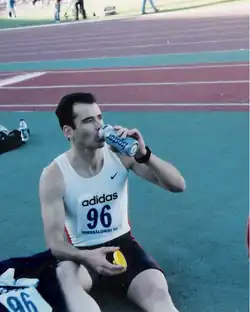
Thomas completed a 10km running exercise but forgot to bring his water bottle. There are no nearby convenient stores nor supermarkets, and now he feels discomfort from dehydration and a strong desire to drink fluids (see Figure 2) like a Powerade (a type of sport drink containing solutes). Why did Thomas have an extreme discomfort of thirst, and needed to drink as soon as possible? Why sport drinks work better for him than pure water in this case? What happened inside of his body?
|
|
Case study analyse-scenario 2 Thomas has completed lots of exercise such as 10km running, he’s experiencing body fluid loss and sweating a lot. When human bodies experience fluid loss, stimuli of receptors trigger the sensation of thirst, the hypothalamus, a subcortical brain structure in our brains responds and we feel the thirsty feeling and motivation to seek hydration to restore the fluid balance (Leiper, 2013, p. 283). That’s the consequence that he feels a sensation of thirst and urgently seeks fluid intake. However, due to the significant deficit of body fluid and sodium loss, he needs to replenish not just water but sufficient sodium to ensure the solute concentration level of his blood (McKinley, 2004, p. 3). Therefore, drinking enough water with correct solute level is needed.
|
Quiz
Psychological mechanism of water regulation and hydration seeking motivation
In addition to the above core physiological mechanisms that regulate thirst, there are psychological theories helping to explain the motivational drive to seek hydration. These theories explore how psychological drives and our minds shape the hydration motivation behaviour, complementing the psychological perspectives.
Clark Hull's Drive reduction theory
When our bodies have organic needs to intake food and hydration, with a lack of fluids, an unpleasant drive of feeling thirsty is initiated (Stults-Kolehmainen, 2023). This unpleasant drive and the biological thirst feeling motivates our behaviour to seek and restore fluids to reduce the unpleasant tension of dehydration (Burgos, 2017). The motivation of the drinking behaviour is initiated and driven to restore the homeostasis state of our bodies and remove the uncomfortable sate of being thirsty (Burgos, 2017). Until the drive is satisfied the motivation of this behaviour is reduced, such as when our bodies have stored enough fluids and our drive and motivation of intake is reduced and the behaviour subsides (Stults-Kolehmainen, 2023).
Freud's drive theory
.jpg)
Freud’s (see Figure 3) drive of seeking hydration is an internal psychic tension to connect with a body’s physiological needs such as dehydration, which reflects the changes in blood osmolality or volume (Solms, 2012, p. 52–54). The unmet need, such dehydration, creates an internal tension and discomfort in the mind. This kind of unpleasant tension motivates us to remove it, such as seeking fluids (Solms, 2021). Once fluids are consumed and hydration is restored sufficiently, tension is relieved and the mind to maintain body integrity is satisfied and balanced (Solms, 2021).
Quiz
The integrative mechanism rooted with physiological and anticipated with psychological factors
Despite the above physiological mechanism and psychological theories explain thirst regulation, some integrated perspectives rooted both from physiological and psychological basis also reflect the motivation of drinking, including allostasis theory and various social influence factors.
Allostasis theory (Sterling and Eyer)
Different from other mechanisms under the Homeostasis theory, it was rooted in the core foundations of physiological mechanisms, but also integrates the physiological regulation with psychological prediction and learning, bridging the physiological and psychological factors to control water equilibrium (Schulkin, 2011). According to Sterling and Eyer’s Allostasis theory, we sometimes drink before physiological signals detect our state of dehydration. The hypothalamus, a subcortical brain structure generates the psychological experience and inputs this signal into our consciousness, plus our past learned psychological experiences to detect and anticipate the potential dehydration and trigger thirst (Reeve, 2025, p. 71).
This mechanism motivates us to start drinking fluids before our bodies start the process of fluid loss, in hot weather or before sleeping (Sterling, 2012, p. 14–15). This proactive process keeps body fluid balance in a stable state, our psychological sense also detects the potential situation from past learned experiences and learned behaviours before the biological dehydration kicks in (Sterling, 2004).
.jpg)
Mary enjoys bike riding every Sunday mornings (see Figure 4). She has developed the habit of drinking a large glass of water before leaving home. Even though she is not yet thirsty, she does it to prevent dehydration during the next 90 minutes of cycling. Why does Mary have a motivation of drinking, even before she feels thirsty? What is her drive to drink water?
|
|
Case study analyse-scenario 3 Before Mary starts cycling every Sunday, she drinks enough water before feeling thirsty. The Allostasis theory explains her motivation of drinking fluids in both a biological perspective, associated with neural signals from her subcortical brain structure such as hypothalamus predicting that she needs to prevent body fluid imbalance and potential dehydration. And from a psychological perspective, exploring how the motivation is anticipated and triggered by social context and learned experience (Schulkin, 2011). Therefore, Mary has learned the behaviour of drinking before exercise from her experiences intaking sufficient water to prevent dehydration in both a physiological and psychological perspective.
|
Environmental influences
Despite other drinking motivations being triggered by physiological needs of water replenishment, which satisfied the biological needs of the human body and allow the body fluid to remain in balance, there are other drinking motivations not thirst related (Reeve, 2025, p. 71). They are also driven by both physiological and psychological approaches.
 Non-thirst related drinking with sweet taste. A sweet tasting drink such as soft drinks offer a higher incentive value than drinking water, which motivates people to drink more than their biological needs (Reeve, 2025, p. 71). Example: Even while we are not biologically thirsty, the temptation to grab a sweet drink such as a sweet bubble milk tea (see Figure 5) motivates us to drink purely for the reward of its sweet taste.
|
 Non-thirst related drinking contains alcohol and caffeine substances, offering people a higher pleasant sense than water, triggering our brain’s reward system such as dopamine receptors, attracting people to consume more and causing addictions (Reeve, 2025, p. 71). Example: In the same way, even while we are not biologically thirsty, the temptation to grab a drink containing caffeine or alcohol, such as a coffee (see Figure 6) or a beer daily can motivate us to drink purely for the reward of pleasant feeling in our brain.
|
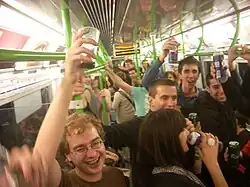 Social, cultural, and environmental influences, which is more a psychological based factor, influenced by surrounding friends, cultural diversities and social attractions from advertisings and social media, also contribute the amount of alcohol or caffeine related drinking (Reeve, 2025, p. 71). Example: Sometimes it’s not the reward of the caffeine or alcohol itself, the influences of friends, or social norms in culture, such as large gathering parties (see Figure 7) that everyone cheer up for us to drink; or even simply social media advertisements of how good the drink is, has an impact on how much we drink.
|
Quiz
What approaches do these mechanisms and theories involve
Table 1. Thirst regulation mechanisms
| Theories | Physiological | Psychological |
|---|---|---|
| Osmotic thirst | X | |
| Hypovolemic (Volumetric) thirst | X | |
| Drive reduction theory | X | |
| Freud's drive theory | X | |
| Allostasis theory | X | X |
| Social influences | X | X |
How does thirst regulation apply into real world settings
Exploring beyond the physiological and psychological mechanisms, the topic of thirst regulation has significant social implications. This section addresses the dehydration issues in different social contexts, such as elderly people, to ensure athletic performance safety, and understanding of climate change. We can utilise our thirst regulation knowledges to improve public health and ensure safety in diverse social contributions.
Water regulation and the global heatwaves / climate change

As global temperatures rise and heatwaves increase (see Figure 8), the community face more challenging hydration supply issues, the need for balanced water intake is essential in vulnerable populations such as children and elderly (Lim, 2020). There is research evidence proving vasopressin, a metabolic fluid like uric acid, function to act as surviving signals to monitor and help reduce dehydration. With the combination of global temperature changes, increase of body fluid loss (sweating, heatstroke) place these surviving signals in overloaded work state and potentially increase the risk of various diseases (Johnson, 2016). Therefore, our community needs more focus and better strategies for solving dehydration problems to prevent heat-related dehydration health issues.
Water regulation and concerns of elderly dehydration
Elderly people are more likely to dehydrate due to decreases in thirst sensitivity (Schols, 2009). Study evidence indicates that physiological mechanisms, including sodium appetite and Renin Angiotensin System (RAS), are responsible for body fluid balances and sodium homeostasis equilibrium are impaired through aging (Begg, 2017). Elderly people need more help to stay hydrated as they lack the same cognitive ability and mobility, living alone or in a nursing home (Schols, 2009). Based on a recent study, an increasing number of elderly people in nursing home/aged care facilities are diagnosed as dehydrated leading to international concern (Li, 2023), due to dehydration causing severe health issue including incident clinical conditions (Li, 2023).
Water regulation and management in athlete performance and safety
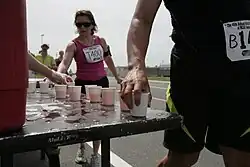
Dehydration can cause multiple medical conditions in athletes and possibly cause life-threating risks. Dehydration reduces the body’s ability to release heat and can cause heat stroke and sweat loss during exercise reduce blood and body fluid volumes. (Lim, 2020). Since 1970s, scientists stated that dehydration during sport impacts the ability regulate temperature of the body (Noakes, 2012). Studies prove that athletes, after 30km running, who intake sufficient water (see Figure 9) to keep their bodies’ at a dehydration level of ≪3% of body mass resulted approximately 38.5°C rectal temperature. In contrast, athletes who do not intake sufficient hydration, their rectal temperature is significantly higher which is harmful for their health (Noakes, 2012). Therefore, hydration regulation in athlete safety management is essential, and the hydration levels of athletes should be monitored to ensure enough water and electrolytes (mainly sodium and potassium) are taken to minimise the threat of chronic dehydration, and replenish the solute deficiency (Noakes, 2012).
Conclusion
This chapter explored how different kinds of physiological mechanisms including Osmotic thirst regulation, Hypovolemic thirst regulation and Allostatic theory form the foundation of our bodies’ drive to seek hydration. We began with different scenarios and demonstrated under what circumstances people feel dehydrated and are motivated to seek fluids, and what their mechanisms are in a physiological perspective. Osmotic thirst is triggered when our body's cells lose water due to the imbalance in solute concentration, and we are motivated to drink fluids to restore balance; And Hypovolemic thirst kicks in when our bodies sense drops of oval fluid volume or blood pressure, such as blood loss, over sweating, or not drinking enough, motivating us to restore the fluid balance.
There are some drinking motivations integrated with both physiological and psychological factors to trigger the motivation of drinking. Allostasis theory, rooted in the core foundation of physiological mechanisms, while integrating physiological regulation and psychological prediction from hypothalamus as biological monitoring the hydration level of the human body, and our psychological mindset also shapes and motivates hydration seeking behaviour from learned experiences. This bridges the physiological and psychological factors to control water equilibrium (Schulkin, 2011). Furthermore, there are few non-thirst related motivations that both affect physiological and psychological factors, such as over drinking with sweet tastes, alcohol and caffeine substance drinking. These behaviours are motivated by our neuro-rewarding system, also influenced by social-cultural factors (Reeve, 2025, p. 71).
This chapter also provided psychological theories and motivations for seeking hydration, such as Clark Hull’s Drive-Reduction Theory, Freud’s Drive Theory, demonstrating how our internal motivations are driven and anticipate the behaviour to seek hydration, ensuring our body integrity is satisfied and balanced, which are beyond the viewpoints of physiological perspectives.
Finally, all these physiological, psychological insights of hydration seeking motivation behaviours can be applied into a broader social context, and integrated into diverse social contributions in real world settings. Including hydration support for elderly people, athletic hydration and performance safety, and understanding of climate changes. Thirst regulation knowledge can be integrated to ensure water equilibrium in the body, improve public health services and ensure safety in diverse social contributions.
See also
- Binge drinking motivation in young people (book chapter, 2015)
- Caffeine and emotion (book chapter, 2013)
- Dehydration and mood (book chapter, 2014)
- Vasopressin and motivation (book chapter, 2024)
References
Burgos, J. E., & García-Leal, Ó. (2017). Drive state. In Encyclopedia of Animal Cognition and Behavior (pp. 1–8). Springer, Cham. https://link.springer.com/rwe/10.1007/978-3-319-47829-6_1100-1
Johnson, R. J., Stenvinkel, P., Jensen, T., Lanaspa, M. A., Roncal, C., Song, Z., ... & Sánchez-Lozada, L. G. (2016). Metabolic and kidney diseases in the setting of climate change, water shortage, and survival factors. Journal of the American Society of Nephrology, 27(8), 2247–2256. https://journals.lww.com/jasn/abstract/2016/08000/metabolic_and_kidney_diseases_in_the_setting_of.8.aspx
Kalat, J. W. (2023). Biological psychology 14e. Cengage Learning. 300–302.
Lacey, J., Corbett, J., Forni, L., Hooper, L., Hughes, F., Minto, G., ... & Montgomery, H. (2019). A multidisciplinary consensus on dehydration: definitions, diagnostic methods and clinical implications. Annals of medicine, 51(3–4), 232–251. https://www.tandfonline.com/doi/full/10.1080/07853890.2019.1628352#abstract
Leiper, J. (2013). Thirst physiology. Encyclopedia of human nutrition, 4, 283.
Li, S., Xiao, X., & Zhang, X. (2023). Hydration status in older adults: current knowledge and future challenges. Nutrients, 15(11), 2609. Hydration Status in Older Adults: Current Knowledge and Future Challenges.
Lim, C. L. (2020). Fundamental concepts of human thermoregulation and adaptation to heat: a review in the context of global warming. International journal of environmental research and public health, 17(21), 7795. https://www.sciencedirect.com/science/article/abs/pii/B978012813922600045X
McKenna, K., Thompson, C., & Thompson, C. (1998). Osmoregulation in clinical disorders of thirst appreciation. Clinical endocrinology, 49(2).
McKinley, M. J., & Johnson, A. K. (2004). The physiological regulation of thirst and fluid intake. Physiology, 19(1), 1–6. https://journals.physiology.org/doi/full/10.1152/nips.01470.2003
Noakes, T. D. (2007). Hydration in the marathon: using thirst to gauge safe fluid replacement. Sports Medicine, 37(4), 463–466. https://link.springer.com/article/10.2165/00007256-200737040-00050
Picó‐Munyoz, R., Tárrega, A., & Laguna, L. (2023). Origins of thirstiness sensation and current food solutions. Comprehensive reviews in food science and food safety, 22(6), 4433–4450. https://ift.onlinelibrary.wiley.com/doi/full/10.1111/1541-4337.13229
Reeve, J. (2025). Understanding motivation and emotion 8e. Wiley. 65, 71–72.
Schols, J. M. G. A., De Groot, C. P. G. M., Van Der Cammen, T. J. M., & Olde Rikkert, M. G. M. (2009). Preventing and treating dehydration in the elderly during periods of illness and warm weather. JNHA-The Journal of Nutrition, Health and Aging, 13(2), 150–157. Preventing and treating dehydration in the elderly during periods of illness and warm weather | The journal of nutrition, health & aging.
Schulkin, J. (2003). Rethinking homeostasis: Allostatic regulation in physiology and pathophysiology. MIT Press. 37–38.
Schulkin, J. (2011). Social allostasis: anticipatory regulation of the internal milieu. Frontiers in evolutionary neuroscience, 2, 111. https://www.frontiersin.org/journals/evolutionaryneuroscience/articles/10.3389/fnevo.2010.00111/full
Schulkin, J., & Sterling, P. (2019). Allostasis: a brain-centered, predictive mode of physiological regulation. Trends in neurosciences, 42(10), 740–752.
Solms, M., & Zellner, M. R. (2012). Freudian drive theory today. From the couch to the lab: Trends in psychodynamic neuroscience, 52–54. From the Couch to the Lab: Trends in Psychodynamic Neuroscience - Google Books.
Solms, M. (2021). Revision of drive theory. Journal of the American Psychoanalytic Association, 69(6), 1033–1091. https://journals.sagepub.com/doi/full/10.1177/00030651211057041?casa_token=V6SSAZEgrScAAAAA%3A9DunJnby1tRKeN9cAJAQHjx7Suk9gm_dTaxQ0RdVh74Qti2qBXlzGwBqxd8YcBPc2gTTxFwQ4gC604I
Sterling, P. (2004). Principles of allostasis: optimal design, predictive regulation, pathophysiology, and rational. Allostasis, homeostasis, and the costs of physiological adaptation, 17.
Sterling, P. (2012). Allostasis: a model of predictive regulation. Physiology & behavior, 106(1), 5–15.
Thomas, D. R., Cote, T. R., Lawhorne, L., Levenson, S. A., Rubenstein, L. Z., Smith, D. A., ... & Council, D. (2008). Understanding clinical dehydration and its treatment. Journal of the American Medical Directors Association, 9(5), 292–301. https://www.sciencedirect.com/science/article/abs/pii/S1525861008001072
Thornton, S. N. (2010). Thirst and hydration: physiology and consequences of dysfunction. Physiology & behavior, 100(1), 15–21. https://www.sciencedirect.com/science/article/pii/S0031938410001034?casa_token=oo3rLPnQ5_4AAAAA:2ujKOR5CuksPTzZ4l80HB9fk7FPbf1cqC7ws3z8U9xHqCWCaBEm0Qv_tbpOzr_VbXYxewQiH0lEc
Todini, L., & Fantuz, F. (2023). Thirst: neuroendocrine regulation in mammals. Veterinary research communications, 47(3), 1085–1101. Https://link.springer.com/article/10.1007/s11259-023-10104-2