Motivation and emotion/Book/2025/Tattoo regret
Overview

Imagine Anna, a 22-year-old university student, wakes up after a spontaneous weekend tattoo. Its her ex-partner’s name inked on her wrist. Weeks later, after a breakup, she feels a surge of regret: the tattoo no longer reflects her identity and brings daily discomfort. Should she wait and see if the feeling passes, cover it up, or opt for removal? |
Tattoo regret refers to the dissatisfaction or remorse a person feels after getting a tattoo, often due to changes in personal identity, impulsive decision-making, poor artistic quality, or social and professional pressures. While tattoos are intended as lasting expressions of self, they can lose their significance over time, become associated with unwanted memories, or cause practical challenges in work or relationships. Research suggests that 16.2 percent of people with tattoos experience regret at some point, highlighting the importance of understanding both its causes and solutions (Liszewski et al., 2015). Management options range from non-invasive approaches such as allowing time for reflection or opting for a cover-up to medical interventions like laser tattoo removal. This topic raises important questions: What psychological and social factors drive tattoo regret, and how can individuals make informed, lasting choices about body art?
Key points
- Tattoo regret can stem from shifting identity, impulsive decisions, poor aesthetic outcomes, or social/professional concerns.
- Regret varies in onset and intensity with some feeling it immediately, others years later.
- Several coping strategies exist such as healing time, cover-ups, removal. These all carry with varying costs, benefits, and risks.
Focus questions 
|
Key definitions and scope
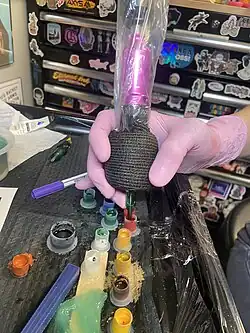
Tattoo regret can be defined as the negative affective evaluation of a previous tattoo decision (Altunay et al., 2022). It can involve dissatisfaction with appearance, a sense of misalignment with personal identity, or a strong desire for removal. Importantly, regret exists on a continuum, ranging from mild annoyance to significant psychological distress. Dissatisfaction refers to concern with specific features such as fading ink or poor line quality. Ambivalence is marked by mixed feelings toward the tattoo, where a person may feel pride in one context but shame in another. Decisional regret is a reflective appraisal that the choice itself was wrong, often accompanied by counterfactual thinking such as “I should have done things differently.”
Empirical studies suggest that between 14 and 25% of tattooed individuals report some form of regret (Swami et al., 2022). Timing varies widely: some experience immediate regret within weeks, often due to poor healing or impulsive decision making, while others develop regret years later as identities shift, careers evolve, or cultural norms change. Delayed regret is especially common during life transitions such as entering professional roles, becoming parents, or experiencing relationship breakdowns when tattoos commemorate a partner. Tattoos are now mainstream, with surveys indicating that 30–40% of adults in many Western countries have at least one tattoo (Pew Research Center, 2023). Despite their popularity, tattoos remain permanent body modifications. Regret can therefore have lasting consequences for psychological wellbeing, finances, and occupational mobility. The cost of removal averages thousands of dollars and involves painful, time-intensive procedures with no guarantee of complete erasure.
Theoretical frameworks (theory & research)
Emotion, identity, and self-expression are deeply intertwined with skin art. Psychodermatology views the skin not only as a physical surface but also as an interface between body and self (Altunay et al., 2021). From this perspective, dermatological complications such as scarring, pigment unevenness, or ghosting are not just cosmetic problems. They become visible reminders of imperfection that can intensify negative emotions and fuel regret. Tattoos that do not heal properly, or that respond unpredictably to removal procedures, can undermine body image. In this framework, regret is produced both by symbolic misalignment and by dissatisfaction with the physical condition of the canvas itself (Kluger, 2019).
Identity and self-concept theory
Tattoos can act as symbolic commitments to aspects of the self. Identity theory suggests that as individuals evolve across life stages, tattoos may become inconsistent with their current identity. When tattoos no longer reflect who someone believes they are, they can prompt identity threat and distancing. Tattoo regret in this framework functions as a signal of identity change and as an attempt to realign external self-expression with an updated internal self. Studies on temporal self-appraisal support this idea, showing that people often perceive their past selves as less authentic or disconnected from their current identity (Ross & Wilson, 2003).
Decision-affect and regret theory
Decision-affect and regret theories explain how regret occurs when people compare actual outcomes with imagined alternatives. Tattoos, because they are relatively permanent, invite strong counterfactual thinking such as “if only I had waited” or “I could have chosen differently.” The permanence of tattoos increases the psychological weight of these counterfactuals. Regret is especially acute when individuals believe they acted impulsively but could have made a more deliberate choice, reinforcing feelings of responsibility for the outcome (Bleichrodt et al., 2009; Atik & Yιldιrιm, 2014).
Cognitive dissonance theory
Cognitive dissonance theory highlights the discomfort that arises when tattoos conflict with current social roles or values. For instance, a tattoo obtained to symbolise rebellion may later feel incompatible with the requirements of a conservative professional environment. In order to reduce this dissonance, people may adopt different coping strategies such as reframing the meaning of the tattoo, covering it in social or professional settings, or pursuing removal. This ongoing tension underscores how regret is shaped not only by individual decision-making but also by shifting social roles and expectations (Broussard & Harton, 2017; Timming & Perrett, 2016).
| Case study: Sarahs story
Sarah got a tattoo on her forearm at 19 to symbolise independence and rebellion. Several years later, she began working in a conservative law firm where visible tattoos were discouraged. The values represented by her tattoo no longer fit with the professional image expected at work, creating discomfort. To cope, Sarah reframed the tattoo’s meaning, covered it with clothing, and eventually considered laser removal. This case shows how regret can arise when tattoos become incompatible with new social roles, and how people use strategies such as reframing, concealment, or removal to reduce dissonance |
Stigma and labelling perspectives
Tattoos often reflect youthful rebellion, but as cultural norms shift they may become misaligned with evolving identities, particularly when they were acquired impulsively (Madfis & Arford, 2013). Stigma and labelling theories emphasise that external judgments and stereotypes strongly influence internal experience. A visible tattoo can trigger labels such as “unprofessional” or “outsider,” which in turn shape self-concept and heighten regret. Motivations for tattoo removal often extend beyond aesthetics, with many individuals citing public criticism and workplace stigma as decisive factors (Sharifi & Nouri, 2025). This demonstrates that tattoo regret is not purely an individual phenomenon but a product of wider cultural and institutional contexts.
Taken together, psychodermatology, identity change, regret theory, cognitive dissonance, and labelling perspectives explain why regret persists even as tattoos become mainstream. Psychodermatology accounts for distress when the physical outcome falls short. Identity and temporal self-appraisal explain why meaning drifts with life stage. Regret theory clarifies why durable and controllable choices evoke counterfactuals. Dissonance and labelling show how role demands and stigma intensify discomfort. No single theory suffices; the evidence indicates multiple, partly independent routes to regret, which implies that prevention and remediation should be tailored to pathway.
Causes of tattoo regret
Identity shifts over time can make tattoos feel incongruent with personal growth (Sear, 2015). Tattoo regret arises from an interplay of psychological processes, social contexts, and decision-related factors (see Table 1)
Table 1. Causes of tattoo regret
| Category | Key cause | Description | Example |
|---|---|---|---|
| Psychological factors | Identity change & cognitive dissonance | As people grow and their self-concept evolves, tattoos may feel out of sync with current identity or roles, creating regret and discomfort. | A tattoo that represented rebellion at 18 feels unprofessional at 30. |
| Social factors | Social stigma & feedback | Negative reactions from peers, family, or employers, and broader cultural stigma can amplify regret, particularly for visible tattoos. | Co-workers criticise a visible tattoo, leading to embarrassment. |
| Decision/tattoo-related factors | Impulsivity, poor planning, or visible placement | Rushed or impulsive decisions without planning, or tattoos in highly visible areas, often increase likelihood of long-term dissatisfaction. | A spur-of-the-moment wrist tattoo becomes a source of regret in conservative workplaces. |
| Health & healing factors | Complications in healing/aftercare | Poor healing, infections, or scarring can distort tattoos, making the final result disappointing and regret more likely. | Improper aftercare causes scarring that alters the tattoo design. |
Psychological and developmental factors
Psychological factors include identity change over time, where designs meaningful at 18 may feel incompatible by 30 when new professional, relational, or cultural roles emerge. Research on temporal self-appraisal shows that people often distance themselves from past selves (Ross & Wilson, 2003), making earlier tattoo choices seem alien. Adolescents may lack emotional regulation or foresight, leading to higher regret rates (Dukes, 2016) with impulsivity and sensation-seeking being further contributors, as many regretted tattoos are acquired in contexts of heightened arousal such as nights out or travel adventures, where foresight is limited. Cognitive dissonance also plays a role, as tattoos can create discomfort when they conflict with current values or roles. For example, a rebellious design may create dissonance when the same individual later seeks acceptance in conservative professional settings (Nanay, 2023). Unrealistic expectations about permanence, quality, or social acceptance often lead to disappointment, particularly when tattoos age poorly or when the emotional meaning attached to them fades.
Social and situational influences
Social and situational factors often amplify tattoo regret. Social feedback plays a central role, with praise and acceptance reinforcing satisfaction while criticism or stigma provoke shame and dissatisfaction. Tattoos acquired in moments of peer pressure, intoxication, or during transient life stages such as relationships are especially vulnerable to later regret. Cultural and occupational norms also shape this process, as acceptance of tattoos varies across societies and professions. In conservative or religious contexts, tattoos may be associated with deviance, which increases regret when individuals internalise stigma. Regret is also strongly influenced by career concerns and unwanted attention, particularly when tattoos are highly visible or linked to relationships (Dickson et al., 2014).
Decision-making and tattoo characteristics
Decision-related and tattoo characteristics play a crucial role in shaping regret. Regret is less common when individuals carefully research artists, iterate on designs, and consider long-term relevance, while poor planning or hasty choices about design, artist, or placement significantly increase the likelihood of dissatisfaction (Resnick, 2025). Placement and visibility are especially important, as tattoos on the hands, neck, or face often produce greater long-term regret, particularly in professional settings where appearance norms are strict. Design choices also matter, with trend-sensitive motifs and partner names strongly associated with regret due to their transient meanings. Smaller tattoos obtained on a whim are more often regretted, whereas larger or more personally meaningful tattoos are less likely to trigger dissatisfaction (Advanced Dermatology, 2025). Finally, poor aftercare can result in infections, scarring, or pigment distortion, which compromise appearance and intensify regret.
|
Previous research
Prevalence, timing and statistics
Tattoo regret is common worldwide, but prevalence rates vary across populations and cultural contexts. In a U.S. cross-sectional survey of 501 tattooed adults, 16.2% reported regretting at least one tattoo and 21.2% expressed interest in removal (Liszewski et al., 2015). Complications were frequently reported, including infection (3.2%), pain (3.8%), and pruritus (21.2%), and these were associated with dissatisfaction. Risk behaviours were also common: more than one in five participants had been tattooed while intoxicated and 17.6% had received tattoos outside professional parlours, both practices linked to higher regret. These findings highlight the role of impulsive decision-making and unsafe conditions in shaping long-term outcomes.
In Turkey, regret rates were higher. A multi-centre dermatology outpatient study found that 26% of 302 patients regretted at least one tattoo, and among these, 42.5% had pursued removal or camouflage through a cover-up (Altunay et al., 2022). The most common reason for regret was simply “not liking the tattoo anymore,” demonstrating that dissatisfaction often emerges independently of medical complications. The study also reported demographic patterns, with women more likely to cite motivations such as individuality or beauty, while overall motivations included independence, self-image, and aesthetics.
Together, these studies illustrate how regret is shaped by a combination of physical complications, impulsive behaviour, and shifting identity or aesthetic preferences. They also suggest that regret is not uniform but context-dependent, reflecting the interplay of psychological, social, and cultural factors (Morlock et al., 2017).
International studies
Evidence from international research shows that tattoo regret is a widespread but context-dependent phenomenon. In the United States, the study by Liszewski et al. (2015) found that of the 16.2% that regretted at least one tattoo presented with common risk factors including tattoos obtained while intoxicated, tattoos placed outside professional parlours, and complications such as infection, pain, and pruritus. These findings highlight how impulsive decision-making and unsafe practices amplify dissatisfaction. In Turkey, Altunay et al. (2022) reported higher regret rates, with 26% of dermatology outpatients expressing dissatisfaction and 42.5% pursuing either removal or camouflage through cover-ups. Notably, the most common reason for regret was simply “not liking the tattoo anymore,” and gender differences emerged in motivations, with women more likely to describe tattoos as expressions of individuality or beauty. This suggests that regret is shaped by both cultural norms and personal identity trajectories.
Findings from Saudi Arabia provide further insight into the demographic and cultural context of tattoo regret. A recent survey by Mitwalli & Alfurayh (2024) of 181 tattooed individuals, most of whom were women, showed that nearly half had obtained their first tattoo between 18 and 25 years of age, with cosmetic tattoos such as eyebrow micro-pigmentation especially common. Regret and dissatisfaction were often linked to appearance, lifestyle, and professional concerns, and complications such as pain, itching, and scarring contributed to diminished quality of life. Consistent with other international samples, many participants expressed interest in removal, with lasers recognised as the most effective but imperfect method.
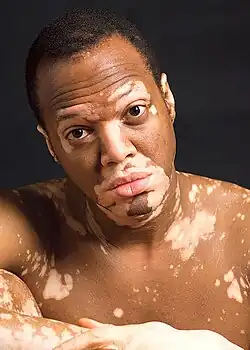
Tattoo regret is not solely psychological but can also be medical in origin. Yadav et al. (2020) described cases in India where tattoos were sought as camouflage for dermatological conditions such as vitiligo (see Image 3.) and morphea. In these instances, tattooing reactivated disease processes and worsened lesions due to Koebner’s phenomenon, leaving patients with both medical complications and regret. These cases underscore how social pressures, misinformation, and medical vulnerability intersect with tattoo practices, broadening the understanding of regret beyond impulsivity or symbolic misalignment.
Taken together, these international studies demonstrate that tattoo regret is common across cultures but manifests differently depending on context. In Western settings, regret often reflects impulsive choices, stigma, or identity shifts. In Middle Eastern contexts, cosmetic tattoos and cultural attitudes toward appearance and professionalism are especially salient. In South Asian settings, medical complications and therapeutic tattooing add another dimension. Collectively, this research reinforces that tattoo regret is a multidimensional phenomenon shaped by identity, social meaning, health, and cultural expectations.
Managing tattoo regret: practical applications
| Tattoo Removal experts advise waiting 2–4 weeks for healing; regret may fade as the tattoo settles.
Reflection time allows assessing whether regret is transient or persistent. |
Coping strategies
Include normalising identity change (accepting that people evolve), selective concealment (e.g. clothing or sleeves), and meaning reappraisal (re-narrating the tattoo’s story). Psychological counselling or body-image therapy may benefit those for whom regret causes distress.
Cover-ups
Using new designs to mask or integrate old tattoos. Cover-ups are often effective but come with compromises: the new design usually must be larger, darker, or more complex, and perfect masking is not guaranteed. Satisfaction is higher when clients have realistic expectations.
Laser removal
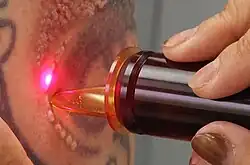
Laser removal (see Image 4. and Image 5.) is the most direct approach. It generally requires multiple sessions (often 6–15 or more depending on size, ink colour, layering, and skin type). Success is incomplete in many cases; residual ghosting, scarring, hypopigmentation, or skin texture changes are common even with current laser technologies (e.g. selective photothermolysis, picosecond lasers). The Kirby–Desai Scale is a clinically used predictive scoring system to estimate the number of sessions needed based on skin type, ink density, location, scarring, etc.
Surgical removal
Surgical removal is a less common but sometimes necessary option for tattoo regret. Techniques such as excision involve cutting out the tattooed skin and stitching the wound closed, which is generally only feasible for small designs. Larger tattoos may require staged excisions or skin grafting, both of which carry higher risks of scarring, infection, and altered skin texture (Kluger, 2019). While surgery offers immediate removal, it is considered a last resort when other methods such as laser treatment are ineffective or unsuitable, and patients must weigh the permanence of scarring against the psychological relief of eliminating the tattoo.
Psychological motivation is often central in removal decisions: many patients cite regret, shame, or social pressures more than aesthetic dislike (Sharifi & Nouri, 2025). Post-removal psychological outcomes remain under-researched, but preliminary evidence suggests some people gain confidence, reduced stigma, and better social reception (especially in justice-involved populations) (Motivations for Seeking Laser Tattoo Removal, 2022).
|
Broader implications and future directions
Tattoo regret has implications that reach beyond individual dissatisfaction. At a psychological level, it highlights the tension between permanence and human change. Tattoos fix a moment of self-expression on the body, but identity continues to evolve. This tension reflects wider challenges in life where decisions are difficult to reverse, such as cosmetic procedures, elective surgeries, or even financial commitments. Research on temporal self-appraisal shows that people often distance themselves from their past selves (Ross & Wilson, 2003), which helps explain why tattoos that once felt meaningful may later feel foreign. Understanding regret in this context provides insights into how people adapt to long-term decisions that become misaligned with their present identity.
From a social perspective, tattoo regret demonstrates how stigma and cultural labelling influence personal meaning. Tattoos have historically been associated with deviance, subcultures, or rebellion (Madfis & Arford, 2013). Even as tattoos become more mainstream, visible tattoos can still attract workplace stigma and criticism, shaping regret and motivating removal (Sharifi & Nouri, 2025). Cross-cultural work will be valuable in clarifying whether regret decreases as social acceptance rises, or whether it persists primarily because of psychological and identity factors.
Future research should address several gaps. Longitudinal studies are needed to track how regret develops over time and what predicts it across the life course. Clinical and psychodermatological research could also examine outcomes of different coping strategies, such as re-narration or concealment compared to removal, since current evidence is limited (Altunay et al., 2021). Testing preventative interventions, such as cooling-off periods or future-self reflection exercises, would also be important in reducing regret incidence. Additionally, more research on post-removal outcomes is necessary, as early findings suggest that removal can improve confidence and social integration, particularly in justice-involved populations (Motivations for Seeking Laser Tattoo Removal, 2022)
|
Sam, a 19-year-old apprentice chef, decided to get his first tattoo during a weekend trip with friends. Encouraged by the group and wanting to mark the occasion, he chose a small, colourful design on his forearm depicting a cartoon character he loved as a teenager. At the time, the decision felt exciting and spontaneous. Within months, Sam began to feel uneasy about the tattoo. As he progressed in his career, he noticed colleagues making occasional comments about it, and he worried it looked unprofessional during customer-facing shifts. The once-favourite cartoon character now seemed out of place with his maturing sense of style. Sam found himself covering the tattoo with long sleeves, even in the summer. After researching his options, Sam initially considered laser removal but was deterred by the high cost and multiple sessions required. Instead, he consulted a skilled tattoo artist about a cover-up design. Together, they created a new piece incorporating a minimalist botanical motif that felt more timeless and personally meaningful. The process helped Sam feel ownership over his body again and turned an impulsive choice into an expression he was proud to show. Discussion questions Which factors in Sam’s case contributed most to his tattoo regret? How might Sam have avoided this outcome before getting the tattoo? What psychological processes (e.g., identity change, social pressure) are illustrated here? How does Sam’s choice of a cover-up reflect one way of managing tattoo regret?
|

Conclusion
Tattoo regret illustrates how motivation and emotion influence human behaviour through the interplay of identity, decision-making, and social context. Many people are motivated to get tattoos to express individuality, affirm belonging, or enhance self-image. Yet over time, identity shifts, evolving social expectations, and changes in the tattoo’s appearance can transform pride into dissatisfaction. Psychological theories clarify these processes. Identity and self-concept theory explain why tattoos that once felt authentic may later appear misaligned with the current self (Ross & Wilson, 2003). Decision-affect and regret theory highlight how irreversible choices increase counterfactual thinking and magnify dissatisfaction (Zeelenberg & Pieters, 2007). Cognitive dissonance theory shows how tattoos that conflict with present values or roles create discomfort, leading people to reframe meaning, conceal the tattoo, or pursue removal (Festinger, 1957). Psychodermatology adds that scarring, pigment irregularities, and fading can intensify regret by making imperfections visible (Altunay et al., 2021). Stigma and labeling perspectives further demonstrate how external judgments and workplace norms shape internal experiences of regret (Madfis & Arford, 2013; Sharifi & Nouri, 2025).
Empirical research confirms that regret is common but variable across populations. Prevalence ranges from 16 to 25 percent in U.S. samples (Liszewski et al., 2015; Morlock et al., 2017) to 26 percent among Turkish dermatology patients (Altunay et al., 2022). The most frequent triggers include impulsive decision-making, intoxication, visible placement, and dissatisfaction with artistic or physical outcomes. Regret may emerge immediately, due to poor healing or impulsivity, or years later, as identities shift and cultural or occupational expectations change.
The focus questions can now be answered. People regret tattoos when they become misaligned with identity or values, when social stigma reshapes their meaning, or when physical complications undermine satisfaction. Regret evolves over time, shaped by life transitions and social pressures. Psychological science offers multiple frameworks to explain this complexity and highlights practical coping options, from reappraisal and concealment to cover-ups and removal. The central take-home message is that while tattoos are intended as permanent expressions of identity, human lives and roles change, making thoughtful decision-making and realistic expectations essential in reducing regret.
See also
- Body modifications (Wikipedia)
- Cognitive dissonance (Wikipedia)
- Counselling (Wikipedia)
- Koebner phenomenon (Wikipedia)
- Morphea (Wikipedia)
- Psychodermatology (Wikipedia)
- Regret theory (Wikipedia)
- Tattoo (Wikipedia)
- Tattoo removal (Wikipedia)
- The Kirby–Desai Scale (Wikipedia)
- Vitiligo (Wikipedia)
- Western Countries (Wikipedia)
References
Bleichrodt, H., Cillo, A., & Diecidue, E. (2010). A Quantitative Measurement of Regret Theory. Management Science, 56(1), 161–175. https://doi.org/10.1287/mnsc.1090.1097
Broussard, K. A., & Harton, H. C. (2018). Tattoo or taboo? Tattoo stigma and negative attitudes toward tattooed individuals. The Journal of Social Psychology, 158(5), 521–540. https://doi.org/10.1080/00224545.2017.1373622
Dickson, L., Dukes, R., Smith, H., & Strapko, N. (2014). Stigma of ink: Tattoo attitudes among college students. The Social Science Journal, 51(2), 265–276. <nowiki>https://doi.org/10.1016/j.soscij.2014.02.005
Dukes, R. L. (2016). Regret among tattooed adolescents. The Social Science Journal, 53(4), 455–458. <nowiki>https://doi.org/10.1016/j.soscij.2016.08.004
Kıvanç Altunay, İ., Mercan, S., & Özkur, E. (2021). Tattoos in Psychodermatology. Psych, 3(3), 269–278. <nowiki>https://doi.org/10.3390/psych3030021
Liszewski, W., Kream, E., Helland, S., Cavigli, A., Lavin, B. C., & Murina, A. (2015). The Demographics and Rates of Tattoo Complications, Regret, and Unsafe Tattooing Practices. Dermatologic Surgery, 41(11), 1283–1289. https://doi.org/10.1097/dss.0000000000000500
Madfis, E., & Arford, T. (2013). The dilemmas of embodied symbolic representation: Regret in contemporary American tattoo narratives. The Social Science Journal, 50(4), 547–556. <nowiki>https://doi.org/10.1016/j.soscij.2013.07.012
Mitwalli, H., & Alfurayh, N. (2024). Tattoo Regret, Complications, and Removal: A Cross‐Sectional Study among Tattooed Individuals in Saudi Arabia. Dermatology Research and Practice, 2024(1). https://doi.org/10.1155/2024/5673785
Schaeffer, K., & Dinesh, S. (2023, August 15). 32% of Americans have a tattoo, including 22% who have more than one. Pew Research Center. <nowiki>https://www.pewresearch.org/short-reads/2023/08/15/32-of-americans-have-a-tattoo-including-22-who-have-more-than-one/?utm_
Timming, A. R., & Perrett, D. (2016). Trust and mixed signals: A study of religion, tattoos and cognitive dissonance. Personality and Individual Differences, 97, 234–238. https://doi.org/10.1016/j.paid.2016.03.067
Yadav, P., Yadav, A., Yadav, J., & Chander, R. (2020). Tattoo for camouflage: A new cause of tattoo regret. Indian Dermatology Online Journal, 11(2), 250. https://doi.org/10.4103/idoj.idoj_189_19
External links
Navigating Tattoo Regret: Insights, Statistics, and Advice (TattooPathway)
So, You Regret Your Tattoo—Now What? We Asked the Pros (Byrdie)
Tattoo Regret (The British Psychological Society)
The statistics surrounding tattoo regret and how to avoid it (Advanced Dermatology)
Why Most People Don't Regret Their Tattoos (Psychology Today)