Motivation and emotion/Book/2025/Self-transcendent emotions
What are self-transcendent emotions and how can they be cultivated?
Overview
This book chapter will focus on exploring self-transcendent emotions.
Nathanial has started feeling more anxious due to climate change. He is worried more and more about his future and what living conditions will be like in the future. He feels increasingly saddened when he hears about animals dying and ecosystems collapsing. One night, he heads out on his horse to get away from all the pressures. He rides up into the mountains. It's a warm summer evening. The sun has set but he knows his way well. He rides to the top of the mountain. He enters the clearing and stops. All the stars are out. It's so clear and they are so bright. He is up so high, the stars appear all around him. As low as his waste where he sits in the saddle. He can see a huge blue halo bubble far off in the distance. He realises it's the city lights glowing like a space dome. In that moment, he is struct by the pure majestic expanse of it all. The sheer beauty. It feels surreal. All time and space disappears, converges, expands. The moment brings Nathaniel alive, surrounds him, releases him in a way he has never experienced before. He feels free and yet connected to everything. What makes us feel connected to something greater than ourselves? |
 Focus questions
|
Self-transcendence can be a tricky concept to grasp. It has been defined as an expansion of the self, that can transcend time and space (cite). Self-transcendence is considered to be an alignment between intrinsic self values and optimal harmony with the outside world. Self-transcendence focuses on the "we," not the "me." (cite) It is outward focused and pro-socially inclined. It goes beyond Maslow's hierarchy of needs, incorporates Vicktor Frankls ideas of meaning and purpose, and can be explored
It is widely accepted that emotions play an evolutionary role in assisting human beings to adapt and thrive (Chow et al., 2022). Modern society faces multiple challenges. From every day living, to global societal and environmental impacts. By cultivating self-transcendent emotions, we can collectively enhance optimal thriving for each other and our environment. Self-transcendent emotions are at the pinnacle of positive emotions. They help to enhance the well-being of societies through pro-social attributes and behaviours that serve humanity (Li et al., 2024). They are distinct from simple feelings (Weijers & Cox, 2025).
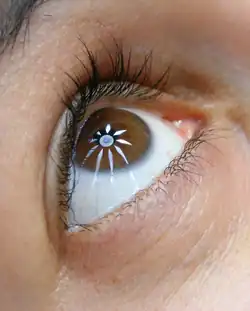
What do you think of the word self-transcendence, do you imagine some sage words, as shown in Figure 1? Reload the photo and replace temp place holder.
The key explanatory documents are the:
Theoretical construct of self-transcendence
Intro para
Frankl's self-transcendent model
Maslow's hierarchy of needs
Self-actualisation - congruence and satisfaction with the self (Reicher, 2025).
B-value values - top items of the hierarchy of needs
- Maslow's hierarchy of needs
- Clayton Alderfer's Model
- Self-transcendence theory
- Self-determination theory
- Expand further
- Case study 1 - Climate anxiety of young person
- Case study 2 - Father seeing emaciated children in Gaza on the news feeling anger
- Case study 3 - Existential fear from dying cancer patient
- Case study 4 - Person feeling lost looking for purpose and meaning in their life
Emotional mechanisms connected with self-transcendence
- Neuroplasticity
- Different brain regions associated with different emotional states; executive network, default network
- Physiological states that can affect emotions
- Enlightenment; perceptually, cognitively. The state of clarity
- Examples of some of the biggest discoveries eg. long term meditators having brains similar to much young people etc
- Explore further
|
Case Study 2:
|
Transcendent emotions
- Awe
- Admiration
- Gratitude
- Inspiration
- Wisdom
- Higher levels of consciousness; being as apposed to having
- Hope
- Insight
- Connection
- Compassion - overcomes anger, hate, fear, revenge, cruelty, and violence.
- Awareness
- Purpose
Expand further and adapt
Practical activities to explore and experience optimal emotional states
Expand further and adapt
- Example of how cultivating self-transcendent emotions can lead to positive wellbeing and prosocial behaviour
Table 1. Empathy Vs Compassion in the brain when seeing someone experiencing pain
| Empathy | Compassion | |
|---|---|---|
| Internal/external focus | Self oriented | Other oriented |
| Brain activation | pain matrix activated | motor cortex firing |
| Emotional state | mirrored feeling of pain | motivated to act and help |
Conclusion
- Reiterate self-transcendence encompassing more than oneself; focused outward more than inward (the 'we, not the 'me' so much
- Sum up the evidence supporting cultivating the emotional states that lead to self-transcendence
- Optimal benefits to wellbeing supported by the evidence
- end off with a few simple ways to practice
- Suggested word count: 150 to 330 words
- It should be possible for someone to only read the Overview and the Conclusion and still get a good idea of the problem and what is known based on psychological science
|
|

See also
- Self-transcendence (Wikipedia)
- Peak experiences (Wikipedia)
- Positive psychology (Wikipedia)
- Ego death (Book chapter, 2024)
- Transpersonal psychology (Book chapter, 2020)
References
Castelo, N., White, K., & Goode, M. R. (2021). Nature promotes self-transcendence and prosocial behavior. Journal of Environmental Psychology, 76, Article 101639. https://doi.org/10.1016/j.jenvp.2021.101639
Chow, P. I., Berenbaum, H., Boden, M. T., & Flores, L. E. (2023). All for one or one for all? Examining a parsing of emotion that is informed by lay people’s values. Motivation and Emotion, 47(3), 333–346. https://doi.org/10.1007/s11031-022-10002-1
Clayton, R. B., Raney, A. A., Oliver, M. B., Neumann, D., Janicke-Bowles, S. H., & Dale, K. R. (2021). Feeling transcendent? Measuring psychophysiological responses to self-transcendent media content. Media Psychology, 24(3), 359–384. https://doi.org/10.1080/15213269.2019.1700135
Christov-Moore, L., Schoeller, F., Lynch, C., Sacchet, M., & Reggente, N. (2024). Self-transcendence accompanies aesthetic chills. PLOS Mental Health, 1(5), e0000125. https://doi.org/10.1371/journal.pmen.0000125
Gao, M., Qiu, X., & Zhu, H. (2024). The Relationship between awe and Prosocial Behavior: A Three-Level Meta-Analysis. Basic and Applied Social Psychology, 1–15. https://doi.org/10.1080/01973533.2024.2433721
Garland, E. L. (2021). Mindful positive emotion regulation as a treatment for addiction: from hedonic pleasure to self-transcendent meaning. Current Opinion in Behavioral Sciences, 39, 168–177. https://doi.org/10.1016/j.cobeha.2021.03.019
Freimann, A., Mayseless, O., Hart, T., & Johnson, A. (2025). Living Transcendence: A Phenomenological Study of Spiritual Exemplars. The Humanistic Psychologist, 53(2), 266–288. https://doi.org/10.1037/hum0000359
Haryanto, S., & Muslih, M. (2025). The Contribution of Transpersonal Psychology to The Emotional, Mental, and Spiritual Well-Being of Individuals. Islamic Guidance and Counseling Journal (Online), 8(1). https://doi.org/10.25217/0020258549000
Heylighen, F. (2025). Curiosity, Awe and Wonder: The Emotions that Open Our Mind. Foundations of Science. https://doi.org/10.1007/s10699-025-09972-5
Huang, M., & Yang, F. (2023). Self-Transcendence or Self-Enhancement: People’s Perceptions of Meaning and Happiness in Relation to the Self. Journal of Experimental Psychology. General, 152(2), 590–610. https://doi.org/10.1037/xge0001297
Indius, S. (2024). Meditation and Self-transcendence: A Human Need? Integrative Physiological and Behavioral Science, 58(3), 878–883. https://doi.org/10.1007/s12124-024-09848-6
Ji, Q., & Raney, A. A. (2020). Developing and validating the self-transcendent emotion dictionary for text analysis. PloS One, 15(9), e0239050. https://doi.org/10.1371/journal.pone.0239050
Jiang, T., & Sedikides, C. (2022). Awe Motivates Authentic-Self Pursuit via Self-Transcendence: Implications for Prosociality. Journal of Personality and Social Psychology, 123(3), 576–596. https://doi.org/10.1037/pspi0000381
Kałużna, A., Schlosser, M., Gulliksen Craste, E., Stroud, J., & Cooke, J. (2022). Being no one, being One: The role of ego-dissolution and connectedness in the therapeutic effects of psychedelic experience. Journal of Psychedelic Studies, 6(2), 111–136. https://doi.org/10.1556/2054.2022.00199
Li, R., Hou, Z., Zhang, C., Xu, Q., & Nie, A. (2024). A meta-analysis examining the relationship between awe and prosocial behavior. Current Psychology, 43(29), 24702–24711. https://doi.org/10.1007/s12144-024-06039-9
Llanos, L. F., & Martínez Verduzco, L. (2022). From Self-Transcendence to Collective Transcendence: In Search of the Order of Hierarchies in Maslow’s Transcendence. Frontiers in Psychology, 13, 787591. https://doi.org/10.3389/fpsyg.2022.787591
Perdomo-Guevara, E., & Dibben, N. (2025). Cultivating meaning and self-transcendence to increase positive emotions and decrease anxiety in music performance. Psychology of Music, 53(3), 337–354. https://doi.org/10.1177/03057356241246052
Peteet, J. R., Cloninger, C. R., & Cloninger, K. M. (2021). Self-Transcendence. In The Virtues in Psychiatric Practice. Oxford University Press. https://doi.org/10.1093/med/9780197524480.003.0011
Rahrig, H., Vago, D. R., Passarelli, M. A., Auten, A., Lynn, N. A., & Brown, K. W. (2022). Meta-analytic evidence that mindfulness training alters resting state default mode network connectivity. Scientific Reports, 12(1), Article 12260. https://doi.org/10.1038/s41598-022-15195-6
Reischer, H. N., Cowan, H. R., Johnson, K. M., & Mittal, V. A. (2025). Self‐Transcendence as a Risk and Resilience Factor in Individuals at Clinical High Risk for Psychosis. Early Intervention in Psychiatry, 19(1), e13638-n/a. https://doi.org/10.1111/eip.13638
Rogawski, M., Simonsmeier, B. A., & Buecker, S. (2025). The Quiet Ego: A Meta-Analytical Review. Journal of Happiness Studies, 26(7), Article 112. https://doi.org/10.1007/s10902-025-00923-2
Tee, E. Y. J., & binti Raja Reza Shah, R. I. A. (2023). Self‐transcendent emotions and their influence on organizational effectiveness: A literature review and synthesis. Asian Journal of Social Psychology, 26(1), 146–163. https://doi.org/10.1111/ajsp.12550
Weijers, K. A. M., & Cox, E. R. J. (2025). Valuing peak experience in everyday lives : insights from positive and transpersonal psychology. Routledge.
Wong, P. T. (2022). The best possible life in a troubled world: The seven principles of self-transcendence. Positive Psychology in Counseling and Education, 1, 1-24.
Wong, P. T. P., Arslan, G., Bowers, V. L., Peacock, E. J., Kjell, O. N. E., Ivtzan, I., & Lomas, T. (2021). Self-Transcendence as a Buffer Against COVID-19 Suffering: The Development and Validation of the Self-Transcendence Measure-B. Frontiers in Psychology, 12, 648549. https://doi.org/10.3389/fpsyg.2021.648549
Worth, P., & Smith, M. D. (2021). Clearing the Pathways to Self-Transcendence. Frontiers in Psychology, 12, 648381. https://doi.org/10.3389/fpsyg.2021.648381
Zhao, D., & Raney, A. A. (2024). Mood Enhancement, Self-Transcendence, and Prosociality: Selective Exposure to Self-Transcendent Media Entertainment and Prosocial Behavior. Journal of Media Psychology. https://doi.org/10.1027/1864-1105/a000447
External links
- Ancient wisdom + modern science (Fitmind.org)
- Self-transcendent theory (Self-transcendence.org)
- What is self-transcendence? Definition and 6 examples (Positivepschology.com)