Motivation and emotion/Book/2025/Morbid curiosity
What is morbid curiosity, what causes it, and how does it influence behaviour?
Overview-User:Chelsea Schofield - Wikiversity
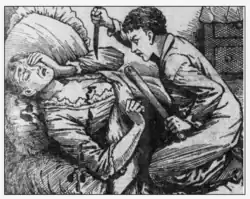 Scenario You are watching a late-night documentary. It begins with a calm narrator, but soon shifts to graphic crime scene footage. You feel your pulse quicken — part of you wants to turn away, yet another part leans closer. Why? |
This chapter explores the psychological phenomenon of morbid curiosity examining why individuals are drawn to content that is disturbing dangerous or taboo. The chapter considers morbid curiosity as both an adaptive trait and form of sensation seeking driven by emotional arousal and novelty.
|
What Is Morbid Curiosity
Morbid curiosity refers to the attraction people feel toward material that is disturbing, taboo, or frightening. Instead of turning away from scenes of violence, death, or danger, many individuals are compelled to look closer—even while knowing the experience may provoke discomfort. This paradox, of wanting to avoid something unpleasant while simultaneously feeling drawn toward it, is central to understanding morbid curiosity (Scrivner, 2021).
Across history, fascination with death and danger has been a recurring theme. Public executions, gladiator games, and other violent spectacles often drew massive crowds, indicating that this tendency is not unique to modern society but deeply rooted in human behavior (Oosterwijk, 2017). In contemporary contexts, the same impulse is visible in the popularity of horror films, true crime documentaries, and breaking news reports that highlight violent or tragic events.
Psychological theories help explain why morbid curiosity emerges. Loewenstein’s (1994) information gap theory proposes that curiosity arises when there is a gap between what we know and what we want to know. For example, when a documentary withholds crucial details about a crime, viewers may feel compelled to continue watching until those gaps are filled. Zuckerman’s (1979) work on sensation seeking shows that some individuals are particularly drawn to high-arousal, risky, or novel experiences, meaning they may find morbid material thrilling rather than purely distressing.
More recent research has established ways to measure these tendencies. Scrivner (2021) developed the Morbid Curiosity Scale, which breaks morbid curiosity into domains such as interest in death and bodies, violence, the supernatural, danger and disasters, and body violations. Studies using this scale demonstrate that morbid curiosity varies across individuals and cultures (Wang, Wang, Cai, & Tu, 2023).
Importantly, morbid curiosity may also serve adaptive functions. It can help individuals mentally rehearse responses to potential threats, build resilience by confronting fear in safe contexts, or strengthen social bonds when unsettling experiences are shared (Zuckerman & Litle, 1986; Scrivner, 2021b). For instance, people who watch disturbing films together often report a heightened sense of social bonding and collective identity. Neuroimaging research even suggests that choosing to view morbid material engages reward circuitry in the brain, implying that curiosity about the macabre is not only tolerated but may be intrinsically rewarding (Oosterwijk, Snoek, Tekoppele, Engelbert, & Scholte, 2020).
Overall, morbid curiosity is best understood as a complex motivational process rather than a simple fascination with the grotesque. It is a way of seeking knowledge, managing difficult emotions, rehearsing responses to threat, and engaging in powerful shared experiences. Far from being a marginal or pathological tendency, morbid curiosity reflects a fundamental part of human psychology that has persisted across time, culture, and society.
What Are The Psychological Motivators?
Why do people lean toward the very things that make them shudder? Psychologists argue that morbid curiosity is not a trivial quirk, but a motivational force with deep roots in survival, thrill-seeking, and social connection. Four main perspectives help explain why individuals are drawn to the disturbing or taboo.
The Information Gap
Loewenstein’s (1994) information gap theory suggests that curiosity arises when there is a mismatch between what we know and what we want to know. This “gap” produces psychological tension, which drives people to close it. For example, when a true crime documentary withholds details about a murder, viewers often persist through distressing footage to resolve unanswered questions. The discomfort of ignorance outweighs the discomfort of exposure, keeping people engaged until the gap is filled.
Sensation Seeking
Zuckerman’s (1979) theory of sensation seeking explains why some individuals crave high-arousal or risky experiences. Just as thrill-seekers enjoy extreme sports, others derive excitement from horror films, graphic news reports, or medical footage. For these individuals, morbid curiosity offers a safe form of stimulation: a way to test emotional limits without actual danger. This aligns with findings that people high in sensation seeking report stronger attraction to violent or taboo material (Zuckerman & Litle, 1986).
Emotional Regulation
Morbid curiosity also plays a role in emotional regulation. By deliberately engaging with frightening or disgusting material, people may practice managing their reactions to fear, disgust, or grief (Scrivner, 2021). Watching disturbing media can therefore act like “psychological weightlifting,” giving individuals the chance to strengthen coping mechanisms in controlled settings. Research suggests that repeated exposure to unsettling content can reduce anxiety and improve tolerance for negative emotions, functioning as resilience training.
Adaptive Social and Cultural Functions
Morbid curiosity is not confined to the individual—it has powerful social and cultural dimensions. Historically, crowds gathered for public executions, gladiator games, and tales of the supernatural, using these events to reinforce group identity and collective values (Oosterwijk, 2017). In modern contexts, the same impulse is evident in binge-watching horror series, following disaster coverage on social media, or participating in online communities dedicated to the macabre.
Engaging with morbid content together fosters social bonding and collective processing of fear. Oosterwijk et al. (2020) found that choosing to view morbid information activates the brain’s reward circuitry, suggesting that these shared experiences may be both thrilling and socially rewarding. Moreover, cultural research demonstrates variation: individuals in different societies show distinct patterns of interest in death, danger, and taboo, with differences across gender and age (Wang, Wang, Cai, & Tu, 2023).
Domains and Manifestations
Morbid curiosity is a powerful and unsettling force that pulls people toward the very things they are told to look away from—death, violence, the grotesque, the dangerous, and the unknown. It stretches across several domains: some are captivated by the stark reality of death and the human body, drawn to autopsies, funerals, or the forensic details of crime shows; others feel a pull toward violence and aggression, following the twisted psychology of killers, the blood-soaked chaos of battlefields, or the brutality of true crime documentaries. Many are lured by the supernatural, seeking out the thrill of hauntings, ghost stories, and the unexplainable terrors that blur the line between reality and imagination. Still others cannot resist the drama of disasters and danger, watching with horrified fascination as floods, fires, plagues, and catastrophic accidents unfold in real time. And then there are those who fixate on the human body in its most unsettling forms—injuries, medical anomalies, surgical footage, or museums of oddities—testing their tolerance for the visceral and the taboo.
These domains of curiosity manifest in gripping ways: people binge true crime series late at night despite knowing they will struggle to sleep, or refresh breaking news during tragedies, unable to look away from disaster. They seek out cemeteries, abandoned asylums, or places like Chernobyl in the name of dark tourism, while online they join communities that trade in graphic imagery, horror stories, or intimate dissections of real-life atrocities. Art and culture, too, are soaked in this impulse: gothic literature, death metal, and horror films all channel the same fascination with what frightens and repels (Scrivner, 2021; Oosterwijk, 2017).
Yet beneath the shock and spectacle lies something deeply human—an attempt to grapple with mortality, danger, and fear in a controlled way, to confront the worst imaginings from the safety of a couch, a screen, or a guided tour. Research shows that even unsettling domains of curiosity may serve adaptive purposes, from strengthening emotional resilience to reinforcing social bonding (Wang, Wang, Cai, & Tu, 2023; Rozin, Haidt, & McCauley, 2008). Morbid curiosity, then, is not just voyeurism—it is a shadowy mirror of our survival instinct, a rehearsal for the inevitable, and a cultural theater where dread and desire collide.
Measurement
Most people think of curiosity as a harmless itch—something that sends you Googling a fact at midnight or diving into a new hobby—but psychologists know it’s far more than that. Curiosity can be measured, mapped, and scored, right down to the darker corners of your imagination. Enter the measurement scales: the scientific tools that researchers use to reveal what really drives you to click, watch, or wander where others turn away. The General Curiosity Scale looks at curiosity in its purest form—the hunger for new knowledge, new sensations, new puzzles to solve. It captures the restless mind that always asks “why” and “what if.” But then comes its shadow twin: the Morbid Curiosity Scale, designed to unmask how strongly you’re drawn to the macabre. Do you lean in when the news turns tragic? Do you find yourself riveted by medical oddities, true crime, or haunted places? This scale doesn’t just ask in the abstract—it breaks morbid curiosity into its domains: death and bodies, violence, the supernatural, disasters, and body violations. Each item asks you to confront your own thresholds: would you look at photos from an autopsy? Would you want to read the diary of a serial killer? Your answers add up to a score, a mirror reflecting back how far you walk with your darker fascinations. Researchers use these scales to predict behavior—why some binge horror while others flee, why some study forensic science while others can’t stomach the news. But you don’t have to stay in the role of a passive reader: you can take the measure yourself. Psychologists Coltan Scrivner and colleagues have put together versions of the Morbid Curiosity Scale that anyone can try. If you dare, you can step into the test and find out—scientifically—just how morbidly curious you really are.
- https://www.coltanscrivner.com/morbid-curiosity-test
- https://www.idrlabs.com/five-dimensional-curiosity-scale/test.php?utm_source=chatgpt.com
Ethical and Social Considerations
To measure morbid curiosity is to walk a line between science and spectacle, and that line is never clean. Researchers who invite participants to confront the macabre must also confront the consequences. Exposure to disturbing content is not a neutral act. The images, stories, or scenarios used to test morbid curiosity can leave a residue—unsettling thoughts that linger long after the study ends. Even a carefully worded questionnaire can summon mental images that some readers cannot easily shake.
The emotional impact of this research runs deeper than numbers on a scale. For some, questions about autopsies, disasters, or violence stir only mild fascination; for others, they can reawaken trauma, amplify anxiety, or provoke shame for the very feelings the scale is designed to measure. Ethical research must therefore walk a tightrope: it seeks honest answers without tipping participants into distress.
That distress, however, is not evenly distributed. Vulnerability is the hidden variable—what one participant shrugs off, another might find overwhelming. People with prior exposure to violence, medical trauma, or loss are at greater risk of harm. The challenge is that vulnerability is invisible; a researcher cannot know in advance whose boundaries they might be brushing against. This makes consent and safeguards more than formalities—they are shields against unseen damage.
Enter the participant awareness studies, the behind-the-scenes attempts to gauge just how much people understand what they are signing up for. When volunteers are told, “This survey contains sensitive material,” do they really imagine the intensity of what they might encounter? Awareness studies reveal a paradox: the most morbidly curious are often the least deterred by warnings, while those most vulnerable may ignore them until it is too late. This raises urgent questions: Can informed consent ever be fully informed when the material itself relies on surprise, shock, or taboo? And how much should society tolerate the scientific probing of our darkest fascinations, knowing that the very act of study risks leaving its mark on the minds of those who dare to participate?
Conclusion
Morbid curiosity emerges not as a trivial quirk but as a profound expression of human psychology, rooted in the same forces that drive us to seek knowledge, regulate emotions, and forge social bonds. Throughout this chapter we have seen that the pull toward disturbing material is not reducible to a single explanation, nor can it be dismissed as mere voyeurism. Instead, it is a varied phenomenon where evolutionary pressures, cognitive gaps, sensation-seeking tendencies, and adaptive functions converge. In this conclusion, the strands of evidence and theory are drawn together to show how morbid curiosity illuminates both the light and dark edges of the human drive to know, and why its study matters not only for psychology but also for ethics, culture, and social life.
At the heart of morbid curiosity lies the tension of the unknown. Information gap theory explains why a fragment of knowledge about a grisly event or a taboo subject provokes an almost physical discomfort until the missing details are filled (Loewenstein, 1994). That gap is not neutral; it creates a drive state. When people persist in watching a distressing documentary or reading every update in a crime trial, they are trying to restore equilibrium in their understanding. This compulsion to resolve cognitive imbalance underscores why morbid curiosity has persisted in diverse forms across history, from medieval public executions to modern-day true crime podcasts. And yet, the impulse is not purely cognitive. Sensation seeking captures the thrill, the physiological arousal, and the desire for intensity that make the grotesque appealing to some but intolerable to others (Zuckerman, 1979). The Morbid Curiosity Scale has since mapped this variation into measurable domains—death and bodies, violence, supernatural themes, disasters, and body violations—demonstrating that not all individuals are drawn to the same triggers (Scrivner, 2021). This is a crucial advance, as it moves the concept from abstract speculation to quantifiable psychology, allowing comparisons across cultures, media, and age groups.
The enduring appeal of violent spectacles or horror films is therefore not accidental; it is rooted in adaptive functions. Engaging with depictions of threat may help people rehearse coping strategies without real danger, strengthening preparedness for unpredictable environments. The simulation of worst-case scenarios has value in building emotional and cognitive resilience, and this is echoed in the way disaster films surge in popularity during crises, such as pandemics or wars. By watching controlled depictions of chaos, individuals can confront fear within a bounded context, gaining a sense of mastery. Emotional regulation theory further explains how people may intentionally expose themselves to disturbing content as a form of training or catharsis, learning how to down-regulate fear or disgust in safe settings (Scrivner et al., 2021). Seen in this way, morbid curiosity is not pathological; it can be a self-regulatory tool, an emotional exercise that mirrors the way athletes train the body under strain.
These functions also extend beyond the individual, binding people together. The social dimension of morbid curiosity is revealed in collective experiences, from crowds gathering at public executions in the past to millions simultaneously watching a streaming true crime documentary today. The shared attention to death or transgression reinforces group identity, shaping moral boundaries and providing points of comparison for what is acceptable and what is beyond. Oosterwijk (2017) demonstrated that people do not merely stumble into negative material but sometimes actively choose it, highlighting how curiosity for the morbid is intertwined with social and cultural scripts. The act of collectively processing disturbing narratives creates solidarity, even if the solidarity is tinged with discomfort or outrage.
The ethical questions that arise from these tendencies are substantial. On one hand, the study of morbid curiosity requires confronting the fact that people are sometimes motivated to seek distressing content, and this raises participant protection concerns. Researchers cannot ignore the possibility of harm, particularly among vulnerable populations, and so ethical guidelines must be rigorous: informed consent, explicit content warnings, opt-out provisions, and post-exposure support are not optional but essential. This aligns with best practice recommendations widely shared in psychological research ethics, including resources summarised by Verywell Mind and New Scientist. On the other hand, failing to study these motivations leaves society unequipped to understand why morbid content proliferates, why people spread graphic images online, or why communities rally around tragedies. Research into morbid curiosity is thus ethically complex but also ethically necessary, ensuring that public discourse is informed by evidence rather than speculation.
The cultural manifestations of morbid curiosity underscore its dual potential. At times, it contributes to education and empathy. Graphic depictions of medical procedures, when sought by those interested in healthcare, can foster knowledge and preparedness. Similarly, war photography, though difficult to view, can galvanise humanitarian action. At other times, morbid curiosity risks exploitation, as seen in the sensationalism of some media coverage or the commodification of violence in entertainment. The challenge is distinguishing when morbid curiosity serves adaptive, educational, or social functions, and when it slides into harmful exploitation. This tension plays out in media ethics debates, journalism, and platform regulation, demonstrating that the psychology of curiosity is not confined to the laboratory but actively shapes policy and practice.
From a methodological perspective, the development of tools such as the Morbid Curiosity Scale is vital. Scrivner’s (2021) work provides not only a validated measure but also a structure for comparing curiosity domains, ensuring that researchers can distinguish between interest in supernatural phenomena versus interest in bodily harm. These distinctions matter because they map onto different personality profiles, cultural backgrounds, and potential uses. They also allow for cross-disciplinary bridges: anthropologists, sociologists, criminologists, and media scholars can now connect their insights with psychological measurement, making morbid curiosity a truly interdisciplinary topic. For students and researchers, accessible summaries and resources—such as entries on Wikipedia or deeper analyses in journals like Personality and Individual Differences—provide a starting point for extending the conversation.
Ultimately, morbid curiosity reflects a paradoxical truth about human nature: our minds are drawn not only to beauty, safety, and harmony, but also to death, danger, and disorder. This paradox is not evidence of perversity but of comprehensiveness; the same mental machinery that equips us to learn about flowers and stars also equips us to learn about corpses and catastrophes. Without such drives, our ancestors may not have survived, for the refusal to look at threats would have left them unprepared. Today, morbid curiosity may serve less obvious survival functions but remains tied to our need to anticipate, understand, and integrate the full spectrum of human experience.
Looking forward, the implications of morbid curiosity are profound. In education, recognising that students may seek out disturbing content for genuine learning reasons could guide the design of safe but effective teaching materials in history, medicine, and social sciences. In clinical settings, therapists might harness controlled exposure to aversive material as a form of resilience training, provided safeguards are respected. In media and policy, acknowledging the inevitability of morbid curiosity can inspire more responsible ways of presenting graphic content, avoiding both censorship and exploitation. And in ethics, studying morbid curiosity forces us to confront uncomfortable questions about freedom, harm, and collective responsibility.
As a research frontier, morbid curiosity invites continued empirical attention. Future work should examine cultural variation more systematically—why some societies ritualise death openly while others shield it from view—and investigate developmental trajectories, exploring how children and adolescents negotiate their first encounters with disturbing content. Technological changes, too, demand attention, as immersive media and virtual reality amplify the intensity of morbid experiences. Here, collaborations with computer scientists and ethicists will be critical. By grounding these inquiries in validated measurement, strong theoretical frameworks, and robust ethical safeguards, scholars can ensure that morbid curiosity is understood in its full depth rather than caricatured as a morbid fascination.
In conclusion, morbid curiosity is best seen as a testament to the human drive for understanding, even when that understanding comes at the cost of discomfort. It is a lens through which we glimpse the fundamental tension between knowledge and fear, attraction and repulsion, safety and risk. Whether in the theatre of ancient executions, the glow of a television crime drama, or the quiet scroll through a distressing news feed, the same psychological mechanisms are at work. To ignore them is to ignore a central feature of human nature. To study them is to confront our own impulses honestly, responsibly, and with the humility that comes from recognising that curiosity, in all its forms, is what makes us human.
For those who wish to explore further, accessible discussions are available at Wikipedia, practical summaries at Verywell Mind, and public-facing reports in New Scientist. For deeper academic engagement, the foundational works of Loewenstein (1994), Zuckerman (1979), Oosterwijk (2017), and Scrivner (2021) are the go-to scholars. Meanwhile Pod casts, Psychology tips and ABC journalist Hayley Cambell give us some firsthand perspectives on this interesting topic. Together, these resources make clear that morbid curiosity is not a marginal oddity but a central window into how humans confront the unsettling realities of life, death, and everything in between.
Learning Feature
Case Study
"A university student, Alex, regularly watches graphic true crime documentaries. Alex knows the content is disturbing but feels compelled to continue. Afterward, they discuss the videos with friends, noting a mix of discomfort and fascination. Over time, talking about the content reduces anxiety and increases understanding of criminal behavior."
Discussion Points
- Why might Alex feel both repelled and drawn to the content?
- How does social discussion reinforce morbid curiosity?
- Which psychological theories (Information Gap, Sensation Seeking, Emotional Regulation) help explain Alex’s behavior?
- What ethical considerations arise if Alex were participating in a research study about morbid content?
Quiz Questions
- Which theory explains that curiosity is triggered by the difference between what we know and what we want to know?
- A. Sensation Seeking ❌
- B. Information Gap Theory ✅
- C. Emotional Regulation ❌
- Exposure to morbid content can serve which adaptive function?
- A. Threat Simulation ✅
- B. Memory Suppression ❌
- C. Social Withdrawal ❌
- Discussing morbid content with friends can:
- A. Increase social bonding ✅
- B. Reduce knowledge acquisition ❌
- C. Eliminate curiosity ❌
Table: Psychological Motivators and Effects of Morbid Curiosity
| Motivator / Theory | Example in Alex’s Case | Observed Effect |
|---|---|---|
| Information Gap Theory (Loewenstein, 1994) | Watching documentaries to fill unknown details about crime | Curiosity drives engagement with disturbing content |
| Sensation Seeking (Zuckerman, 1979) | Thrill of watching graphic scenes | Elevated arousal and excitement |
| Emotional Regulation (Scrivener et al., 2021) | Discussing content with friends | Reduced anxiety and improved coping |
| Social Bonding / Cultural | Sharing videos and reactions | Strengthened friendships and social learning |
- Note: Table adapted from Loewenstein (1994), Zuckerman (1979), and Scrivener et al. (2021).
See also
Information gap theory – Wikipedia
Emotion regulation – Wikipedia
References
- Baumeister, R. F., & Leary, M. R. (1995). The need to belong: Desire for interpersonal attachments as a fundamental human motivation. Psychological Bulletin, 117(3), 497–529. doi.org/10.1037/0033-2909.117.3.497
- Berlyne, D. E. (1966). Curiosity and exploration. Science, 153(3731), 25–33. doi.org/10.1126/science.153.3731.25
- Dubey, R., & Griffiths, T. L. (2017). A rational analysis of curiosity. arXiv. arxiv.org/abs/1705.04351
- Gruber, M. J., & Ranganath, C. (2019). How curiosity enhances hippocampus-dependent memory: The PACE framework. Trends in Cognitive Sciences, 23(12), 1014–1025. doi.org/10.1016/j.tics.2019.10.003
- Kidd, C., & Hayden, B. Y. (2015). The psychology and neuroscience of curiosity. Neuron, 88(3), 449–460. doi.org/10.1016/j.neuron.2015.09.010
- Litman, J. A. (2005). Curiosity and the pleasure of learning: Wanting and liking new information. Cognition and Emotion, 19(6), 793–814. doi.org/10.1080/02699930541000101
- Loewenstein, G. (1994). The psychology of curiosity: A review and reinterpretation. Psychological Bulletin, 116(1), 75–98. doi.org/10.1037/0033-2909.116.1.75
- Oosterwijk, S. (2017). Choosing the negative: A behavioral demonstration of morbid curiosity. PLOS ONE, 12(7), e0178399. doi.org/10.1371/journal.pone.0178399
- Oosterwijk, S., Snoek, L., Tekoppele, J., Engelbert, L. H., & Scholte, H. S. (2020). Choosing to view morbid information involves reward circuitry. Scientific Reports, 10, 15291. doi.org/10.1038/s41598-020-71662-y
- Rozin, P., Haidt, J., & McCauley, C. R. (2008). Disgust. In M. Lewis, J. M. Haviland-Jones, & L. F. Barrett (Eds.), Handbook of emotions (3rd ed., pp. 757–776). Guilford Press.
- Scrivner, C. (2021). The psychology of morbid curiosity: Development and validation of the Morbid Curiosity Scale. Personality and Individual Differences, 183, 111139. doi.org/10.1016/j.paid.2021.111139
- Scrivner, C. (2021). An infectious curiosity: Morbid curiosity and media preferences during a pandemic. Evolutionary Studies in Imaginative Culture, 5(1), 1–12. doi.org/10.26613/esic.5.1.206
- Scrivner, C. (2022). The psychology of morbid curiosity (Doctoral dissertation, University of Chicago). PDF link
- Silvia, P. J. (2008). Interest: The curious emotion. Current Directions in Psychological Science, 17(1), 57–60. doi.org/10.1111/j.1467-8721.2008.00548.x
- The five-dimensional curiosity scale: Capturing the bandwidth of curiosity. (2017). Journal of Research in Personality, 69, 10–20. doi.org/10.1016/j.jrp.2017.03.011
- Wang, X., Wang, Q., Cai, Y., & Tu, D. (2023). Measurement invariance of the Morbid Curiosity Scale across the US and China. Heliyon, 9(9), e19973. doi.org/10.1016/j.heliyon.2023.e19973
- Yanagisawa, H., & Honda, S. (2023). Modeling arousal potential of epistemic emotions using Bayesian information gain. arXiv. arxiv.org/abs/2401.00007
- Zuckerman, M. (1979). Sensation seeking: Beyond the optimal level of arousal. Lawrence Erlbaum.
- Zuckerman, M., & Litle, P. (1986). Personality and curiosity about morbid and sexual events. Personality and Individual Differences, 7(1), 49–56. doi.org/10.1016/0191-8869(86)90107-8
External links
Roman Gladiator - World History Encyclopedia
https://psychology.tips/taboo/
What Is Morbid Curiosity? | Psychology Today
Dare you enter the dark and disturbing world of morbid curiosity? | New Scientist
Why Do People Feel Morbid Curiosity? | The Swaddle
Mónica Guzmán: How Curiosity Will Save Us | TED Talk
Curiosity – Wikiversity book chapter (2018)
Why do people like horror movies? (Verywell Mind)
https://en.wikipedia.org/wiki/Death
The Morbid Curiosity Podcast – A podcast for the morbidly curious
User:Chelsea Schofield - Wikiversity- For Social Contributions