Golem
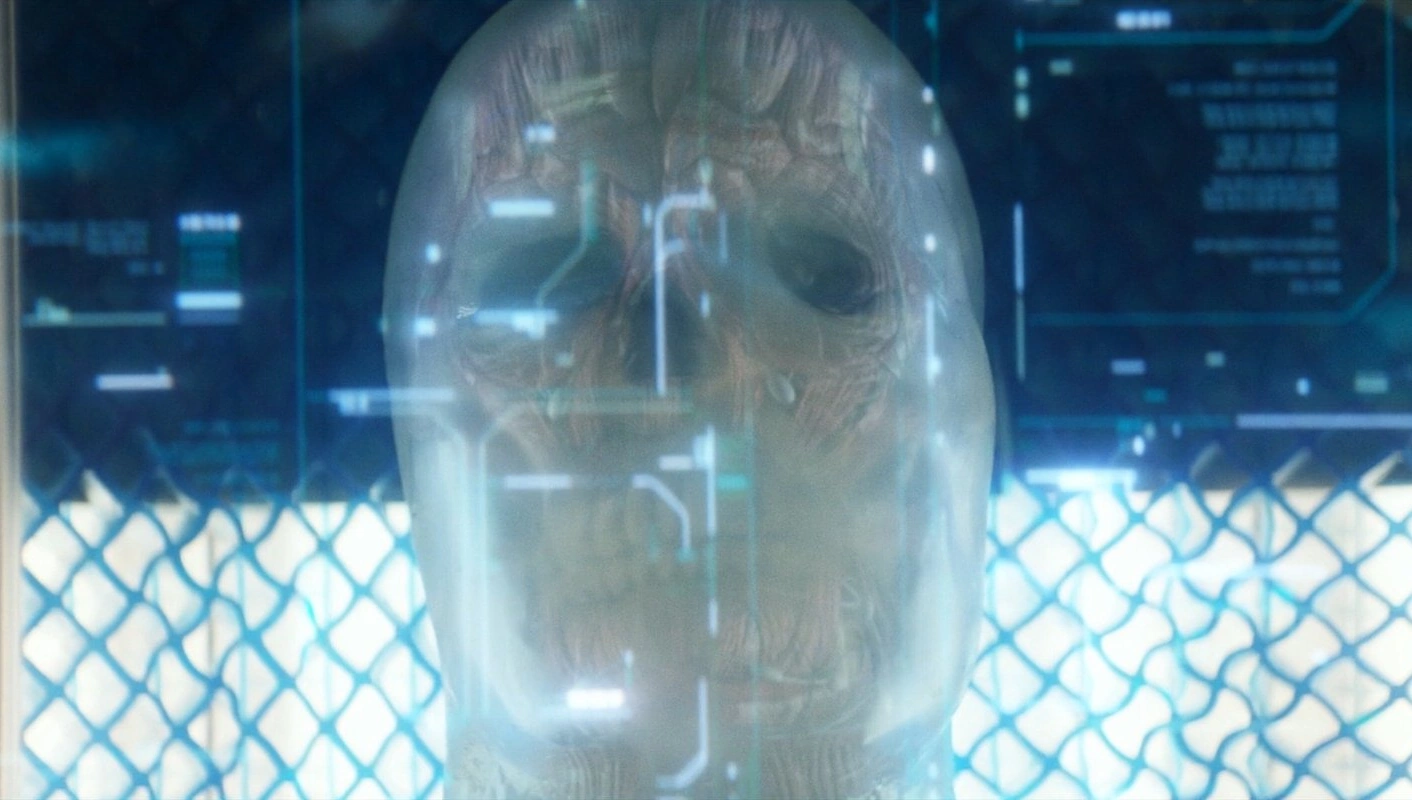
An incomplete golem
"I didn't."
"Right, the positronics. A new fully synth prototype body. I don't suppose you've got another one in my size, have you?"
A golem was a type of android constructed from organic material and designed to function more-or-less identically to the lifeform it was modeled after, including, optionally, the processes of aging and eventual death. It was invented by Doctor Altan Soong at Coppelius Station in 2399. In preparation for the event of his passing, Dr. Soong had intended to place his consciousness into the body of the golem through a mind transfer. He enlisted the aid of Dr. Agnes Jurati in the completion of this project. (PIC: "Et in Arcadia Ego, Part 1")
Before the brain death of Admiral Jean-Luc Picard, his consciousness was transplanted into the golem Soong had prepared, at the cost of Soong not being able to use it himself. The only enhancement the golem provided Picard was a lack of the brain defect that had killed him; in all other respects, it was virtually identical to his Human body, since Soong knew Picard did not want to be immortal and would not want to have to adjust to any new superpowers at his advanced age. (PIC: "Et in Arcadia Ego, Part 2") Even as a golem, Picard retained a residual link to the Borg Collective which helped guide him while Picard was looking for his son. Picard was also able to link into the Collective by plugging a cable into his neck, something that appeared to cause him no lasting harm aside from the pain that Picard experienced while removing it. (PIC: "The Last Generation")
In an alternate timeline where a more xenophobic Earth had founded the Confederation of Earth, Picard's counterpart had still had his consciousness uploaded into a golem by 2401, having suffered fatal injuries at the hands of Gul Dukat. (PIC: "Penance")
Soong would later reconsider his reasons for living beyond his natural lifetime and instead created a new golem body in the aged form of Data and inserting the personalities of B-4, Lal, and Soong himself as memory files, and the full personalities of Data, recovered from B-4, and Lore, in the hopes that they would integrate into a complete totality of one better being. Soong was unable to complete the work before his death, and his work was seized by Starfleet, relocated to Daystrom Station and the golem designated "Daystrom Android M-5-10". After taking full control of the golem body, Data had the ability to feel sensations such as pain for the first time. (PIC: "Dominion", "Surrender")
The procedure of transferring a consciousness to a golem became known as the "Soong Method". However, the mind transfer procedure had a low success rate, leading to it being abandoned by the 32nd century. (DIS: "Anomaly (DIS)") In 3190, it was used to resurrect Gray Tal by transferring his consciousness into a golem after unjoining Gray from the Tal symbiont. (DIS: "Choose to Live")
Quick Answers
What is the Golem android made from?

What unique features does the Golem android have compared to other androids?
What is the purpose of the Golem android?
See also
External link
- Golem at Memory Beta, the wiki for licensed Star Trek works
- Golem at Wikipedia