Wild Match
Wild Match (Japanese: マッチ&ゲット Match & Get) is a fishing-type card game in Pokémon Zany Cards.
Game modes
Vs. CPU
In the Vs. CPU (Japanese: キャラクター バトル Character Battle) mode, there is a competition between the single player and two non-player characters.
In this mode, each stage (Japanese: ステージ stage) features three players competing against each other: one human player and two non-player characters.
- Stage 1: Jessie and James
- Stage 2: Brock and Misty
- Stage 3: Lorelei and Bruno
- Stage 4: Gary and Ritchie*
- Stage 5: Giovanni and Mewtwo
In each stage, there are two games against the same characters: Round 1 (Japanese: だい1せん Round 1) and Round 2 (Japanese: だい2せん Round 2).
At the end of each round, the participants are ranked by the coins earned during the round. There is also an additional ranking at the end of each stage, with the total coins earned in both rounds. The player must win 1st place in the current stage to proceed to the next stage.
Multiplayer
In the Multiplayer (Japanese: パーティ プレイ Party Play) mode, there is a competition between up to 5 Pokémon mini devices connected via infrared. It is possible to play up to 5 stages in this mode, with all players ranked at the end of each stage.
One player is the dealer. During each player's turn, the dealer and the current player must point their Pokémon mini devices to each other when prompted by the game devices.
Gameplay
This game is played with a standard 52-card deck. The object of this game is to form combos[1] with the cards and earn coins (Japanese: コバン koban),[2] also known as points.[3]
Starting the game
At the start of the game, there is a short animation where the cards are drawn. Every player starts wth five cards on their hand, while are four cards on the table that are usable by all players.
Card ordering
The cards on the table are simply ordered by their rank, in this order: A, 2, 3, 4, 5, 6, 7, 8, 9, 10, J, Q, and K. If there are any cards with the same rank, the different suits are placed together in this order: spades, hearts, diamonds, and clubs.
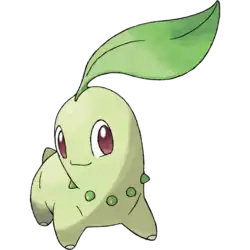
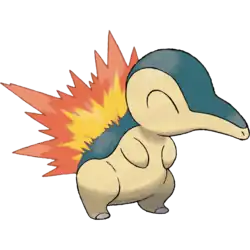
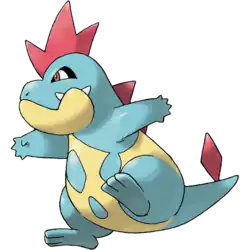
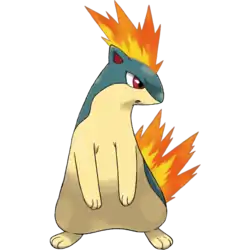
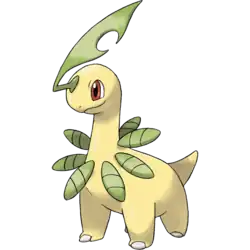
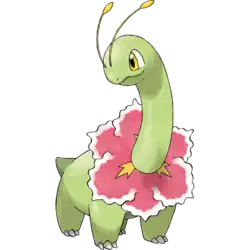
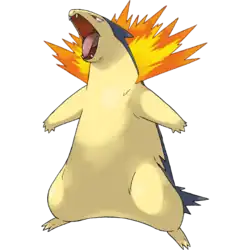
The cards on the player's hand are also ordered by rank and suit, except if there are any Johto first partner Pokémon or their Evolutions on the table, those cards are placed in Pokédex order before all the others. However, if there are multiple different species from the same line of Johto first partner Pokémon (such as Cyndaquil and Typhlosion), those lines are placed before all the other Johto first partner Pokémon.
Playing the game
In the Vs. CPU (single player) mode, during the first round of the current stage, the human player goes first, followed by the CPU character on the left, then the CPU character on the right. In the second round, whoever won the previous round plays first. In each turn:
- The current player must choose one card from their hand and move it to the table.
- If the player is currently able to form a pair or combo by playing a card from their hand, then all the affected cards on their hand or the table will be blinking at this point.
- Then, one card is drawn from the deck into the table.
In both cases above, a card (from the player's hand or from the deck) is placed on the table. If this card forms a pair or combo with other cards present on the table, it is played automatically. All cards used on the pair or combo are discarded and the current player earns coins. When the player forms a combo, a short cutscene plays. If a non-player character forms a combo, there is no cutscene.
It is not possible to form a pair or combo using only cards currently on the hand, or only cards that were already on the table before. For instance, no pair is formed if the table already had two 7 cards at the start of the game, or if the player has two 7 cards on their hand but they were not moved to the table yet.
During a game, the player can press down to see one's own pairs and combos played during the game, or press up to see the pairs and combos played by the opponents. The cards on each player's hand are not known to other players, but everyone can see how many cards exactly each player has on their hand.
In each round, the game ends after five turns when all the players are out of cards in their hands. At the end of each round, all the pairs and combos played by each player during the round are listed in ascending order and the coins are calculated for the ranking.
Cards
|
This section is missing one or more images. Please feel free to add any missing images to this section. Needed images can be uploaded to the Bulbagarden Archives. Reason: Add images of all cards as seen in the game (each card has a regular size and a small size), and the image of the back of the cards |
| ♠ | ♥ | ♦ | ♣ | |
|---|---|---|---|---|
| A | ||||
| 2 | ||||
| 3 | ||||
| 4 | ||||
| 5 | ||||
| 6 | ||||
| 7 | ||||
| 8 | ||||
| 9 | ||||
| 10 | ||||
| J | ||||
| Q | ||||
| K |

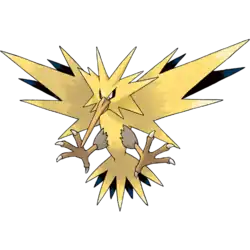
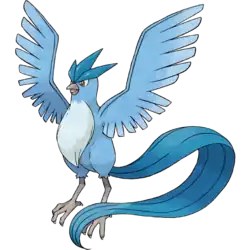
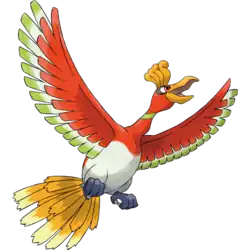
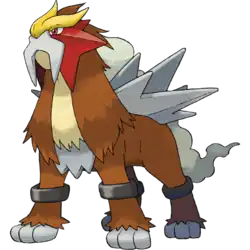
Card combos
These are the card combos available in the Wild Match game.
The Japanese game manual correctly mentions all the card combos. However, the German game manual has a mistake: in the Chikorita line combination, a Togepi is shown instead of Chikorita. In fact, the Wild Match game does not include any Togepi card.
| English name | Japanese name | Rules | Coins | Animation |
|---|---|---|---|---|
| Pair[4] | ペア (Pair)[5] | Form a pair of cards with the same rank | A A = 1 coin 2 2 = 2 coins 3 3 = 3 coins 4 4 = 4 coins 5 5 = 5 coins 6 6 = 6 coins 7 7 = 7 coins 8 8 = 8 coins 9 9 = 9 coins 10 10 = 10 coins J J = 11 coins Q Q = 12 coins K K = 13 coins |
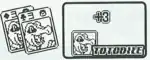 The name and face of the Pokémon |
| Evolution![6] Evolved![7] Chikorita Evolved[8] |
シンカゲット (Evolution Get)[6] 進化系完成! (Evolution Complete!)[7] チコリータシンカ (Chikorita Evolved)[8] |
   Form a group of three cards: A (Chikorita), 6 (Bayleef), and 7 (Meganium) |
20 | 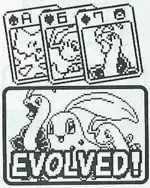 Chikorita, Bayleef, and Meganium appear together |
| Evolution![6] Evolved![7] Cyndaquil Evolved[8] |
シンカゲット (Evolution Get)[6] 進化系完成! (Evolution Complete!)[7] ヒノアラシシンカ (Cyndaquil Evolved)[8] |
   Form a group of three cards: 2 (Cyndaquil), 5 (Quilava), and 8 (Typhlosion) |
20 | 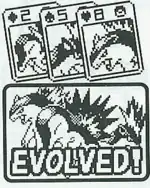 Cyndaquil, Quilava, and Typhlosion appear together |
| Evolution![6] Evolved![7] Totodile Evolved[8] |
シンカゲット (Evolution Get)[6] 進化系完成! (Evolution Complete!)[7] ワニノコシンカ (Totodile Evolved)[8] |
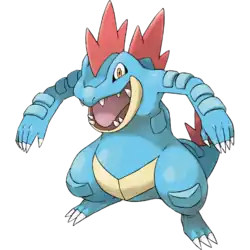
   Form a group of three cards: 3 (Totodile), 4 (Croconaw), and 9 (Feraligatr) |
20 | 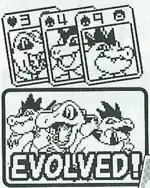 Totodile, Croconaw, and Feraligatr appear together |
| GS Starters[6][7][8] | ポケモンルーキーズ (Pokémon Rookies)[9] | Form three pairs or combos, one with each of these cards: A (Chikorita), 2 (Cyndaquil), and 3 (Totodile) |
30 | 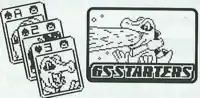 Three Poké Balls open, the three Pokémon appear together, and then a short animation with only the latest of the three obtained |
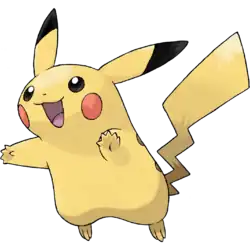
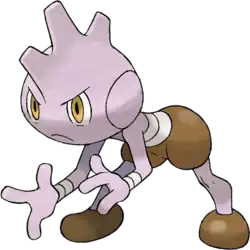
| Someday...[7] | いつかきっと... (Definitely Someday...)[7] |      Form two pairs: 10 10 (two Pikachu) J J (Tyrogue and any Hitmon) |
20 | 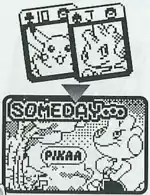 Tyrogue determined and Pikachu encouraging him |
| Pikachu & Lugia[8] Pikachu & Lugia Combo![6] Fly with Lugia![7] |
ルギアそらのたびへ! (Lugia Travels to the Sky!)[7] |     Form two pairs: 10 10 (two Pikachu) Q Q (Lugia and any legendary bird) |
20 | 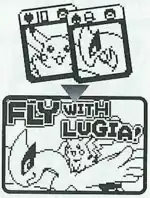 Pikachu flying on Lugia's back |
| Pikachu & Ho-Oh[8] Pikachu & Ho-Oh Combo![6] Legendary Encounter?[7] |
でんせつのポケモンにあえるかな (Is it possible to meet a Legendary Pokémon?)[7] |     Form two pairs: 10 10 (two Pikachu) K K (Ho-Oh and any legendary beast) |
20 | 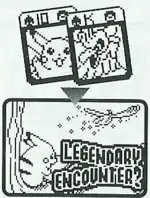 Pikachu seeing Ho-Oh in the distance This is a reference to the events of Pokémon - I Choose You! |
| Four 10 combo[6][8] Pikachu's Forest[7] |
10 カルテット (10 Quartet)[6][8] ピカチュウの森を見つけた (Pikachu's Forest Found!)[7] |
Form two pairs of 10 10 (two Pikachu) |
40 |  A forest full of Pikachu |
| Four J combo[6][8] 4 Fighting Bros.[7] |
J カルテット (J Quartet)[6][8] かくとう四兄弟 (Four Fighting Brothers)[7] |
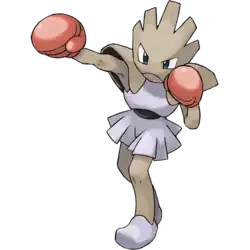
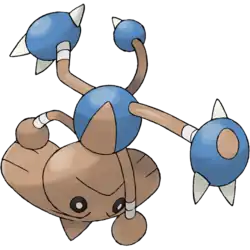
Form two pairs of J J (Tyrogue, Hitmonlee, Hitmonchan, and Hitmontop) |
40 |  Tyrogue family working out |
| Four Q combo[6][8] Revelation Lugia[7] |
Q カルテット (Q Quartet)[6][8] ルギア爆誕 (Lugia's Explosive Birth)[7] |
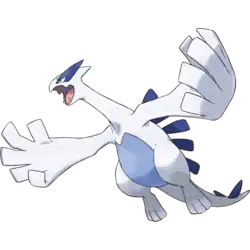
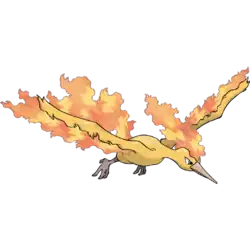
Form two pairs of Q Q (Lugia, Articuno, Zapdos, and Moltres) |
40 |  The legendary birds followed by Lugia This is a reference to the Japanese name of The Power of One |
| Four K combo[6][8] Legendary Pokémon![7] |
K カルテット (K Quartet)[6][8] 伝説のポケモン発見! (Legendary Pokémon Discovered!)[7] |
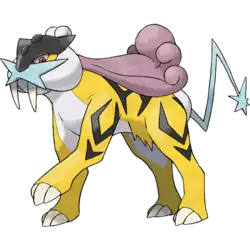
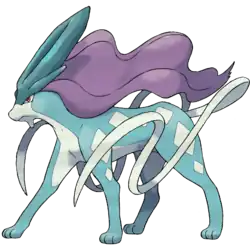
Form two pairs of K K (Ho-Oh, Raikou, Entei, and Suicune) |
40 |  The legendary beasts followed by Ho-Oh |
| All Cleared![7] All Cleared[8] |
全消し! (All Cleared!)[7][8] ぜんけし (All Cleared)[8] |
Clear the table (the player can still have cards on their hand) |
20 |  Pichu appears with the message "All Cleared!" |
Trivia
- In this game, there are three cards whose rank coincides with their New Pokédex number: Chikorita ("A" being equivalent to "1" in the card order), Quilava (5), and Feraligatr (9).
References
- ↑ "Make a combo with the card you get" - Mentioned in the rules before the game
- ↑ They are known as "coins" during the ranking calculation at the end of each round
- ↑ "More points for me!" - Brock character dialogue
- ↑ "Make a pair!" - Mentioned in the instructions before the game
- ↑ Japanese game manual, page 27
- ↑ 6.00 6.01 6.02 6.03 6.04 6.05 6.06 6.07 6.08 6.09 6.10 6.11 6.12 6.13 6.14 6.15 6.16 Combo name mentioned before the animation
- ↑ 7.00 7.01 7.02 7.03 7.04 7.05 7.06 7.07 7.08 7.09 7.10 7.11 7.12 7.13 7.14 7.15 7.16 7.17 7.18 7.19 7.20 7.21 7.22 Combo name mentioned during the animation
- ↑ 8.00 8.01 8.02 8.03 8.04 8.05 8.06 8.07 8.08 8.09 8.10 8.11 8.12 8.13 8.14 8.15 8.16 8.17 8.18 8.19 Combo name mentioned when points are calculated
- ↑ Japanese game manual, page 28

|
This article is part of Project Sidegames, a Bulbapedia project that aims to write comprehensive articles on the Pokémon Sidegames. |