Bootleg
A bootleg is an unlicensed counterfeit of an existing product, such as a toy or video game. Bootleg Pokémon games are often flashed onto after-market game paks or game cards and lack the official Nintendo Seal. Bootleg games are usually considered distinct from ROM hacks, which are created by fans and distributed over the Internet for free, though ROM hacks are often still sold as bootlegs, usually against the hacker's wishes.
List of notable bootleg Pokémon games
Pokémon Diamond and Jade
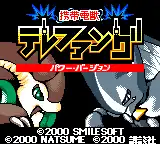
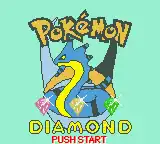
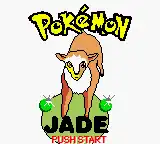
Pokémon Diamond and Jade are among the most infamous bootleg Pokémon games. These games, not to be confused with the official Pokémon Diamond and Pearl of Generation IV, are knock-off versions of the Power and Speed versions of Keitai Denjū Telefang, released exclusively in Japan for the Game Boy Color in November 2000, a year after Pokémon Gold and Silver and shortly before Pokémon Crystal. The box art mimicked Pokémon Gold and Silver, but the creatures depicted—such as a snake-like figure on Diamond and an edited version of the forest spirit from Princess Mononoke on Jade—do not appear in the game, nor are they Pokémon or Denjuu.
These bootlegs were typically produced either as standalone games or bundled with a pirated Pokémon Crystal translation. They aimed to translate the original Japanese game into English, though the translation quality was extremely poor, with nonsensical lines such as "Some points of (number) Lost!" appearing during battles. Profanity was also present, with the British Gaming Blog noting "a healthy dose of Engrish and plenty of swear words."[1] The English translation likely stemmed from a Chinese version, as both share many identical phrases. Incomplete French and German translations also exist.
The games were rife with bugs, including the inability to load saved files and other game-breaking glitches, issues absent from legitimate titles. Despite these problems, the real Telefang games had conceptual similarities with the core series Pokémon games, such as battling with creatures and shared stats like HP, Attack, Defense, and Speed. Both series also featured comparable moves like Poison Sting, Take Down, Flamethrower, and Earthquake, as well as personality traits (Natures) for their creatures, though the mechanics differed.
Notably, these bootlegs were acknowledged by The Pokémon Company in a 2003 Pokémon.com mailbag, where they described Jade as "the bootleg and illegally produced Pokémon Jade."
Pokémon Diamond 2 and Jade 2

Pokémon Diamond 2 and Jade 2 are bootleg sequels to the original Diamond and Jade titles, based on hacked versions of the Power and Speed versions of Keitai Denjū Telefang 2. Like the originals, Diamond 2 corresponds to the Power version, while Jade 2 corresponds to the Speed version. These games were initially released in Chinese.
The title screens resemble those of the original Diamond and Jade, but with changes to feature Ethan and Kris from Pokémon Crystal, as well as Dragon from the film Shrek, likely due to her visual similarity to Charizard. These similarities suggest that the same developers may have created both the original and sequel bootlegs.
Much like their predecessors, Diamond 2 and Jade 2 are riddled with bugs absent from the official Telefang 2 games. Diamond 2 is largely unplayable, crashing after the title screen unless a save state is used to bypass the issue. Jade 2, while more stable, suffers from graphical bugs.
An English translation of the Power version of Telefang 2 also exists under the title Pokémon Ruby (unrelated to the official title of the same name). However, like the original Diamond and Jade, the translation quality is very poor.
Pokémon Vietnamese Crystal
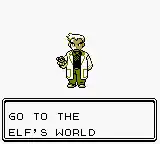
Pocket Monsters Crystal Version (commonly referred to as Pokémon Vietnamese Crystal) is a bootlegged version of Pokémon Crystal. It was translated from Japanese to Chinese to English, and allegedly sold in Vietnam, which led to its popular name. The game's dialogue is in Engrish and often nonsensical and unintentionally humorous. Pokémon, character, and location names are also poorly translated, often appearing as romanized versions of Chinese transliterations of the original Japanese names.
The translation is so notoriously bad that the game has since garnered cult status and has become the subject of various Internet memes. It gained widespread popularity through "Let's Play" video series on YouTube, with the most notable one being by DeliciousCinnamon. Another well-known playthrough is the one by Twitch Plays Pokémon.
Pocket Monster
A Famicom title which was later ported over to the Game Boy Advance under the name of Pokémon Gold Version (unaffiliated with the official game). It is a simple and generic platforming game where the player plays as Pikachu battling against other Pokémon and enemies unrelated to the franchise. While some sprites are original, a majority of the graphics and sprites are taken from other Famicom/NES titles.
This title was later hacked to form Panda World, which changes sprites and graphics to make the game more original including replacing Pikachu with a Panda, and Super Popo's Adventure, which replaces Pikachu with Po from British pre-school series Teletubbies.
Super Pika! Land
Super Pika! Land is a sprite hack of Super Mario Land released in 2000 by independent developer Philip Reuben and published through his company PR Translations. While not a true bootleg, it has been one of the most common titles found on bootleg Game Boy or Game Boy Color multicarts. As the game is a sprite hack, the gameplay is unchanged from the original Super Mario Land. The player plays as a Pikachu, who can evolve into a Raichu when picking up a Super Mushroom and devolve when hit. Princess Daisy is replaced with Ash Ketchum while several Pokémon replace the existing enemies.
Thunder King: The Legend of Pikachu
Thunder King: The Legend of Pikachu, more commonly referred to as Lei Dian Huang Bi Ka Qiu Chuan Shuo (Simplified Chinese: 雷电皇 比卡丘传说) is a bootleg Famicom port of Pokémon Yellow. It is very likely to have been made after 2004, as it has additions seen in Pokémon FireRed and LeafGreen. Aside from that, the game is mostly faithful to the original.
Puckman Pockimon
Puckman Pockimon is a Pac-Man clone developed for the Genie arcade board sometime in 2000. The player controls either Pac-Man or Pikachu (represented by its head) as they grab pallets and avoid ghosts (for Pac-Man) and Pokémon. The two "Pokémon" depicted in the game are a blue rabbit creature previously seen in Pocket Monster and a catapillar that resembles Caterpie. After each level is completed, intermissions with still images of young Japanese women are shown. The sound effects are taken from the original arcade version of Ms. Pac-Man.
Super Monster Bros.
Super Monster Bros. is a bootleg platforming game for iOS and Android released in February 2013 by developer Adventure Time Pocket Free Games, before being removed two months later.
The game is a Super Mario Bros.-esque title where the player plays as a Charmander. Other Pokémon appear as enemies, including Mewtwo as a boss. Several microtransactions allow the player to change their character to a Blastoise, a Charizard or Naruto Uzumaki from the Naruto franchise.
The game is infamous for its bugs, glitches, stolen music from official Pokémon titles, and microtransactions—the most infamous being Charizard's price at $99.99.
Makon Soft bootlegs
Makon Soft (more famously known as "Yong Yong", after the obscure ending from their game Sonic 3D Blast 5) is a game developer based within an unknown Chinese territory who have developed various bootleg titles for the Game Boy and Game Boy Color. All of Makon Soft's titles are 2D platformers and use variations of the same game engine. Their titles have been infamous for their extremely poor quality, including poor level designs, music, and featuring many bugs—most of which being game-breaking.
With the popularity of the Pokémon franchise, the company developed various sprite hacks of their existing titles to include Pokémon characters, akin to other bootleg game developers at the time.
Pokémon Gold 2/Pokémon Adventure
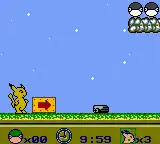
Pokémon Gold 2 was released sometime in 2000 for the Game Boy Color, and reuses the engine and assets from Sonic Adventure 7, itself a hack of Sonic 3D Blast 5. The game is a platformer where the player controls an anthropomorphized version of Pikachu, collecting Poké Balls and defeating enemies. Aside from Pikachu and the use of Poké Balls as a point system—similar to rings in the Sonic games—the game shares few similarities with the Pokémon franchise. The levels in the game are directly ripped off from the Game Boy game Bonk's Revenge and graphics are taken from Makon Soft's other titles, of which many of the enemies do not resemble any Pokémon whatsoever. The intro sequence features various Pokémon screencaptures; many with mistranslated names, and their Pokédex number. The title screen does not contain a year date.
A hack of the game, Pokémon Adventure, was also released in 2000. The only change made to it was to the title screen and intro sequence which now features the Japanese Pokédex entries for various Pokémon and a new title screen which features a screen-capture of a balloon-welding Pikachu from the intro to Pokémon Yellow.
While commonly debated, it is very likely that Pokémon Gold 2 came out before Pokémon Adventure, as the latter's ROM header uses the name "POKEMONGOLD2".
Pokémon Jade
Pokémon Jade (unaffiliated with the Telefang hack) is a sprite and title screen hack of Sonic Adventure 7, released in 2001. Although the game shares similarities with Sonic Adventure 7, the only other differences are altered color tinting and a brief story added at the start. The game's intro begins with various images of Pokémon and then some screencaptures of characters from Pokémon the Series with poorly-translated names, while the title screen has Pikachu over a background with a shatter-effect behind it. The story, which is also poorly translated, centers on Pikachu adventuring into a forest to save various Pokémon who have been trapped in a ferocious storm.
Unlike other hacks of the same game, Pokémon Jade suffers from a programming error that causes the game to crash after completing the first level, making it impossible to finish.
Pokémon Diamond Special Pikachu Edition
Pokémon Diamond Special Pikachu Edition (unaffiliated with the Telefang hack and the official Pokémon Diamond Version) is a hack of Super Mario Special 3, a bootleg Game Boy Color port of Super Mario Bros. 3, released in 2001, likely around the same time as Pokémon Jade as they both share the same intro sequence. The title screen features an oversized image of Pikachu (taken from Pokémon Yellow) alongside a diamond.
The game features an anthropomorphized Pikachu sprite, replacing Mario, with various graphical alterations attempting to resemble Pokémon, such as recolored enemies and Poké Balls replacing coins. The Super Mushroom is swapped for a ball-like item with a thunderbolt that transforms Pikachu into a green variant, though the Super Leaf does not appear in this hack. The music remains the same as in Super Mario Special 3.
Two versions of the game exist—one in English and another in Chinese. Both are unplayable due to glitches. The English version starts on the fourth level of the original game, where a glitch prevents the end block from working properly, summoning a thunder ball (a Super Leaf in Special 3). The Chinese version starts on Level 1 but crashes after the first level, similar to Pokémon Jade.
Pokémon Sapphire
"Pokémon Sapphire" (unaffiliated with the original title) is a hack of the above title, released in 2001. It contains several additions including a new title screen (featuring a poorly-drawn Pikachu) and intro sequence featuring a storyline. English and Chinese versions exist of this title.
This game includes eight levels, three of which are newly-made for this title and appear at the beginning (complete with newly-composed music), while the other 5 are from Special 3. The sprites and graphics are slightly altered, and several additions including a save feature and the player gaining an extra life after every level. The glitch featured in Diamond and Special 3 is now fixed, meaning the game can be played in its entirety without cheating.
Pokémon Pearl
Pokémon Pearl (unaffiliated with the official Pokémon Pearl Version) is a hack of Digimon 02 Jade Version, released within an unknown timeframe.
In this game, the player controls an anthropomorphized Pikachu who must fill up a gauge by defeating enemies to complete each level. Pikachu can defeat enemies by jumping on them or by using Poké Balls as projectiles. The sprite of Pikachu is notably more detailed compared to other Makon Soft titles. Similar to Pokémon Sapphire, a save system was added to this game, which was absent in Digimon 02 Jade Version.
Pokémon Mewtwo Strikes Back
Pokémon Mewtwo Strikes Back, released within an unknown timeframe in 2001, is named after the first Pokémon movie. Unlike Makon's other Pokémon titles, Mewtwo Strikes Back is not a hack of an existing Makon Soft title although it runs on a modified variant of the engine used in their Digimon games.
The game contains eight levels, while sprites are taken from Pocket Monster on the Famicom, including the Pikachu sprite.
The title, as with Makon Soft's other titles, has had many sprite and title screen hacks created to form the basis of other bootleg games such as Digimon Pocket and Harry Potter 3.
Pokémon Ruby
Pokémon Ruby (unaffiliated with the official Pokémon Ruby Version) is a near identical hack of Mewtwo Strikes Back, other than the level placement being altered.
References
- ↑ British Gaming Blog » Bizarre Bootlegs - The Lighter Side of Piracy (archived copy)
External links
- Wikifang - A wiki about Telefang, the game that became Pokémon Jade and Diamond (includes information on the fakes)
Related articles
| |||||||||

|
This article is a part of Project Fandom, a Bulbapedia Project that aims to write comprehensive articles on every aspect of the Pokémon Fandom. |