Attack (TCG)
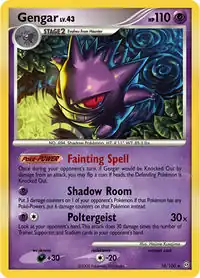
Attacks (Japanese: ワザ Move) are characteristics of cards in the Pokémon Trading Card Game.[1] Attacks are analogous to moves in the Pokémon games, and are sometimes misidentified as such.[2] Nearly every Pokémon card has at least one attack printed on it, with many having two attacks. Some cards may have three, four, or no attacks.
During a player's turn, they may have their Active Pokémon use an attack. Typically, this must be an attack printed on the card, though some effects can grant a Pokémon the ability to use attacks printed on other cards, or prevent Pokémon from using specific attacks. It is also possible for an effect to prevent a Pokémon from attacking. When a player uses an attack, that player's turn ends. Players are allowed to end their turn without using an attack.
Some non-Pokémon cards, such as Technical Machines or Pokémon Tool cards, have attacks printed on them. Those cards cannot use attacks, but may be attached to a Pokémon card, allowing the Pokémon to use the attacks printed on the attached card.
Starting with the release of the Kalos Starter Set at the beginning of the XY Series, the player who goes first cannot use an attack on the first turn.
Pokémon Powers, Poké-Powers, Poké-Bodies, and Abilities are often confused for attacks. However, these characteristics are not attacks. For the most part, using these does not cause the turn to end.
Game effects
Cost
Most attacks have an attack cost, which is printed as energy symbols to the left of the attack name. A Pokémon card can only use an attack if it has enough Energy attached to it to pay for that attack's cost. Energy only needs to be attached to the Pokémon; unless explicitly stated otherwise, all Energy cards remain attached to a Pokémon after it attacks. The attack cost is printed using energy symbols. For each symbol, the Pokémon must have a corresponding Energy attached to it.  Energy requirements may be fulfilled by any kind of Energy, while all other Energy requirements must be fulfilled by that particular Energy. For example, in order to use an attack with a cost of one Fire Energy and one Colorless Energy, at least one Fire Energy and one of any other Energy must be attached to the attacking Pokémon.
Some attacks have an attack cost of zero, which is indicated by a special symbol. These attacks can be used even if the Pokémon has no Energy attached as a result. Attacks with an attack cost of zero first appeared in Diamond & Pearl. In cards from Diamond & Pearl to Call of Legends, the symbol resembles an indentation in the card. Cards from Sun & Moon onward use a symbol resembling an empty bubble. Since Sun & Moon, attacks with costs of zero have been associated with Baby Pokémon, Alolan Pokémon, and Hisuian Pokémon.
Name
Every attack has a name, which is printed in large black text (except for the Darkness type, which is printed in white) to the right of the attack cost. Some effects reference the name of an attack that a Pokémon has, or the name of the attack that was used on a prior turn. Attacks with the same name typically have similar effects, although the specifics may vary. As an example, most attacks named Hyper Beam may discard an Energy card attached to the Defending Pokémon; however, some require a coin flip to be successful in order to allow the Energy card to be discarded. Regardless, effects that reference an attack's name treat this as the same attack on all cards the attack is present on.
Attack name variations
- Main article: List of attack name variations (TCG)
In some cases, the same attacks have different spellings between cards. There are also different attacks in Japanese sharing the same English translation, or, conversely, the same Japanese attacks may have different English translations.
Damage
Most attacks deal damage. The amount of damage an attack deals to the opponent's Active Pokémon (the Defending Pokémon) is written to the right of the attack name as a large black or white number, conventionally divisible by 10.
Some attacks do not inflict damage, or deal damage to one or more Benched Pokémon. A few attacks allow the player to choose which Pokémon take damage as they are resolved, which may or may not include the opponent's Active Pokémon. In these cases, a damage number is not listed to the right of the attack name.
When damage is dealt as a result of a Pokémon's attack, the players place one damage counter on any affected Pokémon for each 10 damage the attack does.
Various symbols next to the number indicate whether the damage will vary. These symbols are for distinguishing purposes; the stipulations of the damage variation are defined in the attack text.
| Symbol | Meaning |
|---|---|
| + | Indicates an increase in damage, under certain conditions |
| - | Indicates a decrease in damage, under certain conditions |
| × | Indicates the value will be multiplied, under certain conditions |
| ? | The amount of damage depends entirely on conditions (e.g. opponent's HP) (this symbol has not been used since Scizor from the Neo Discovery set]]) |
There are effects that increase or decrease the damage that an attack deals. Attacks that do not deal damage cannot have their damage increased through other effects. Damage changing effects are resolved in the order of:
- Effects on the player's Active Pokémon
- Weakness
- Resistance
- Effects on the opponent's Pokémon
Text
Attacks often have additional text beyond their name and damage. This text is printed in small black or white font underneath the cost, name, and damage. The text details additional effects and/or requirements of the attack. The text may alter the amount of damage dealt by the attack, or inflict damage to Pokémon that are not the Defending Pokémon. Unless otherwise specified, the effects of attacks are mandatory when using the attack. Many attacks have text where the result of a coin flip is used to determine if an effect will occur. Many attacks can inflict Special Conditions onto Pokémon, which is listed as part of the text. Some attacks have text that causes one or more damage counters to be placed directly onto Pokémon. While this has the same result as dealing damage, the placement of damage counters via effect is not the same as dealing damage.
Weakness and Resistance
Each Pokémon can have a Weakness or Resistance. If a Pokémon is damaged by an attack that is coming from a Pokémon whose Type is that Pokémon's Weakness or Resistance, then the damage is modified accordingly. On the majority of cards, a Weakness causes the attack's damage to be multiplied by 2, and Resistance causes the attack to deal 30 less damage.
During the Diamond & Pearl Series and the Platinum Series, each card had a mathematical operation next to its weakness type. Most cards had a Weakness ranging between +10 and +40, only a select few had a Weakness of +50. All Pokémon SP had a ×2 Weakness, and so did the majority of Pokémon LV.X. ×2 Weaknesses were rarely used by regular Pokémon. For these cards, the listed mathematical operation is performed when Weakness is applied to an attack's damage. Starting in the HeartGold & SoulSilver Series, cards returned to having ×2 Weakness, but the mathematical operation is still being listed.
From the Diamond and Pearl Series until the Sun & Moon Series, Resistance reduced damage by 20 instead of 30.
Some Pokémon have multiple Weaknesses and/or Resistances. For those Pokémon, an attack only needs to be coming from one such type in order to apply Weakness or Resistance. Some Pokémon also have multiple Types. In those cases, each type will trigger Weakness and Resistance separately.
When Benched Pokémon take damage, Weakness and Resistance are usually not applied. A few attacks allow for Weakness and Resistance to affect damage dealt to Benched Pokémon, and some Pokémon Tools grant this effect as well.
Relevant categories
- Cards by attack
- Pokémon cards by attack damage
References
- ↑ Pokémon Trading Card Game Rules, Paradox Rift, "Characteristics such as attacks, Abilities, HP, Retreat Cost, Weakness, or Resistance cannot be referenced to any individual card piece."
- ↑ Pikachu VMAX, Ninjask, Hitmontop, and More in the Pokémon TCG: Sword & Shield—Vivid Voltage Expansion, Pokémon.com, "The Shed Pokémon’s ominous qualities are difficult to ignore, with a move named Life Squeeze and a mysterious figure positioned slightly behind the Pokémon."

|
This article is part of Project TCG, a Bulbapedia project that aims to report on every aspect of the Pokémon Trading Card Game. |